

The Question That Decides the Plan
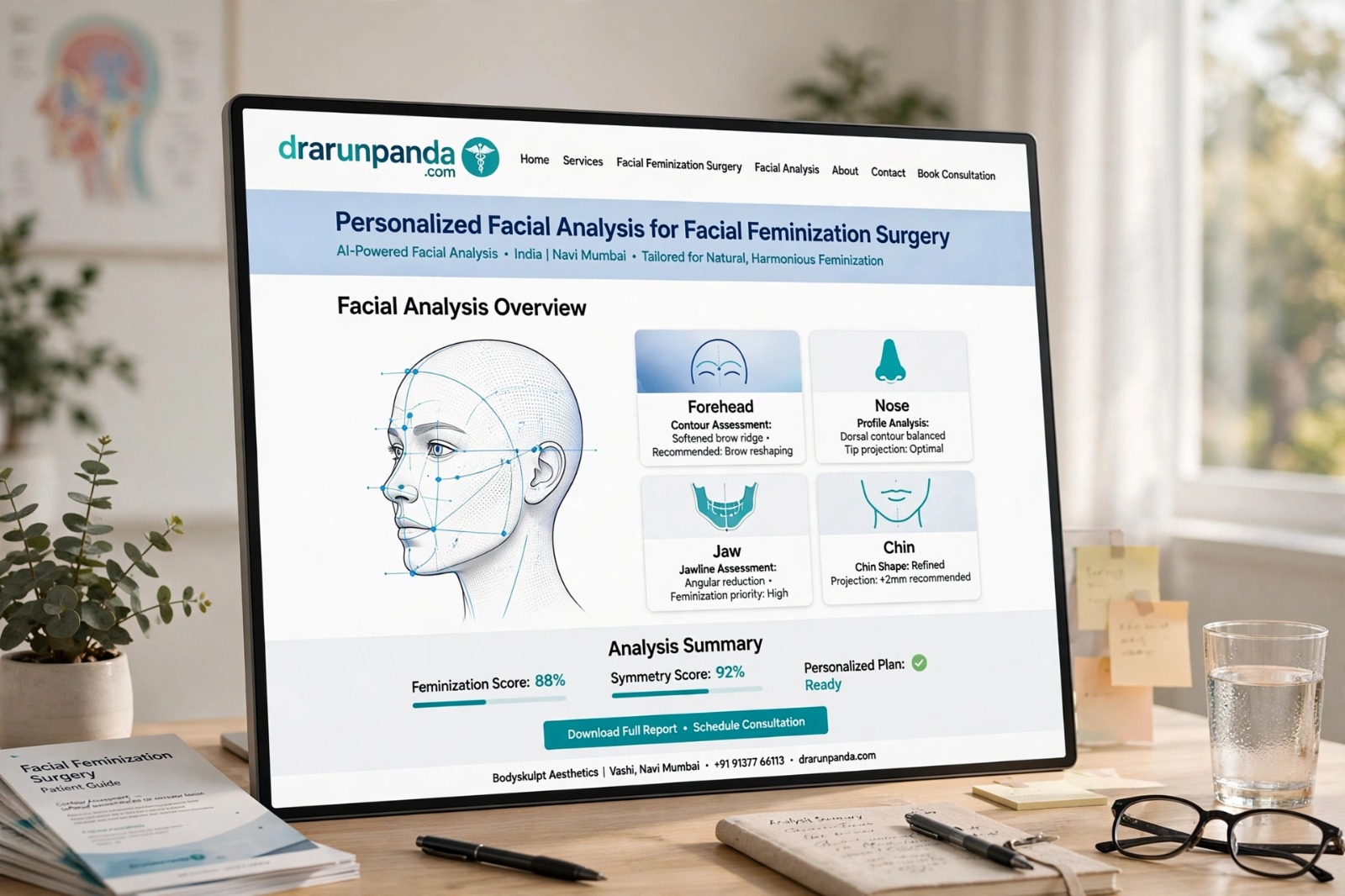
Most people arrive at a Facial Feminization Surgery in India consultation with a list of procedures. They have read forums, compared clinics, and formed a view: forehead, nose, jaw, tracheal shave. It is a reasonable way to prepare, but it is usually the wrong starting point. A personalized facial assessment focuses first on overall facial proportions, balance, and individual features before determining which procedures may be appropriate.
The question a surgeon needs to answer first is not which procedures you want. It is which features are currently doing the most work in how your face is read — and those are frequently not the features the patient names. Someone convinced their nose is the problem may have a nose that is entirely unremarkable, sitting beneath a brow ridge that dominates the upper face and pulls attention with it.
Feminisation Is a Change in Relationships
This is the idea the rest of the article rests on, so it is worth stating plainly. Feminisation is not produced by altering isolated features. It comes from changing the relationships between them.
Research quantifying FFS outcomes has shown this in measurement terms: a frontal sinus setback produces changes across multiple cephalometric measurements at once, and skeletal changes have diverse effects on the soft tissue above them. One bony change does not move one number. It moves several, including some the surgeon did not directly operate on.
The practical consequence is that a plan assembled as a shopping list of procedures tends to produce a face that has been altered in several places without reading as coherently different. A plan built around proportion — which relationships need to change, and which procedures achieve that — does more with less.
| A worked example, without over-diagnosing anyone Consider two patients who both say the same sentence: ‘I want my jaw softened.’ In the first, the jaw is genuinely wide at the angle and the lower face is the dominant feature. Angle reduction addresses the cause. In the second, the jaw is average but the chin is tall, which lengthens the lower third and makes the whole lower face read heavy. Reducing the jaw angle here would achieve little; reducing chin height would change the proportion that is actually causing the impression. Same request, same words, different operations — and the second patient would have been disappointed by the procedure they asked for. |
How a Face Is Actually Assessed
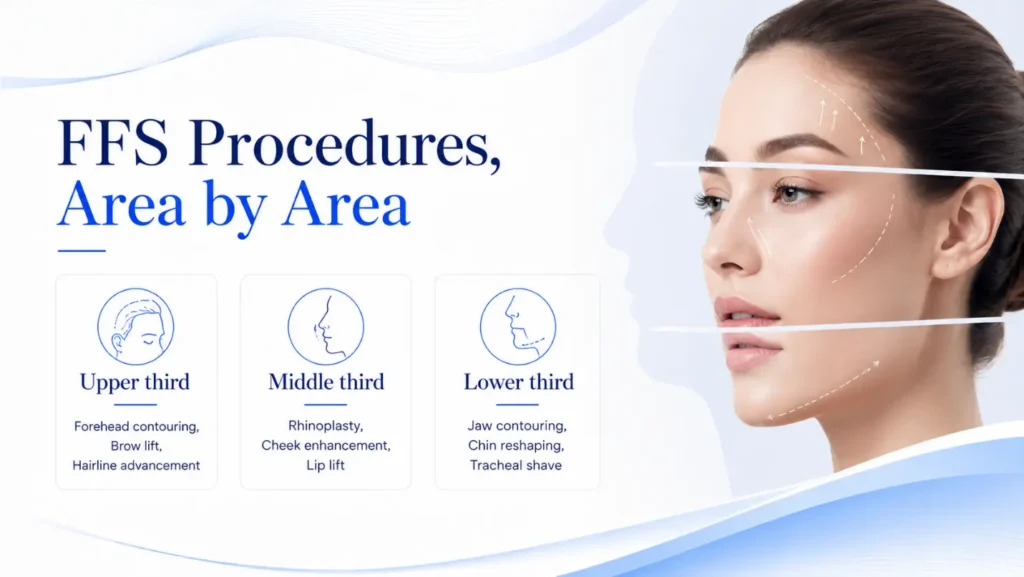
Assessment works through the facial thirds, then across them. What follows is the structure, not a formula — the interpretation is where surgical judgement lives.
Upper third — hairline to brow
- Hairline shape and position. An M-shaped or receded hairline lengthens the forehead and reads masculine independently of the bone beneath it.
- Forehead slope and brow ridge. The single strongest skeletal cue. Assessed for the degree of bossing, the thickness of bone over the frontal sinus, and whether the slope is continuous or stepped.
- Orbital rims and brow position. The bony rim around the eye and where the brow sits on it — higher and more arched reads feminine.
Middle third — brow to base of nose
- Nasal dorsum, width and tip. Assessed relative to the brow above and the chin below, never in isolation.
- Cheek projection and fullness. Often augmented rather than reduced — mid-face volume is a feminine characteristic.
- Upper lip length. The distance from nose to lip; shortening it shows more pink lip and softens the middle third.
Lower third — nose base to chin
- Chin height, width and projection. Three separate measurements that are often conflated; a chin can be too tall without being too prominent.
- Gonial angle and jaw width. Assessed frontally and in profile — a jaw can look wide from the front and normal in profile, or the reverse.
- Thyroid cartilage prominence. Assessed with the neck extended and during swallowing, not at rest.
Across the thirds
- Relative height of each third, and facial width-to-height ratio — the measurements that determine whether the face reads long, square or balanced.
- Soft tissue thickness and skin quality, which determine how much of a skeletal change will actually show externally.
- Existing asymmetry, present in almost everyone, and how much of it is skeletal versus soft tissue.
- Age. A 25-year-old and a 55-year-old with identical bone need different plans, because soft-tissue support differs and lifting or volume restoration may matter more than bone reduction.
Why the Thirds Interact
The reason assessment cannot stop at a list is that changing one third alters how the others are perceived.
- Setting back a brow ridge makes the nose appear more prominent, because the reference point above it has moved. Some patients who wanted rhinoplasty no longer need it after forehead work; others need it more than they expected.
- Reducing chin height shortens the lower third and changes the apparent proportion of the whole face, including how large the eyes read.
- Narrowing the jaw increases the visual dominance of the mid-face, which is usually desirable — but on a face that already lacks cheek projection it can look hollow rather than refined.
- Advancing the hairline shortens the upper third, which alters the balance of all three without touching bone.
This is why sequencing matters, and why a good plan often addresses fewer areas than the patient expected, with the changes chosen so that each supports the others.
What ‘Natural’ Honestly Means
‘Natural-looking’ appears in every clinic’s marketing and is rarely defined. It is worth being precise, because the wrong definition produces the wrong surgery.
There is no universal feminine face. Feminine facial characteristics vary substantially across ethnicities, and a plan built toward a single template — usually a Northern European one — produces results that sit oddly on the person wearing them. For patients in India, this matters practically: brow, nasal and jaw proportions considered characteristic vary across populations, and reduction toward an imported ideal is neither necessary nor desirable.
A workable definition: a natural result is one where the face reads as female to strangers, reads as yours to people who know you, and does not read as operated on to anyone. Those three conditions are often in tension, and resolving them is the actual work of planning.
| On preserving identity — the fear most patients do not voice A great many people considering FFS quietly worry that they will lose the face they recognise. It is worth saying directly: the goal is not to erase your features but to change how they are read, and most people remain recognisable in photographs to those who know them. Preservation of identity is a surgical objective, not a compromise — and overcorrection is a real risk, not a theoretical one. If a plan proposes changing every feature you have, that is worth questioning rather than accepting as thoroughness. |
The Limits of Analysis
- Measurement does not settle aesthetics. Numbers describe a face; they do not determine what should change. Two surgeons can measure identically and plan differently, and both can be right.
- Soft tissue behaves less predictably than bone. Prediction accuracy is consistently lower in the lower face, where tissue is thicker and more mobile.
- Photographs mislead. Lens length, lighting and angle change apparent proportion substantially. Assessment should happen in person, with the patient upright and animated, not from images alone.
- Patient preference is part of the data. Some people want a clearly feminine result; others want subtlety and would find a strong change distressing. Neither is more correct.
Frequently Asked Questions
How is a face analysed before facial feminization surgery?
Assessment works through the facial thirds — hairline to brow, brow to nose base, nose base to chin — measuring the features within each and then the proportions between them. Soft-tissue thickness, skin quality, existing asymmetry and age are assessed alongside the skeleton, because they determine how much of a bony change will show externally.
Why do FFS procedures differ so much between patients?
Because the features driving how a face is read differ. Two people can describe the same concern — a heavy jaw, for instance — where one has genuine jaw width and the other has a tall chin lengthening the lower third. The same requested procedure would help the first and disappoint the second.
What actually makes a face read as feminine?
Proportion more than size. The strongest cues are a smooth forehead without brow bossing, a shorter upper third, fuller mid-face projection and a tapered lower face. Feminisation changes the relationships between features; making every feature smaller does not achieve it and often reads as shrunken rather than feminine.
Will FFS make me look like a different person?
It should not. Most people remain recognisable in photographs to those who know them. The change is in how strangers gender the face in the first second, not in erasing individual identity. A plan that proposes altering every feature is worth questioning.
Is there a standard set of FFS procedures?
No, and any clinic offering a fixed package is planning around its own menu rather than your face. Some patients need extensive upper-face work and nothing below; others the reverse. The number of procedures in a good plan is frequently smaller than patients expect.
Does ethnicity affect FFS planning?
It should. Feminine facial characteristics vary across populations, and planning toward a single imported ideal produces results that look incongruous on the person. The goal is a face that reads as female within your own features, not one converted toward a template.
Can facial analysis tell me exactly what I will look like?
No. It can identify which features are contributing most to how your face is currently read and which changes would alter that. Soft tissue — how skin and fat settle over changed bone — remains less predictable, particularly in the lower face.
A Note on Consultation
| A consultation can identify which of your features contribute most to how your face is currently read, whether the changes that would matter most are skeletal, soft-tissue or both, and how few procedures might achieve them. You can read more about facial feminization surgery, the skeletal procedures involved in jaw and chin surgery, or arrange a consultation. A companion article explains how 3D virtual planning is used once a plan has been decided. |