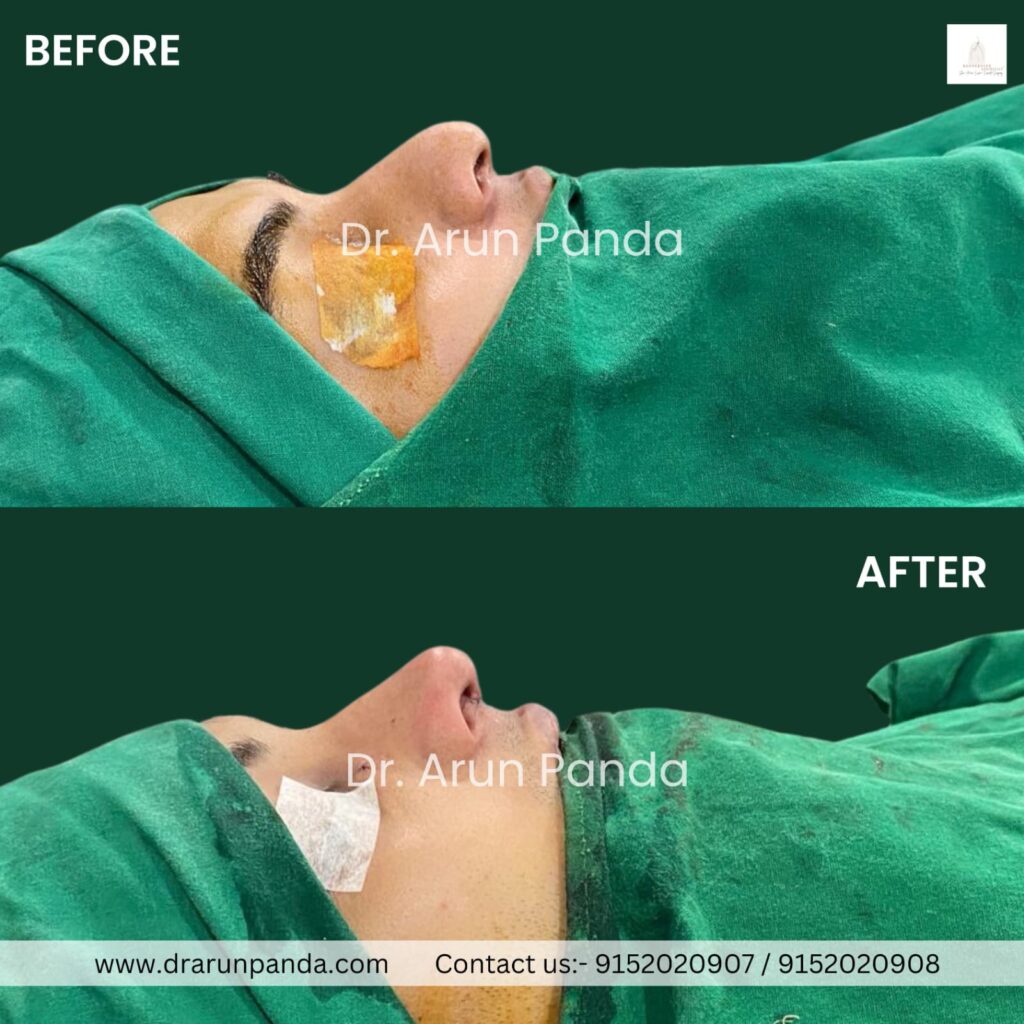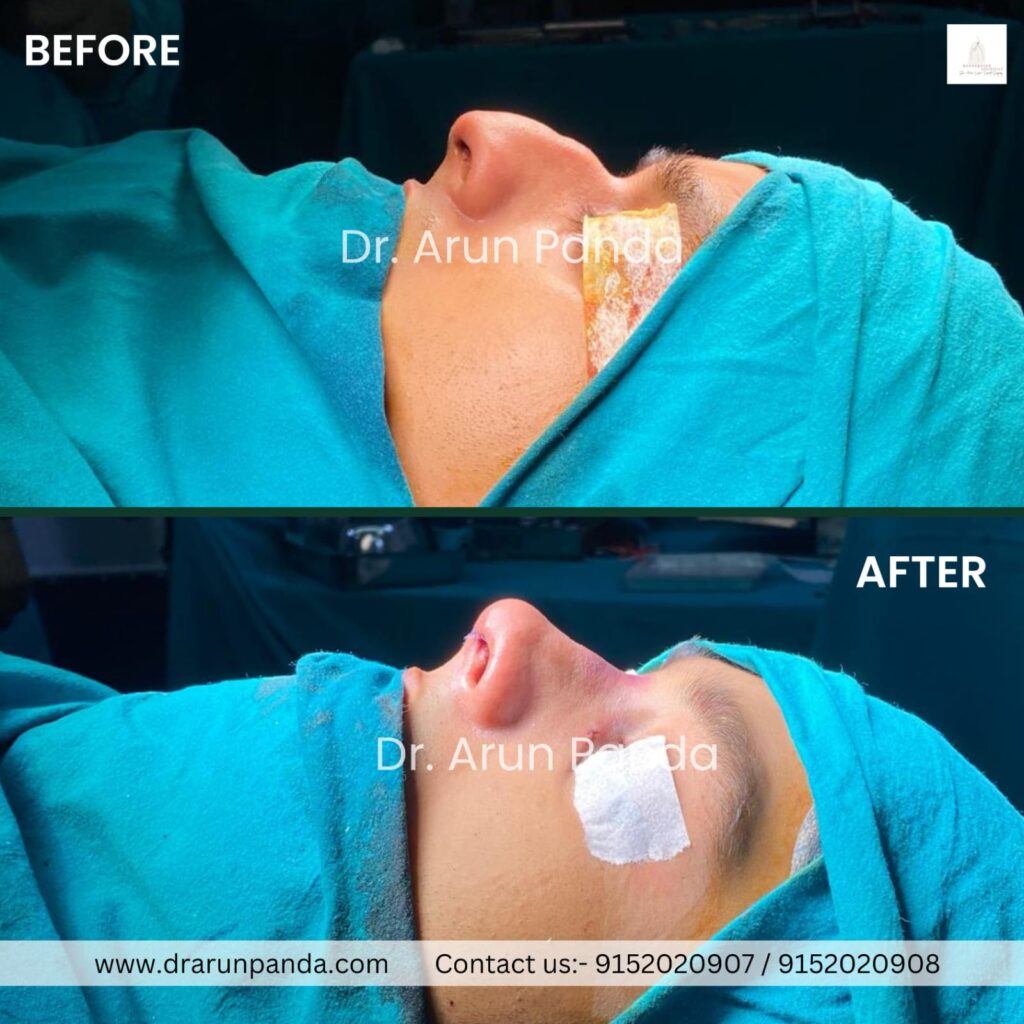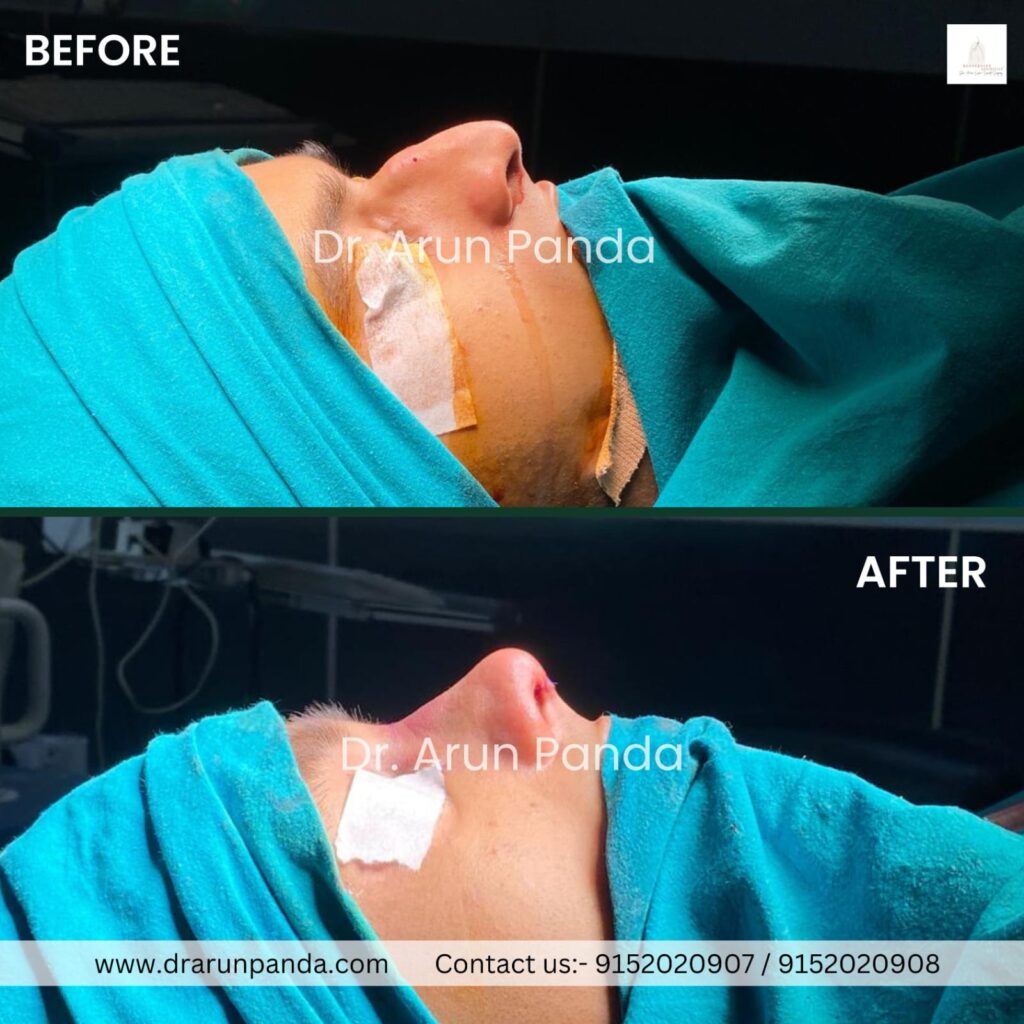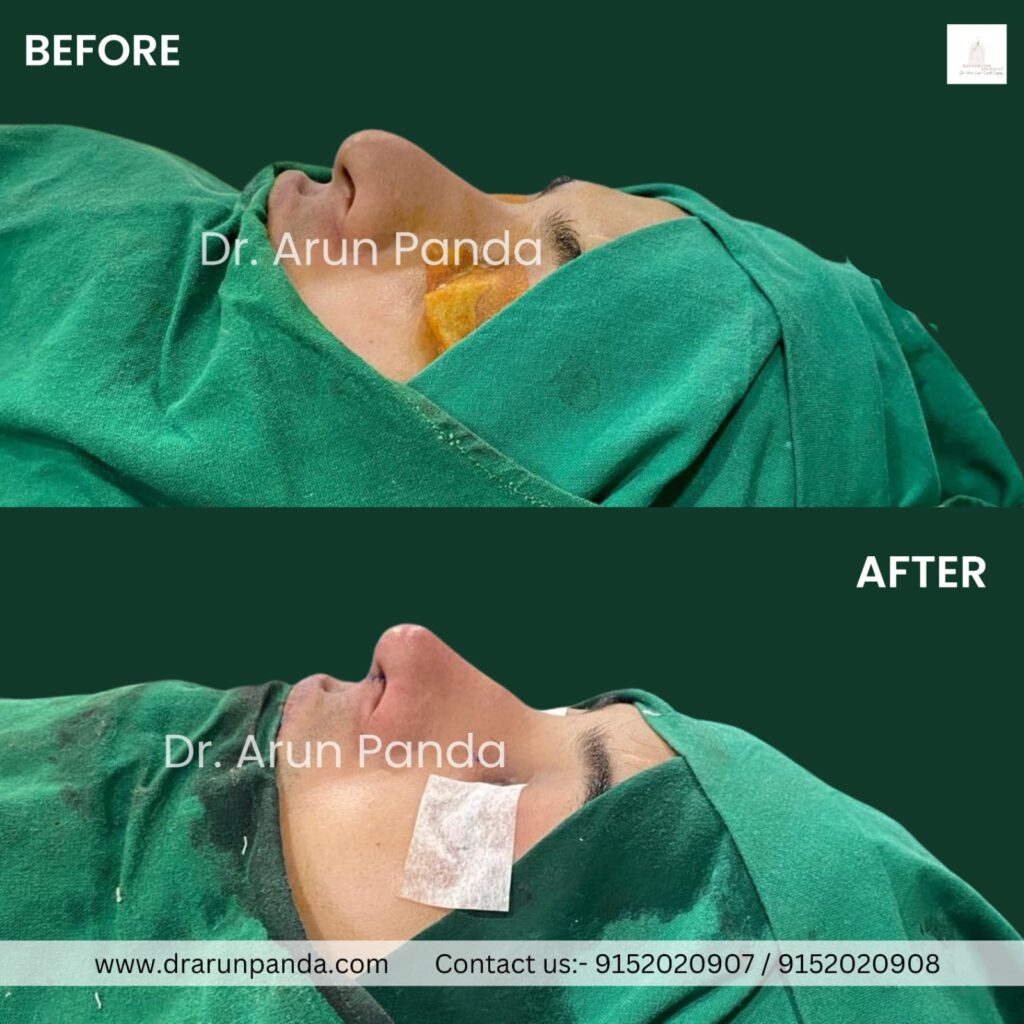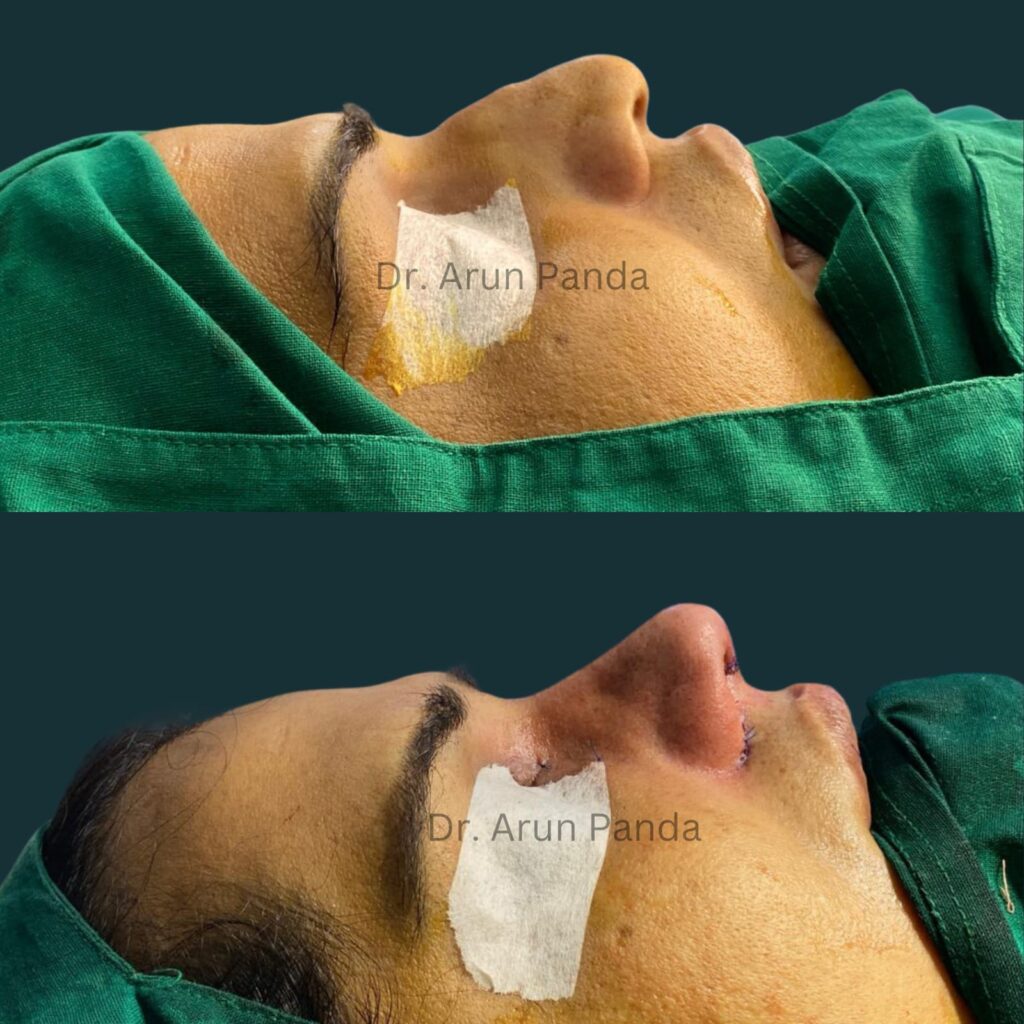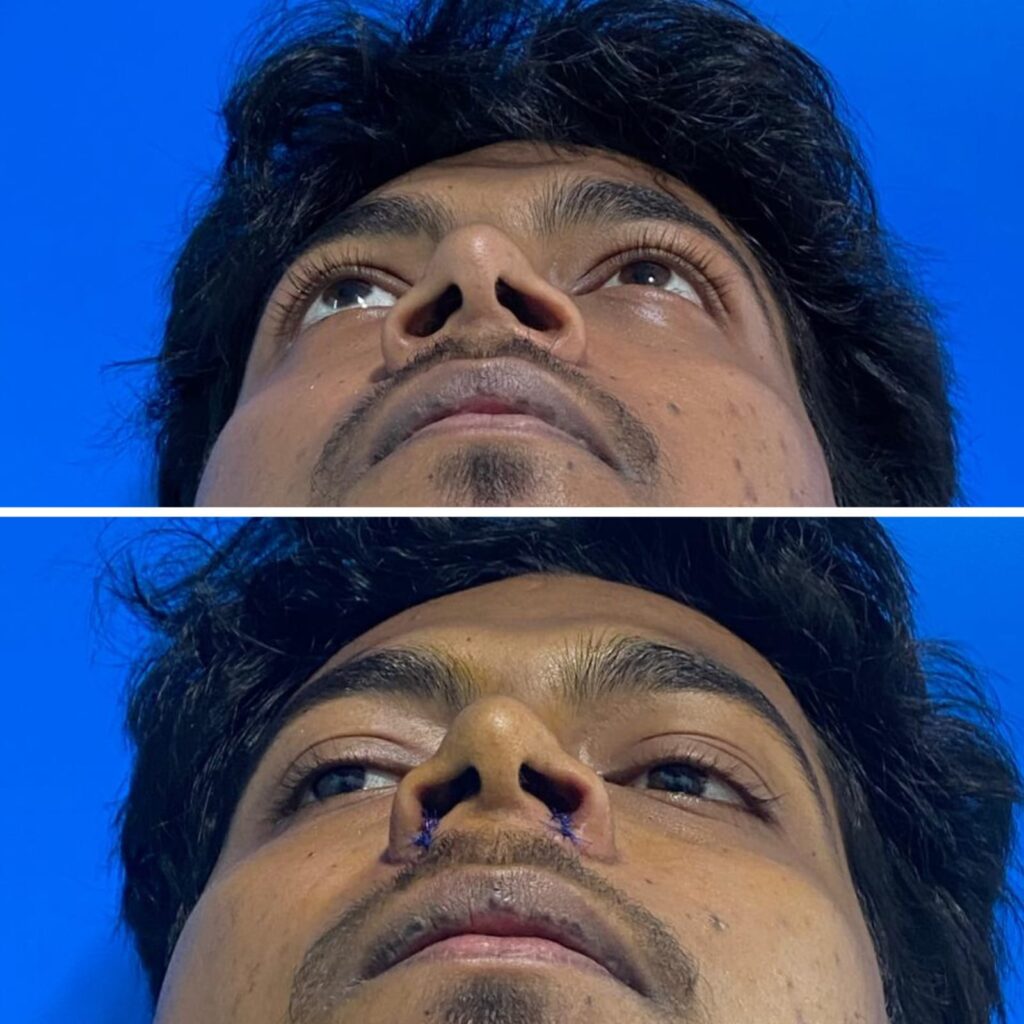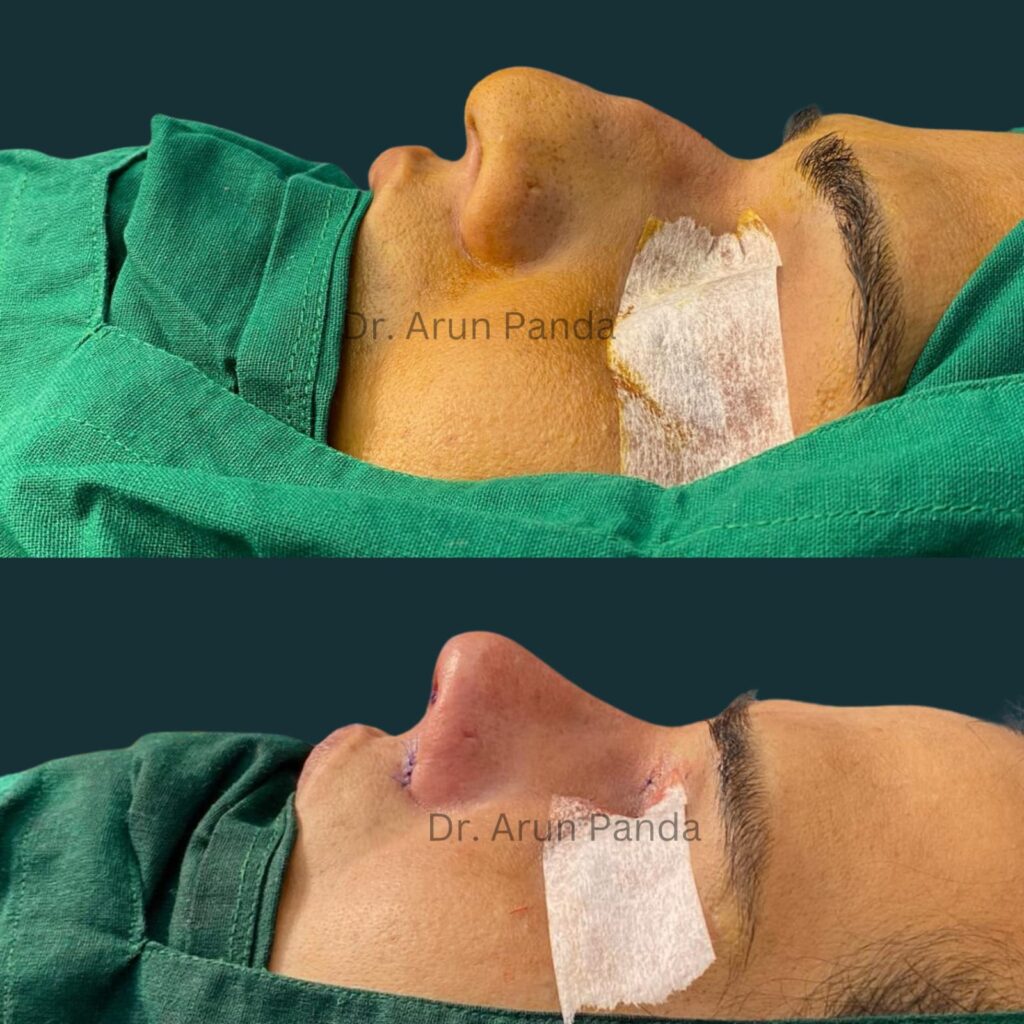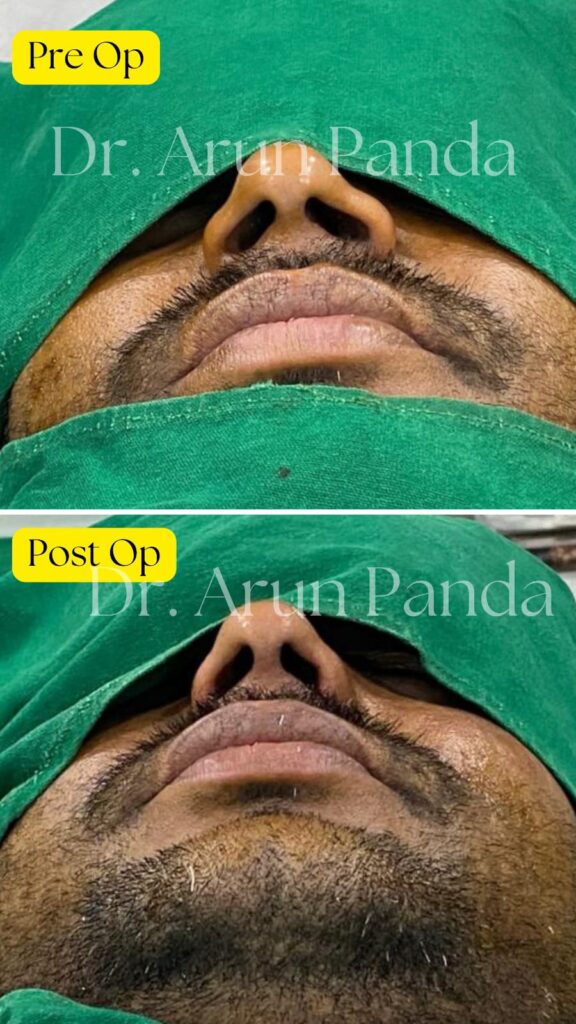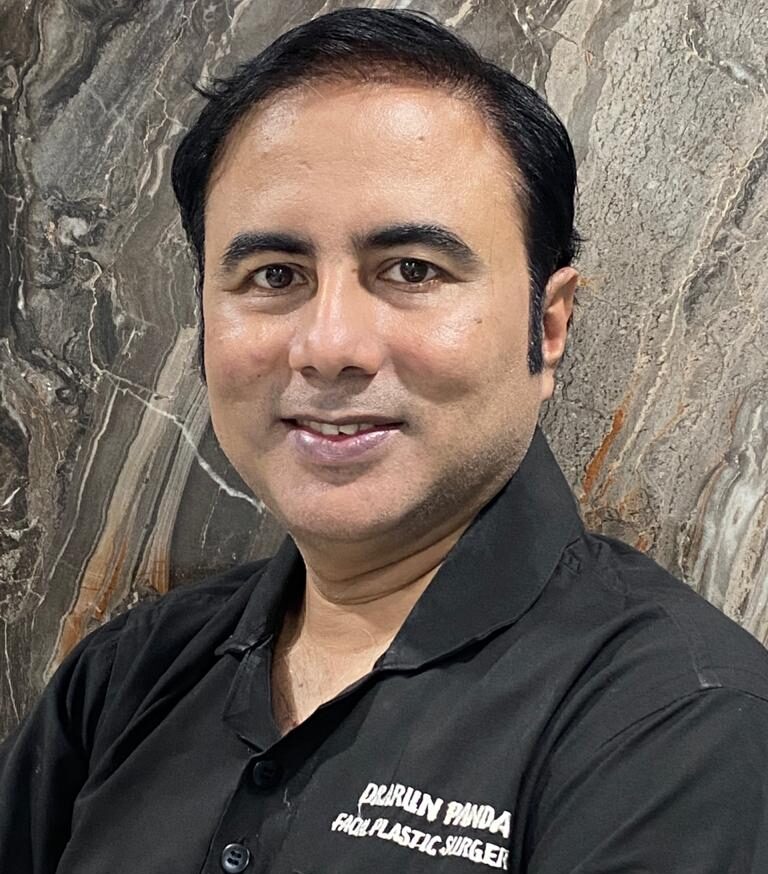
Rhinoplasty in Navi Mumbai

The Nose Is Structural — Not Just Cosmetic
A rhinoplasty is often described as reshaping, which undersells what’s actually happening. The nose is a framework of bone at the top and cartilage below, wrapped in a skin envelope. Change the framework and the skin redrapes over it; weaken the framework and it collapses over years. That’s why the good operations and the disappointing ones diverge less on artistry than on structure — and why noses operated on aggressively in the 1990s so often ended up pinched and functionally obstructed a decade later.
It’s also why breathing and appearance can’t be separated. The same cartilages that define your tip hold your airway open. Reduce them without support and you can end up with a narrower nose that you can’t breathe through — which is why supportive grafting is standard in modern practice rather than optional.

Rhinoplasty for Indian Noses Is a Different Operation
Most rhinoplasty content you’ll read online — and much of the training behind it — is built around Caucasian anatomy, where the commonest request is reducing a dorsal hump. Indian and South Asian noses differ in ways that change the operation fundamentally:
Anatomical feature | What it means surgically | ||
Thicker, more sebaceous skin | Camouflages refinement. The framework must be built to a HIGHER degree of definition for the same result to show externally. | ||
Softer, weaker lower lateral cartilage | Won’t hold tip projection unaided. Structural grafting is needed or definition collapses over time. | ||
Lower dorsal height | Augmentation — building the bridge up — is more commonly indicated than reduction. | ||
Less tip projection, broader tip | Projection and definition are created with cartilage grafts, not by cutting tissue away. | ||
Wider alar base | Alar base reduction may be part of the plan, done conservatively to keep ethnic character. | ||
Longer healing of thick skin | Final result takes 12–18 months, occasionally up to 24 — longer than the 12 months often quoted. | ||
The honest conversation about thick skin If you have thick nasal skin, there is a ceiling on how sharply defined your tip can look, no matter who operates. The skin simply will not shrink-wrap onto a refined framework the way thin skin does. A good surgeon builds a stronger, more defined framework to compensate and gets a genuinely improved, natural result — but if you’re bringing in a photograph of a thin-skinned celebrity nose, the honest answer is that your skin will not do that. We would far rather tell you this before surgery than have you discover it at month nine. Anyone promising you that result on thick skin is either inexperienced or not being straight with you. | |||
Preserving ethnic character
There is a difference between refining a nose and erasing where it came from. The goal is a nose that suits your face and looks like it grew there — better balanced, better functioning — not a template imported from elsewhere. Conservative alar reduction, natural dorsal lines and proportionate projection do far more for a face than an aggressively Westernised result that sits oddly on the features around it.

Before You Book: Is It Your Nose, or Your Chin?
This is worth knowing before you spend anything. The nose is judged in profile relative to the chin. A chin that sits back makes an average nose look large, and a projected chin makes the same nose look proportionate. A meaningful number of people who come asking for rhinoplasty would get a better result from chin augmentation — or from both together.
In profile | Likely issue | What to consider |
Nose prominent, chin projects normally | Genuinely the nose | Rhinoplasty |
Nose looks large, chin sits behind the lip line | Chin under-projection exaggerating the nose | Chin augmentation — sometimes alone |
Both nose and chin out of proportion | Combined imbalance | Rhinoplasty + chin augmentation together |
Chin back AND bite is off | Whole lower jaw retruded | |
Blocked breathing with or without shape concerns | Septal deviation | Septorhinoplasty — function and shape together |

Open or Closed Rhinoplasty?
Open (external) | Closed (endonasal) | |
Incision | Small incision across the columella plus internal | Entirely inside the nostrils |
Scar | Fine line under the nose, usually imperceptible | None visible |
Access | Full direct view of the framework | Limited, more indirect |
Best for | Tip work, structural grafting, asymmetry, revision — most Indian noses | Simpler dorsal work, minor refinement |
Swelling | Slightly more, settles slower | Slightly less |
Precision of grafting | Higher — grafts placed and fixed under direct vision | Lower for complex grafting |
In practice: because most Indian rhinoplasty involves structural grafting to build tip projection, the open approach is frequently the better choice — the columellar scar is a small price for accurate graft placement that holds. Closed rhinoplasty remains excellent for simpler cases. Any surgeon who only ever offers one approach is describing their comfort zone, not your anatomy.

Cartilage or Implant? A Question Worth Asking
If your nose needs augmentation — and most Indian noses do — the material matters a great deal for the long term:
Option | Where from | Advantages | Honest drawbacks |
| |
Septal cartilage | Your own septum | Ideal first choice; straight, strong, same incision | Limited quantity; may be insufficient or already used |
| |
Conchal (ear) cartilage | Back of the ear | Good volume, hidden donor scar | Curved — better for tip than dorsum |
| |
Costal (rib) cartilage | Rib | Large volume; the workhorse for major augmentation and revision | Chest incision, longer surgery, small warping risk |
| |
Silicone implant | Synthetic | Quick, predictable shape, no donor site | Long-term risk of infection, displacement and extrusion needing removal |
| |
| Our position on silicone, stated plainly Silicone dorsal implants are widely used across Asia and can look excellent for years. But they remain a permanent foreign body in a thin-skinned, mobile, exposed area, and the recognised long-term risks — infection, displacement, thinning of the overlying skin and eventual extrusion — don’t disappear with time; they accumulate. Where a patient has adequate cartilage available, we prefer autologous grafting, because a graft that becomes part of you cannot extrude. We’ll discuss both honestly and explain which we’re recommending for you and why, rather than defaulting to whichever is faster. | ||||
Breathing Matters as Much as Shape
A large proportion of people seeking rhinoplasty also have a deviated septum, and many have simply lived with poor nasal breathing for so long they no longer notice it. Correcting both at once — septorhinoplasty — makes clinical and financial sense: one anaesthetic, one recovery, and the functional portion may be partly insurance-eligible where obstruction is documented.
- Deviated septum — straightened, with the removed cartilage often used as graft material.
- Internal nasal valve collapse — supported with spreader grafts, which also refine the dorsal lines.
- Turbinate hypertrophy — reduced where it contributes to obstruction.
- Post-traumatic deviation — straightening a nose broken years ago, restoring both airway and symmetry.
- Preventing surgical obstruction — supportive grafting so that narrowing the nose doesn’t narrow the airway. This is where poorly-planned reduction rhinoplasty causes lasting harm.
Benefits of Rhinoplasty
- Facial balance. The nose sits at the centre of the face; proportion there lifts everything around it.
- A refined tip and straighter profile — the two most-requested changes.
- Better breathing when functional correction is included.
- Correction of post-traumatic deformity — straightening a nose that was broken.
- Proportionate alar base without erasing ethnic character.
- Permanent results — the framework doesn’t revert.
- Gender-affirming refinement as part of FFS or FMS
- Combines well with chin augmentation for profile balance — often the single most transformative pairing in facial surgery.
Concerns It Addresses
- Dorsal hump — reduced, or the dorsum built up around it for a straight line.
- Low or flat bridge — augmented with cartilage; among the commonest Indian requests.
- Bulbous or undefined tip — refined and projected with structural grafts.
- Drooping tip — rotated and supported.
- Wide nose or wide nostrils — narrowed conservatively.
- Crooked or deviated nose — straightened, usually with septal correction.
- Nasal obstruction and poor breathing.
- Previous unsatisfactory rhinoplasty — revision surgery.
- Post-traumatic and saddle-nose deformity — reconstruction with grafting.
Who should wait, or reconsider Anyone whose nose hasn’t finished growing — generally not before about 16 in girls and 17–18 in boys. Anyone in an unstable period of life or seeking surgery to satisfy someone else. Active smokers, until they can stop, since smoking meaningfully impairs healing here. And anyone whose expectations are fixed on a specific photograph rather than a proportionate improvement to their own face — that mismatch, not surgical technique, is the commonest reason for unhappiness after a technically good rhinoplasty. |
The Procedure, Step by Step
- Consultation and nasal analysis. Assessment of skin thickness, cartilage strength, dorsal height, tip support, septum and airway — plus chin projection and overall facial proportion. Photographs from standard angles.
- Planning and expectation-setting. What is achievable for your skin and cartilage, discussed honestly, including where thick skin will limit definition. Simulation can help communicate goals — it is a discussion aid, never a promise.
- Anaesthesia and approach. General anaesthesia; open or closed approach chosen for your anatomy and the work required.
- Framework work. Reshaping bone and cartilage: hump reduction or dorsal augmentation, septal straightening, osteotomies to narrow the bony vault where needed.
- Structural grafting. Cartilage grafts placed and fixed to project the tip, support the airway and hold the framework long-term — the step that determines whether your result lasts.
- Alar base and closure. Conservative nostril narrowing if planned; meticulous closure; splint and internal support applied. Surgery runs 2–4 hours; usually day care or one night.

Downtime & Recovery — the Realistic Version
Timeframe | What to expect |
Days 1–3 | Splint in place; swelling and bruising around the eyes peak. Congestion is normal — you’ll breathe through your mouth initially. |
Days 7–10 | Splint and sutures removed. Bruising fading; the nose looks swollen and upturned — this is not your result. |
Weeks 2–4 | Most people back at work by week two. Visible swelling settling; makeup can cover residual bruising. |
Weeks 6–8 | Socially presentable in photographs; exercise resumed. Tip still firm and swollen. |
Months 3–6 | Around 70–80% of swelling resolved; the shape is clearly emerging. |
Months 12–18 (thick skin: up to 24) | Final tip definition. Thick skin genuinely takes this long — patience is part of the treatment. |
Aftercare
- Sleep elevated for 2 weeks and avoid bending or lifting early on.
- No glasses resting on the bridge for 4–6 weeks — tape them to your forehead or use contact lenses.
- Don’t blow your nose for about two weeks; use saline sprays as directed.
- Strict sun protection — healing nasal skin pigments easily, especially Indian skin.
- No contact sport for 3 months — the bones need that long to be safe from displacement.
- Accept the long tail of swelling. Judging your nose at week six is the most reliable way to make yourself miserable about a result that will be good at month twelve.

Cost of Rhinoplasty in Navi Mumbai
Rhinoplasty is not a fixed-price procedure, and quotes vary because the operations vary — a simple tip refinement and a rib-graft revision are different undertakings. These indicative ranges cover surgeon, anaesthesia, facility and routine follow-up. EMI options are available.
Procedure | Indicative cost (INR) | ||
Tip rhinoplasty only | ₹80,000 – ₹1,50,000 | ||
Primary rhinoplasty (cosmetic) | ₹1,00,000 – ₹2,50,000 | ||
Septorhinoplasty (shape + breathing) | ₹1,20,000 – ₹2,80,000 | ||
Alar base reduction alone | ₹50,000 – ₹90,000 | ||
Augmentation with rib cartilage | ₹2,00,000 – ₹3,50,000 | ||
Revision rhinoplasty | ₹1,80,000 – ₹3,50,000 | ||
Non-surgical rhinoplasty (filler) | ₹20,000 – ₹50,000 per session | ||
What a cheap quote usually leaves out — and the insurance point Before comparing numbers, ask what each quote includes: anaesthetist, operating theatre, graft harvesting, hospital stay, medications, splints, follow-up visits, and what a revision would cost. A quote that looks 40% lower often excludes half of those. Separately, if a deviated septum is genuinely obstructing your breathing, the functional part of a septorhinoplasty may be partly insurance-eligible — it depends on documentation and your policy, so it’s worth asking rather than assuming. We’ll tell you honestly whether your case has a genuine functional component; what we won’t do is manufacture one. | |||
Results Timeline
When | What you’ll see |
Day 10 | Splint off — swollen, upturned, unfamiliar. Normal, and not your result. |
Weeks 3–6 | Major swelling gone; the new profile becomes recognisable. |
Months 3–6 | Shape settling; bridge looks close to final, tip still refining. |
Months 12–18 | Final tip definition — longer with thicker skin. |
Long term | Stable and permanent when the framework was properly supported. |
Surgical vs Non-Surgical Rhinoplasty
Surgical rhinoplasty | Non-surgical (filler) | |||
Can do | Reduce, reshape, refine, straighten, improve breathing | Camouflage a hump, lift the tip slightly, straighten a mild deviation | ||
Cannot do | — | Make a nose SMALLER — it only adds volume | ||
Duration | Permanent | 12–18 months | ||
Downtime | 1–2 weeks visible | 1–2 days | ||
Cost pattern | One-off | Repeating | ||
A safety point about non-surgical nose jobs that deserves more attention Filler in the nose is not a lightweight version of rhinoplasty — it is one of the highest-risk areas on the face for injectable treatment. The nasal blood supply connects to vessels supplying the eye, and vascular occlusion here, though rare, can cause skin necrosis or vision loss. It should only ever be performed by an experienced medical injector with hyaluronidase immediately available and a clear emergency protocol. It is also much riskier after previous rhinoplasty, where scarring alters the vasculature. Non-surgical rhinoplasty is genuinely useful for the right, limited indications — but not because it is trivial. | ||||
Risks, and the Revision Question
Rhinoplasty is safe in trained hands, but it is widely regarded as one of the most technically demanding operations in facial surgery, and you deserve the honest picture. General risks include bleeding, infection and anaesthetic reaction. Specific issues include persistent swelling, asymmetry, breathing difficulty if support was inadequate, irregularities palpable or visible along the dorsum, altered tip sensation for months, and graft warping or resorption.
On revision: even in experienced hands, a proportion of rhinoplasties — commonly cited in the region of 5–15% — need a revision procedure, usually minor. That is not a reflection of poor surgery; it reflects how much of the outcome depends on individual healing and skin behaviour that no surgeon fully controls. Ask any surgeon what their revision rate is and what their policy is on revision costs. A confident, specific answer tells you more than a glossy gallery.

Why Dr. Arun Panda — Facial Surgery, Not Just Nose Surgery
Dr. Arun Panda is a Cranio-Maxillofacial and fellowship-trained Facial Plastic and Cosmetic Surgeon with 18+ years of experience, and founder of Trinity Aesthetics Academy, where he trains other doctors. For rhinoplasty in Navi Mumbai, the relevant advantages are anatomical breadth and honest planning.
- The nose planned within the whole face. Profile is nose AND chin. If chin augmentation would give you more than rhinoplasty — or if you need both — that’s what you’ll be told.
- Structural technique for Indian anatomy. Cartilage grafting to build and hold tip projection, rather than reduction techniques designed for different noses.
- Function assessed alongside form. Septum and airway examined as standard — not treated as someone else’s department.
- Facial skeleton expertise. Nasal bones, osteotomies and post-traumatic deformity sit within maxillofacial training, alongside jaw surgery for cases where the skeletal base is part of the problem.
- Autologous-first philosophy on grafting, with silicone discussed openly rather than defaulted to.
- Realistic expectations set before surgery, including the thick-skin conversation — which is the single biggest predictor of a happy patient at month twelve.
Centrally located in Vashi — serving Navi Mumbai and Mumbai Bodyskulpt Aesthetics is in the heart of Vashi, easily reached from Kharghar, Panvel, Belapur, Nerul, Airoli, Thane and across Mumbai. Rhinoplasty is a planned procedure with staged follow-up, so out-of-town patients are scheduled efficiently and video consultations are available beforehand. EMI options available. |
Frequently Asked Questions
How much does rhinoplasty cost in Navi Mumbai?
Primary cosmetic rhinoplasty runs approximately ₹1,00,000–₹2,50,000, septorhinoplasty (shape plus breathing correction) ₹1,20,000–₹2,80,000, tip-only rhinoplasty ₹80,000–₹1,50,000, and revision rhinoplasty ₹1,80,000–₹3,50,000. Rib-graft augmentation runs ₹2,00,000–₹3,50,000. Always confirm whether the quote includes anaesthesia, theatre, grafts, hospital stay, medications and follow-up. EMI options are available.
Is rhinoplasty different for Indian noses?
Yes, meaningfully. Indian noses typically have thicker skin, softer lower lateral cartilage, a lower bridge and less tip projection. That means most Indian rhinoplasty involves building the framework up with cartilage grafts rather than the hump reduction that dominates Western rhinoplasty. Thicker skin also camouflages refinement, so the framework must be built more sharply than the desired external result, and the final shape takes longer to appear.
Will thick skin affect my rhinoplasty result?
Yes. Thick, sebaceous nasal skin doesn’t shrink-wrap onto a refined framework the way thin skin does, so there’s a genuine ceiling on how sharply defined the tip can look, regardless of surgeon. A good result is still very achievable — it’s built by creating a stronger, more defined cartilage framework underneath — but if your reference photograph is a thin-skinned nose, that specific look isn’t realistic. Swelling also takes longer to settle, with final definition at 12–18 months and sometimes up to 24.
Open or closed rhinoplasty — which is better?
It depends on what needs doing. Closed rhinoplasty leaves no external scar and suits simpler dorsal work. Open rhinoplasty uses a small columellar incision — usually imperceptible once healed — and gives direct view of the framework, which matters for tip work, structural grafting, asymmetry and revision. Because most Indian noses need grafting to build tip projection, the open approach is frequently the better choice.
Can rhinoplasty fix my breathing too?
Yes, and it often should. Septorhinoplasty corrects a deviated septum and supports the internal nasal valve at the same time as reshaping, so you get one anaesthetic and one recovery. Where obstruction is documented, part of the cost may be insurance-eligible. Importantly, reduction rhinoplasty without proper support can worsen breathing, which is why supportive grafting is standard in modern practice.
How long is recovery after a nose job?
The splint comes off at 7–10 days and most people return to work around week two. Bruising fades within two weeks, and by weeks 6–8 you’ll look presentable in photographs. However 70–80% of swelling resolves by months 3–6 and the final tip definition appears at 12–18 months — up to 24 with thick skin. No contact sport for three months.
Is non-surgical rhinoplasty a good alternative?
For limited indications, yes — filler can camouflage a small dorsal hump, lift the tip slightly or straighten a mild deviation, with minimal downtime. But it can only ADD volume, so it cannot make a nose smaller. It also carries real risk: the nose is one of the highest-risk facial areas for filler, with rare but serious vascular complications including skin necrosis and vision loss, so it should only be done by an experienced medical injector with hyaluronidase on hand.
What if I’m not happy with my result?
Even in experienced hands, roughly 5–15% of rhinoplasties need a revision, usually minor — largely because healing and skin behaviour vary between individuals. Revisions are generally not considered before 12 months, since swelling must fully settle first. Ask any surgeon directly about their revision rate and revision cost policy before you book; a specific answer is a good sign.
What age is appropriate for rhinoplasty?
The nose should have finished growing — generally around 16 in girls and 17–18 in boys. Operating earlier risks interfering with growth and producing a result that changes as the face matures. There’s no upper age limit provided you’re in good general health.
Book a Nasal Assessment
An honest plan for your nose — and your face around it. Book with Dr. Arun Panda at Bodyskulpt Aesthetics, Sector 9, Vashi, Navi Mumbai. You’ll get your skin thickness, cartilage strength, septum, airway and facial proportion assessed together, a frank conversation about what is achievable for your anatomy, and an itemised quote covering everything. Video consultations available for patients travelling from other cities. Explore chin augmentation, facial feminization surgery, or book a consultation. Call / WhatsApp: 9152020907 / 9152020908 • drarunpanda.com • EMI available |
Authoritative references
For independent information, see the American Society of Plastic Surgeons on rhinoplasty, Mayo Clinic and a systematic review of rhinoplasty in thick-skinned noses (PubMed).
Educational information only and not a substitute for an in-person surgical consultation. Rhinoplasty outcomes depend substantially on individual skin thickness, cartilage quality and healing; results, costs and recovery vary between individuals.
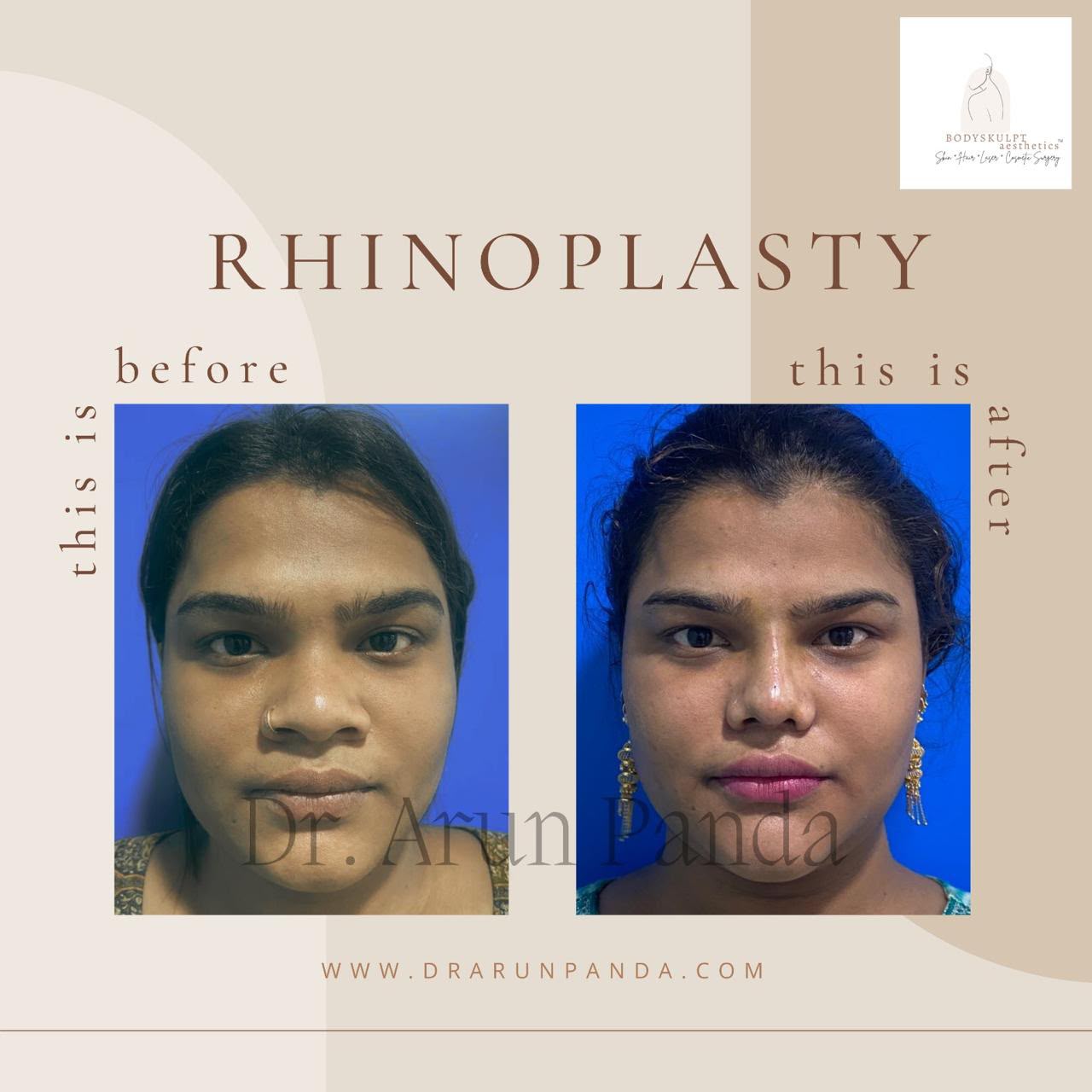
Please reach out to us through the contact details below.
- Website: https://drarunpanda.com/
- Phone: +919152020907, +919152020908
- Address: Dr. Arun Panda, BodySkulpt Aesthetics, F1/A-4, Aditi Apartments, Sector 9, Vashi, Navi Mumbai – 400703
- Facebook: https://www.facebook.com/DrArunPanda
- Instagram: https://www.instagram.com/drarunpanda/
- Youtube: https://www.youtube.com/DrArunPanda
- LinkedIn: https://www.linkedin.com/in/drarunpanda
- Twitter: https://twitter.com/DrArunPanda1
- Email: facialaestheticsindia@gmail.com
- Google Directions: https://g.page/DrArunPanda?gm