Buccal Fat Removal in Navi Mumbai
What the Buccal Fat Pad Actually Is
The buccal fat pad is a distinct, self-contained pocket of deep fat that sits in the hollow beneath your cheekbone, between the facial muscles. Everyone has one. Its size varies enormously between individuals and it’s largely genetic, which is why some people keep round cheeks no matter how lean they get. It finishes developing around age 20.
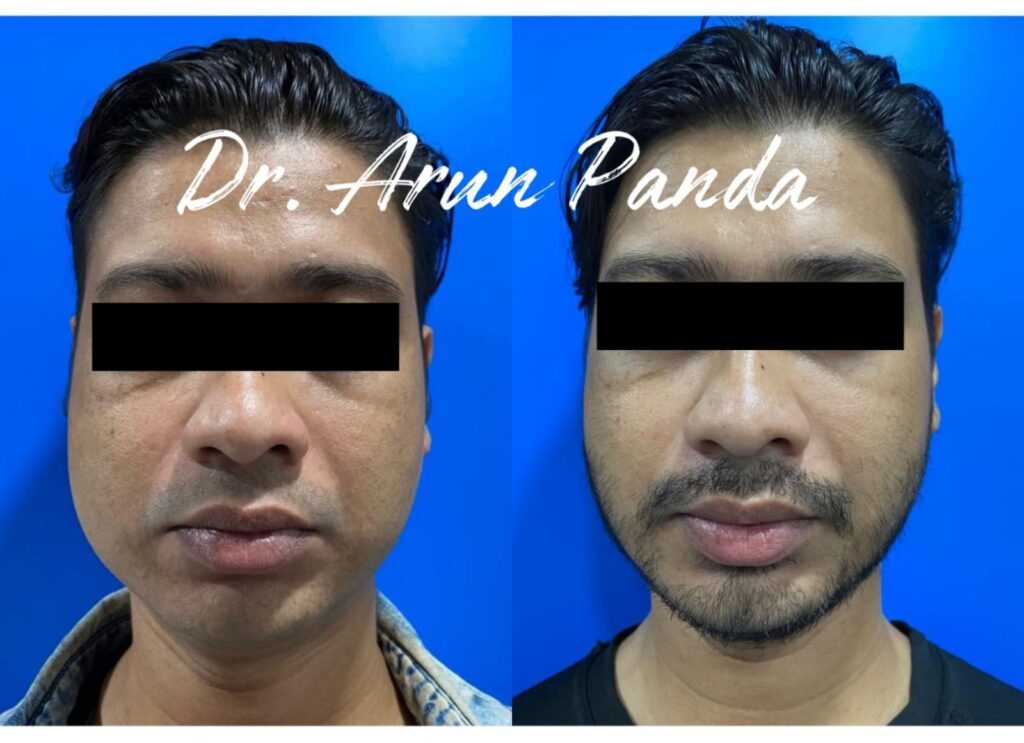
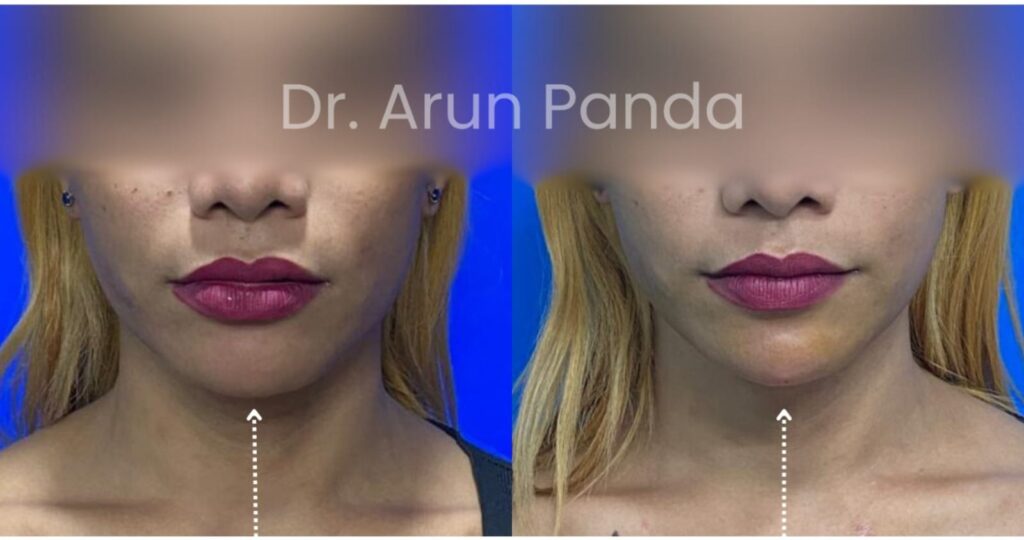
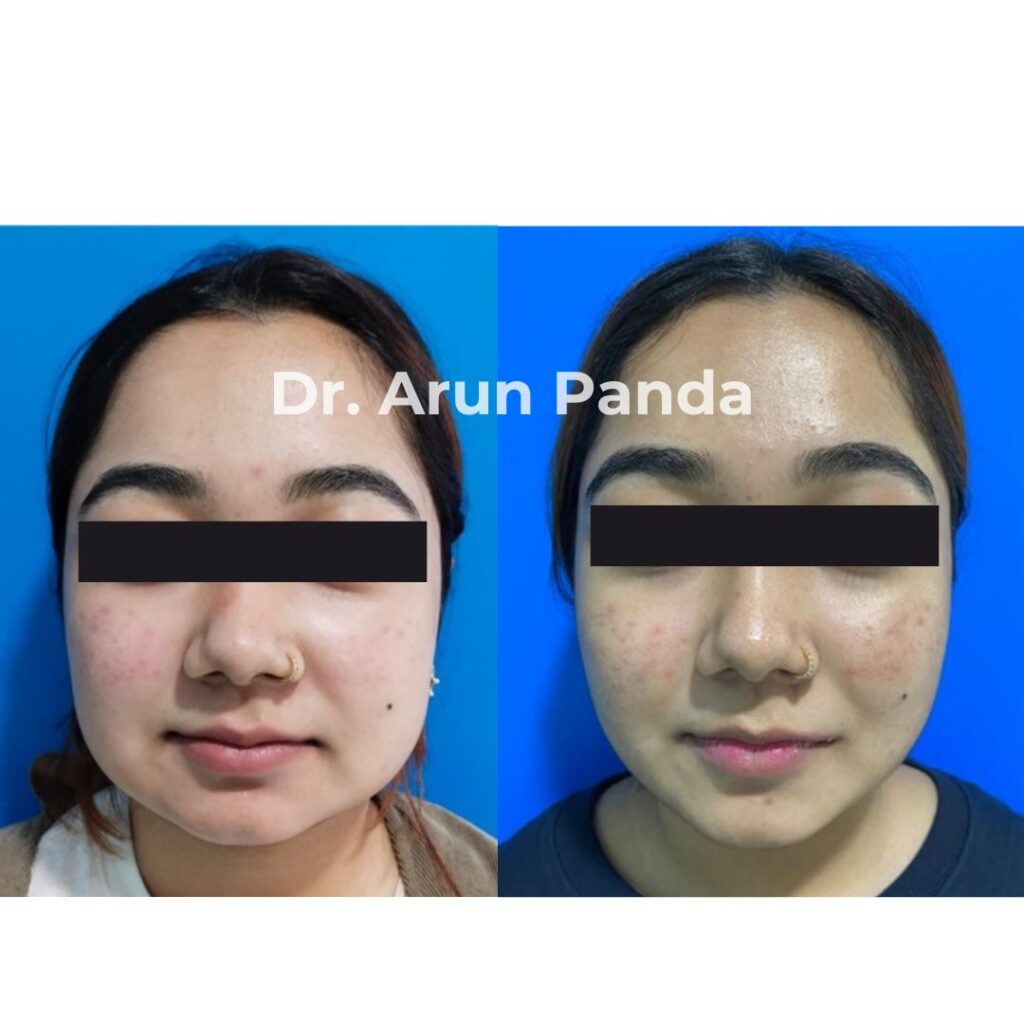
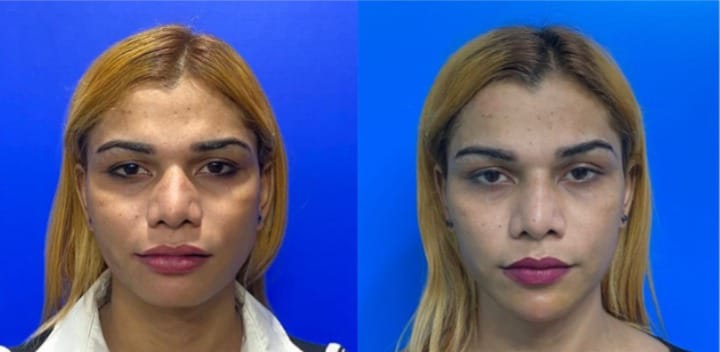
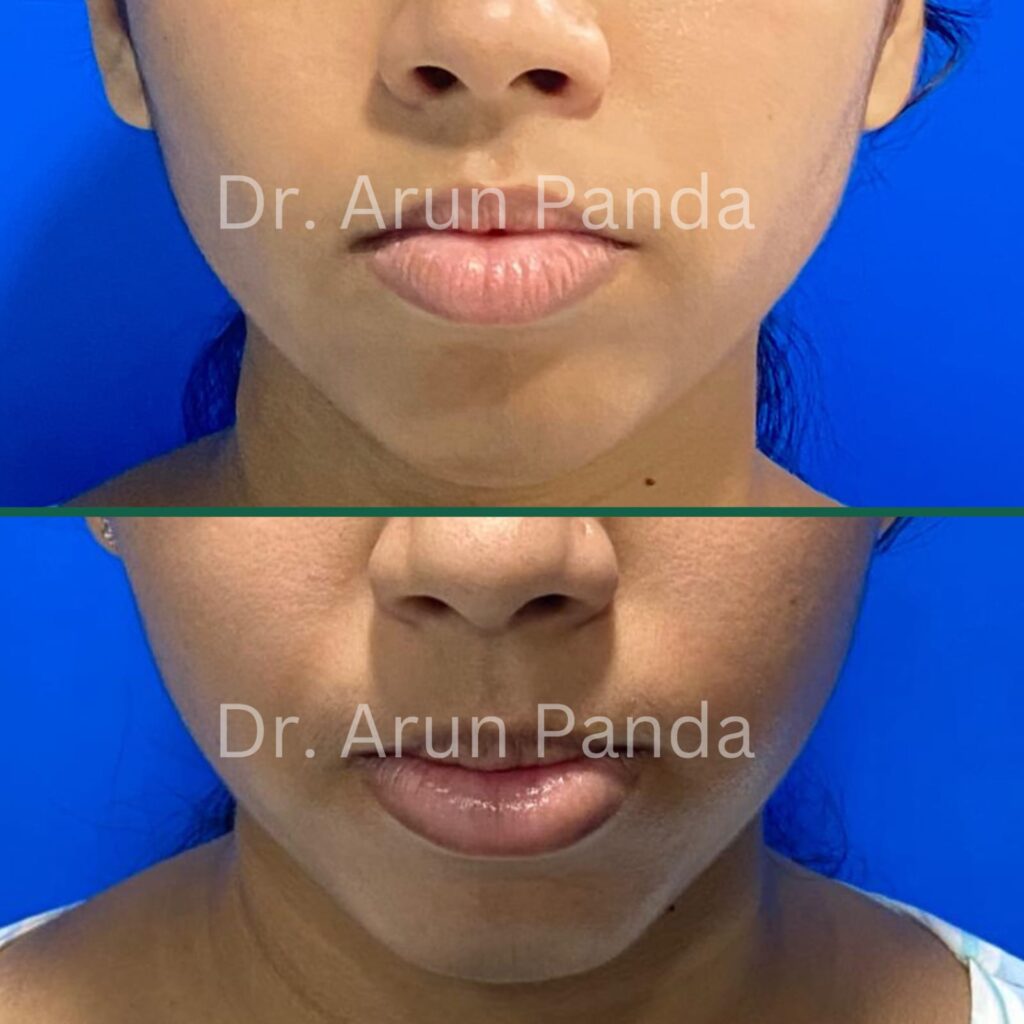
Because it’s deep and discrete, it can be removed through a small incision on the inside of the cheek leaving no visible scar anywhere on the face. The result is a subtle slimming of the lower cheek and a defined shadow under the cheekbone. It doesn’t tighten skin, it doesn’t sharpen the jawline bone, and it doesn’t treat a double chin. It does one specific thing, well, for the right patient.
One point of local relevance rarely mentioned: buccal fat pad size differs by ethnicity, and Asian patients typically have larger pads than patients of European descent. That means both a more visible result when surgery is appropriate and more scope for over-resection when it isn’t planned carefully.
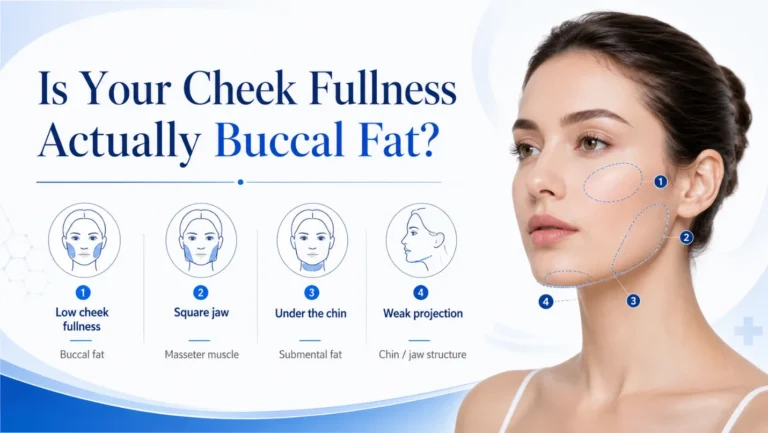
Is Your Cheek Fullness Actually Buccal Fat?
This is the question that decides whether this surgery will do anything for you — and it’s the one most clinics skip, because the honest answer is often ‘no’. ‘Chubby cheeks’ and a soft lower face have several different causes, and only one of them is buccal fat. Removing the pad when your fullness comes from something else changes nothing, permanently:
What you see | Likely cause | What actually treats it | ||
Rounded fullness low on the cheek, below the cheekbone | Prominent buccal fat pad | Buccal fat removal | ||
Wide, square lower face; a hard bulge when you clench | Masseter muscle hypertrophy | Masseter Botox — not surgery | ||
Generalised facial fullness with overall weight | Subcutaneous fat | Weight management first — the face follows | ||
Fullness under the chin and jaw | Submental fat | |||
Round-looking face with a weak jaw or chin | Skeletal proportion, not fat | |||
Soft, sagging lower face with age | Skin laxity and descent | |||
A five-second self-check — then get it confirmed Buccal fat sits LOW on the cheek, below the cheekbone, and tends to look rounder when you smile. Masseter bulk sits further back near the jaw angle and becomes hard when you clench your teeth — put your fingers there and bite down; if the bulge firms up, that’s muscle, and Botox is your answer, not a scalpel. This is a useful indication, not a diagnosis: the definitive assessment is an examination, including feeling the pad from inside the mouth. | ||||
The Honest Question: Will This Make Me Look Gaunt Later?
It can and this is the single most important thing to understand before booking. Your face loses subcutaneous fat naturally as you age, at roughly 1–2% per year after about 35. The buccal fat pad is part of your mid-face’s natural support. Remove too much of it in your twenties and you’re subtracting volume from a face that is already scheduled to lose more which is how a look that’s sharp at 25 becomes hollow and prematurely aged at 45.
This isn’t hypothetical. It’s why the procedure has become controversial after a surge of social-media popularity, why some surgeons now decline it in patients under 30, and why a proportion of people who had aggressive resections are now paying for fat grafting to put volume back an expensive correction with no guarantee of restoring the original contour. Removed fat does not grow back.
How we handle that risk
- Conservative resection, always. We remove a measured portion of the pad — typically around 40–50% — rather than the whole thing. Aggressive removal is what produces irreversible hollowing.
- Age and facial type are part of the decision. A round, genuinely full face at 28 is a different proposition from a slim face at 22 chasing a trend.
- We assess your whole face, not just the pad. Cheekbone projection, skin quality and how your face is likely to age all feed the plan.
- You can always remove more later; you can never put it back. Under-correcting is a fixable mistake. Over-correcting isn’t.
- Sometimes the answer is no. If your fullness is muscle, weight or bone — or if you’re slim already — we’ll say so and point you to what would actually work.
Benefits of Buccal Fat Removal
- Defined lower cheeks. A cleaner hollow beneath the cheekbone and a more sculpted mid-face.
- More visible cheekbone structure. Reducing the fullness below lets the bone above read more clearly.
- A slimmer facial profile for genuinely round or full lower faces.
- No visible scarring. The incision is inside the mouth and heals quickly.
- Quick, minimally invasive. 30–45 minutes under local anaesthesia; home the same day.
- Removed fat cells don’t return — a one-time procedure.
- Combines well. Often planned alongside chin augmentation, fillers or double chin reduction for a complete lower-face result.
Areas & Concerns It Addresses
- Lower cheeks — the primary target: fullness sitting below the cheekbone.
- Mid-face contour — creating a defined sub-cheekbone hollow.
- ‘Baby face’ roundness in adults with genuinely prominent pads.
- Facial width at the mid-cheek — narrowing the widest soft-tissue point.
- Pseudoherniation of the buccal pad — a visible rounded bulge caused by a lax, prominent pad.
- Facial asymmetry where one pad is noticeably larger than the other.
- Gender-affirming facial contouring — as one component of a considered surgical plan.
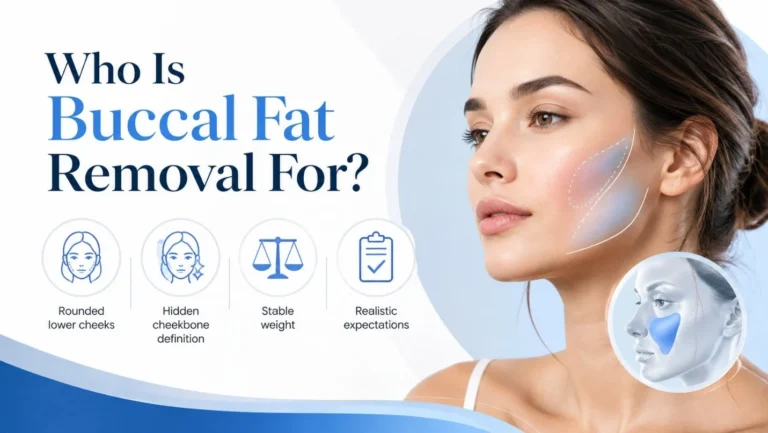
Who Is a Good Candidate and Who Isn’t
Well suited
- Genuinely full, rounded lower cheeks with a normal, stable body weight.
- Good skin elasticity and defined underlying bone structure.
- Typically mid-20s to 40s — the pad is fully developed and facial fat distribution is stable.
- Realistic expectations — wanting refinement, not a transformed face shape.
- Non-smokers in good general health with healthy gums and teeth.
Not suitable and we’ll tell you
- Naturally slim or narrow faces — high risk of a gaunt result now and worse later.
- Fullness that’s actually masseter muscle, weight or skeletal — see the table above; surgery won’t help.
- Significant unstable weight — the face changes with weight; settle first.
- Older patients already showing volume loss — subtraction is the wrong direction; volume restoration usually suits better.
- Very young patients chasing a trend — a permanent operation is the wrong answer to a passing aesthetic.
- Active gum or dental infection, uncontrolled diabetes, or bleeding disorders — treat first.
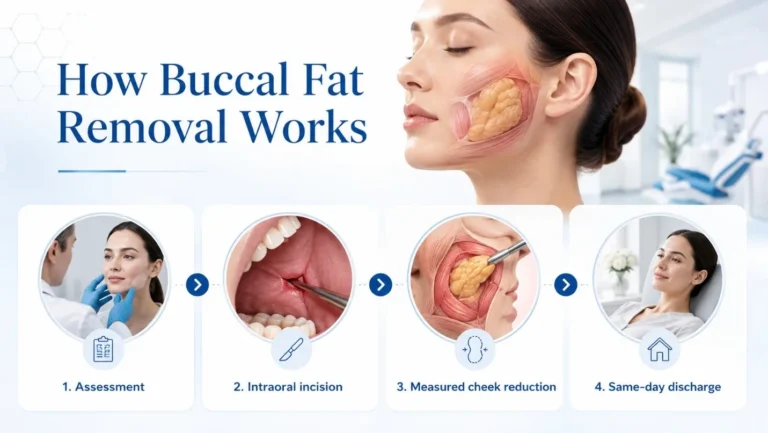
The Procedure, Step by Step
- Consultation & examination. Your facial proportions are assessed and the pad palpated from inside the mouth to confirm the fullness is genuinely buccal fat — plus an honest conversation about permanence and ageing.
- Planning & marking. How much to remove from each side is decided — including correcting any asymmetry — with a conservative target agreed in advance.
- Local anaesthesia. The inside of the cheek is numbed. You’re awake and comfortable; sedation is available for anxious patients.
- Small intraoral incision. About 1 cm inside the cheek, opposite the upper molars — nothing on the outside of the face.
- Careful delivery of the pad. Gentle pressure delivers the fat pad into view; the measured portion is removed with meticulous attention to the buccal branch of the facial nerve and the parotid duct.
- Dissolvable sutures & home. Both sides checked for symmetry, closed with dissolvable stitches. Total: 30–45 minutes, home the same day.
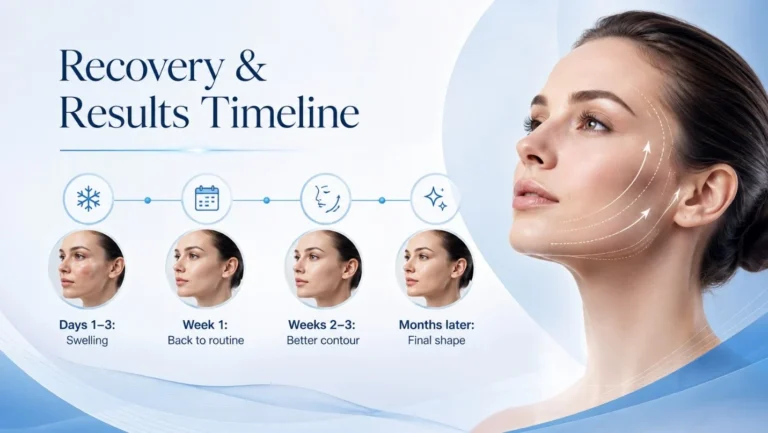
Downtime & Recovery
Timeframe | What to expect |
Days 1–3 | Peak swelling — cheeks look FULLER than before, not slimmer. This is normal. Soft diet, ice, head elevated. |
Days 4–7 | Swelling begins to settle; jaw stiffness (trismus) is common and eases. Most return to work around day 5–7. |
Weeks 2–3 | Most swelling resolved; the change starts to become visible. |
Weeks 4–6 | Normal chewing restored; contour emerging clearly. |
Months 3–6 | Final result — judge it here, not before. |
Aftercare
- Soft diet for about a week — nothing crunchy, spicy or very hot.
- Prescribed antiseptic mouth rinses after every meal; oral hygiene protects the incision.
- Sleep with your head elevated for the first few nights to limit swelling.
- No strenuous exercise or facial massage for about a week.
- Expect to look worse before better — the day-3 puffiness is not your result. Don’t book this the week before an event.
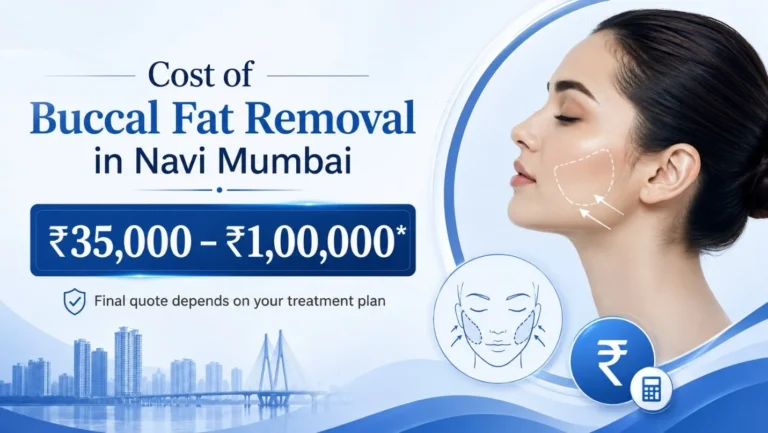
Cost of Buccal Fat Removal in Navi Mumbai
Cost depends on anaesthesia (local vs sedation), surgical complexity, whether asymmetry correction is needed, and whether it’s combined with other procedures. These are honest indicative ranges for Navi Mumbai; your exact quote follows assessment. EMI options are available.
Procedure | Indicative cost | ||
Buccal fat removal (both sides, local anaesthesia) | ₹35,000 – ₹70,000 | ||
With sedation / anaesthetist | ₹60,000 – ₹1,00,000 | ||
Combined with chin augmentation | Quoted together — usually less than separately | ||
Combined with double chin reduction | Quoted together at consultation | ||
Revision / asymmetry correction | Assessed case by case | ||
What the quote should include — and the one thing price can’t buy back A fair quote covers the surgeon’s fee, facility, anaesthesia, medications and follow-up reviews; ask specifically about GST and revision policy. But the more important comparison isn’t price — it’s judgement. This operation is irreversible and takes place millimetres from the facial nerve and the parotid duct. The cheapest quote in the market is a poor reason to accept less experience in exactly the anatomy where experience matters most. | |||
Results Timeline
When | What you’ll see |
Week 1 | Swelling only — fuller, not slimmer. Not your result. |
Weeks 2–3 | Swelling settles; first genuine glimpse of the new contour. |
Weeks 4–8 | Definition becomes clear as residual swelling resolves. |
Months 3–6 | Final, settled result — the fair point to judge outcome. |
Long term | Permanent. The face still ages and responds to weight change. |
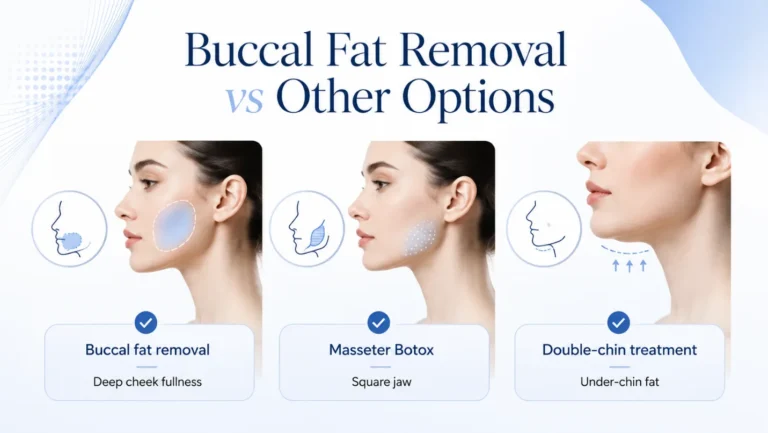
Buccal Fat Removal vs the Alternatives
Option | Best for | Permanent? | Downtime |
Buccal fat removal | Genuine buccal fat fullness low on the cheek | Yes — irreversible | 5–7 days |
Masseter Botox | Square lower face from muscle bulk | No — 4–6 monthly | None |
Cheek liposuction | Superficial fat — a different layer entirely | Yes | 5–7 days |
Round look caused by weak chin projection | Yes (implant) | 7–10 days | |
Age-related softening, not fat | No — maintained | 0–3 days | |
Adding structure above rather than removing below | No — 12–18 months | 1–2 days |
A frequently-missed distinction: cheek liposuction and buccal fat removal are not the same operation. Liposuction addresses the superficial fat layer; buccal fat removal excises a deep, discrete pad. Confusing the two is a common way for patients to end up with the wrong procedure.
Risks & Safety — the Honest Numbers
In experienced hands this is a safe, quick procedure — but it isn’t trivial, and you deserve real figures rather than reassurance. Published complication data reports temporary swelling in a large majority of patients, restricted jaw opening (trismus) in roughly a third, visible asymmetry in around one in ten, haematoma in a small minority, and infection uncommonly. Permanent nerve weakness is rare, reported at around 1–2%.
Why anatomy expertise matters here specifically: the buccal branch of the facial nerve and the parotid (Stensen’s) duct both run in close proximity to the pad — anatomical studies have found the parotid duct crossing directly over the buccal fat pad in a substantial proportion of people. Injury to the duct can cause chronic salivary leakage and swelling; injury to the nerve can affect your smile. These are uncommon, and they are overwhelmingly a function of who is operating and how carefully the pad is delivered.
The two risks worth weighing most
- Over-resection and hollowing — the leading long-term regret, irreversible without fat grafting. Managed by conservative removal.
- Asymmetry — pads differ naturally between sides; careful measured removal and intraoperative comparison reduce it, and minor differences can settle as swelling resolves.

Why Dr. Arun Panda a Maxillofacial Surgeon Operating in His Own Anatomy
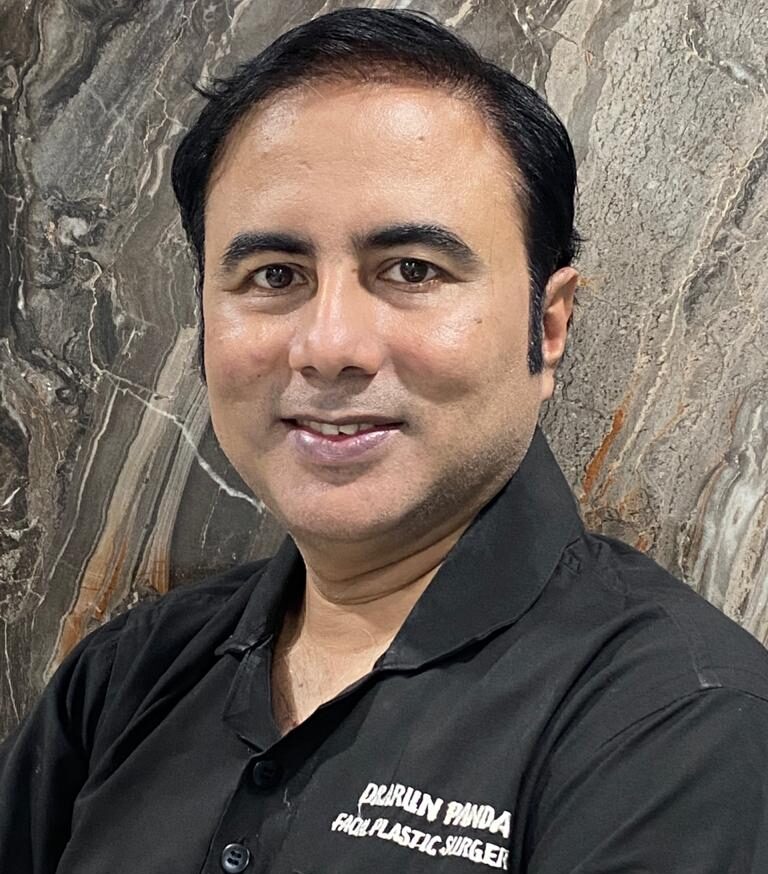
Buccal fat removal happens inside the mouth, millimetres from the facial nerve, the parotid duct and the masseter. That region — the deep architecture of the mid and lower face — is precisely the territory of a cranio-maxillofacial surgeon. Dr. Arun Panda is a Cranio-Maxillofacial and fellowship-trained Facial Plastic and Cosmetic Surgeon and founder of Trinity Aesthetics Academy, where he trains other doctors in aesthetic procedures. For a buccal fat removal surgeon in Navi Mumbai, operating in familiar anatomy is not a marketing line — it’s the whole risk profile of this procedure.
- Intraoral surgery is routine ground. Maxillofacial training means this approach, and this anatomy, are everyday work.
- Correct diagnosis before surgery. Buccal fat, masseter bulk, submental fat and skeletal proportion are distinguished properly — so you get the operation you actually need, or none.
- Conservative, measured resection. Planned to look right at 45, not only at 25.
- The full lower-face toolkit. If masseter Botox, chin augmentation, double chin reduction or jaw surgery would serve you better, that’s what we’ll recommend.
- He trains other practitioners. As founder of Trinity Aesthetics Academy, Dr. Panda teaches aesthetic technique to other doctors.
Centrally located in Vashi — serving Navi Mumbai and Mumbai Bodyskulpt Aesthetics is in the heart of Vashi, easily reached from Kharghar, Panvel, Belapur, Nerul, Airoli, Thane and across Mumbai. Book a facial-contour assessment for a proper diagnosis and an honest recommendation — including when the answer is not to operate. EMI options available. |
Frequently Asked Questions
How much does buccal fat removal cost in Navi Mumbai?
Indicatively ₹35,000–₹70,000 for both sides under local anaesthesia, and ₹60,000–₹1,00,000 where sedation and an anaesthetist are involved. Combining it with chin augmentation or double chin reduction is usually quoted together and costs less than doing them separately. Ask whether the quote includes GST, medications, follow-ups and revision policy. EMI options are available.
Is buccal fat removal permanent?
Yes — the removed fat cells do not grow back, so the result is permanent. But your face continues to age and to respond to weight change, so the result isn’t frozen. This permanence is exactly why conservative removal matters: you can always remove more later, but you cannot put it back without fat grafting.
Will buccal fat removal make me look gaunt when I’m older?
It can if too much is removed or if you weren’t a good candidate. Facial fat naturally declines with age — roughly 1–2% per year after about 35 — so an aggressive resection in your twenties can read as hollow in your forties. This is why we remove a measured portion (typically around 40–50% of the pad) rather than all of it, and why we decline the procedure for naturally slim faces.
How do I know if my chubby cheeks are buccal fat or something else?
Buccal fat sits low on the cheek, below the cheekbone. If your fullness is a wide, square lower face that becomes hard when you clench your teeth, that’s masseter muscle and Botox treats it — not surgery. Fullness under the chin is submental fat; generalised fullness usually tracks body weight; and a round-looking face with a weak chin is a skeletal proportion issue. An examination, including feeling the pad from inside the mouth, gives the definitive answer.
Is there a visible scar after buccal fat removal?
No. The incision is about a centimetre long and sits inside the cheek, opposite the upper molars, closed with dissolvable stitches. There is no incision anywhere on the outside of the face.
What is the recovery time?
Most people return to work in 5–7 days. Expect peak swelling on days 1–3 — when your cheeks will look fuller, not slimmer — with jaw stiffness that eases over the first week, a soft diet for about a week, and most swelling gone by weeks 2–3. The final contour appears at 3–6 months.
What are the risks of buccal fat removal?
Common and temporary: swelling, jaw stiffness (reported in roughly a third of patients), bruising and minor asymmetry. Less common: haematoma, infection, and injury to the buccal branch of the facial nerve or the parotid duct — usually temporary, with permanent nerve weakness rare at around 1–2%. The most significant long-term risk is over-resection causing hollowing, which is why conservative removal and candidate selection matter.
What is the right age for buccal fat removal?
Generally mid-20s to 40s. The buccal fat pad finishes developing around age 20, and facial fat distribution should be stable before removing any. Many surgeons are cautious about operating on very young patients, because a permanent subtraction is a poor answer to a trend — and because the ageing face will lose more volume on its own.
Can buccal fat removal be combined with other procedures?
Yes, and often it should be. Lower-face definition frequently comes from a combination — buccal fat removal with chin augmentation for projection, double chin reduction for the submental area, or masseter Botox for muscle width. Planning them together generally gives a more harmonious result than a single procedure in isolation.
Book a Facial Contour Assessment
A proper diagnosis first — including an honest ‘no’ if that’s the right answer. Book with Dr. Arun Panda at Bodyskulpt Aesthetics, Sector 9, Vashi, Navi Mumbai. You’ll get your cheek fullness correctly diagnosed — buccal fat, muscle, weight or bone — a conservative surgical plan if surgery suits you, a clear view of what it will look like in twenty years, and an itemised quote. Explore chin augmentation, double chin reduction and masseter Botox, or book a consultation. Call / WhatsApp: 9152020907 / 9152020908 • drarunpanda.com • EMI available |
Authoritative references
For independent information, see the American Society of Plastic Surgeons, Cleveland Clinic and peer-reviewed complication data on buccal fat pad removal.
Educational information only and not a substitute for an in-person surgical consultation. Buccal fat removal is permanent and irreversible; suitability, results and risks vary between individuals.
Please reach out to us through the contact details below.
- Website: https://drarunpanda.com/
- Phone: +919152020907, +919152020908
- Address: Dr. Arun Panda, BodySkulpt Aesthetics, F1/A-4, Aditi Apartments, Sector 9, Vashi, Navi Mumbai – 400703
- Facebook: https://www.facebook.com/DrArunPanda
- Instagram: https://www.instagram.com/drarunpanda/
- Youtube: https://www.youtube.com/DrArunPanda
- LinkedIn: https://www.linkedin.com/in/drarunpanda
- Twitter: https://twitter.com/DrArunPanda1
- Email: facialaestheticsindia@gmail.com
- Google Directions: https://g.page/DrArunPanda?gm