
Is a hair transplant safe? A plain-English look at the real risks, the myths, and how to choose a clinic that keeps you safe — from a surgeon-led practice in Navi Mumbai.
| Quick answer: Is a hair transplant safe? Yes — a hair transplant is one of the safest cosmetic procedures available when it’s done by a qualified surgeon in a sterile, accredited setting. It’s minimally invasive, performed under local anaesthesia as a day-care procedure, and serious complications are rare. The real risks aren’t the surgery itself — they’re choosing the wrong clinic: unqualified “technician-run” centres, over-harvested donor areas, and unhygienic facilities. Pick the surgeon carefully and the procedure is safe, with most people back to normal life within a week. |
If you’ve typed “is a hair transplant safe” into Google at 1 a.m., you’re not alone — it’s one of the most common worries people have before booking. And it’s a fair question, because hair restoration has a wide quality range, from excellent surgeon-led clinics to cut-price “graft factories.” This guide gives you the straight, simple, honest version: what the genuine risks are, which scary stories are myths, and — most importantly — how to choose a hair transplant clinic in Navi Mumbai that keeps you safe. No sales spin.
Why a Hair Transplant Is Considered Safe
A hair transplant moves your own hair follicles from the back and sides of your scalp (where they’re genetically resistant to balding) to the thinning areas. Because it uses your own tissue, there’s no risk of rejection or allergy to a foreign material. Here’s why it sits at the safer end of cosmetic surgery:
- It’s minimally invasive. No major incisions, no general anaesthesia in most cases — just local anaesthesia, like at the dentist.
- It’s a day-care procedure. You walk in and walk out the same day; there’s no hospital stay.
- It uses your own follicles. No implants, no synthetic material, no rejection risk.
- The recovery is quick. Most people return to work within a few days to a week.
The honest caveat: “safe” assumes a qualified surgeon and a sterile clinic. The procedure’s safety is almost entirely about who does it and where — which is the whole point of this article.
The Real Risks — and How Often They Actually Happen
Every honest surgeon will talk you through the risks. The good news is that the genuine ones are mostly minor and temporary. Here’s the straight picture:
| Possible effect | How common | What it means |
| Mild swelling / redness | Common, temporary | Settles in a few days; normal healing |
| Tiny scabs at grafts | Expected | Flake off within 7–10 days |
| Temporary “shock loss” | Common, temporary | Transplanted hairs shed, then regrow from ~month 3 |
| Numbness/tingling | Occasional | Usually resolves over weeks |
| Minor bleeding | Uncommon | Minimal with proper technique |
| Infection | Rare | Avoidable with sterile technique & aftercare |
| Poor growth / scarring | Rare with experts | Linked to inexperienced hands or over-harvesting |
Notice the pattern: the common effects are temporary and minor; the serious ones are rare and almost always tied to clinic choice, not the procedure. That’s an empowering fact — because clinic choice is the one thing fully in your control.
5 Hair Transplant Safety Myths — Busted
Myth 1: “A hair transplant is risky surgery.”
Reality: it’s minimally invasive, done under local anaesthesia as day-care. It’s far less involved than most people imagine — closer to a long dental appointment than an operation.
Myth 2: “Transplanted hair falls out and is wasted.”
Reality: the transplanted hairs do shed in the first few weeks — that’s normal “shock loss.” The roots stay in place and regrow permanently from around month three. Shedding is part of the process, not a failure.
Myth 3: “It looks obviously fake — the ‘hair plugs’ look.”
Reality: that was the 1990s. Modern FUE/FUT places individual follicular units at natural angles, with single hairs at the hairline edge. Done by a skilled surgeon, it’s undetectable.
Myth 4: “You can transplant unlimited hair.”
Reality: your donor area is finite. A responsible surgeon plans your grafts for a lifetime, not just today — over-harvesting to maximise one session is a genuine safety and aesthetic risk. (More on this in our complete hair transplant guide.)
Myth 5: “A transplant cures hair loss forever.”
Reality: transplanted hair is permanent, but a transplant doesn’t stop your native hair from thinning. That’s why surgeons pair it with medical maintenance and sometimes PRP hair treatment. Anyone promising a permanent “cure” in one sitting is overselling.
How to Choose a Safe Hair Transplant Clinic in Navi Mumbai
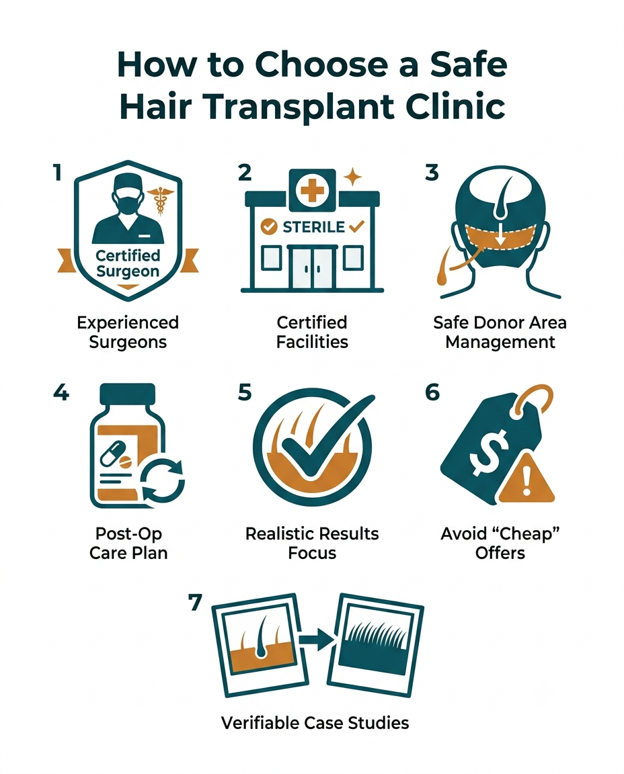
This is where your safety is actually decided. If you’re searching for the best hair transplant in Mumbai or a trusted hair transplant clinic in Navi Mumbai, run every option through this seven-point checklist:
- Is a qualified surgeon doing the surgery? Not just “technicians.” A surgeon should plan your hairline and lead the procedure. Hairline design is facial aesthetics — it belongs with a trained facial surgeon.
- Is the facility sterile and accredited? Infection risk comes from poor hygiene, not the procedure. Ask to see the operating area.
- Do they assess your donor honestly? A good clinic plans your donor for life and won’t over-harvest for a dramatic before-after photo.
- Do they talk about maintenance? If they promise a one-and-done “cure” with no mention of protecting native hair, walk away.
- Are the results realistic? Be wary of guaranteed graft counts and miracle density. Honesty is a safety signal.
- Is the price suspiciously low? Rock-bottom per-graft rates often mean technician-run work or over-harvesting. You’re buying graft survival and a natural hairline — not the cheapest follicle.
- Can you see genuine, consented before-and-afters? Real patient results (with consent) beat stock photos every time.
| The one-line safety rule Choose the surgeon, not the discount. Almost every serious hair-transplant complication traces back to an unqualified provider or an unhygienic, high-volume “factory” — not to the procedure itself. |
Why Surgeon-Led Care Is Safer
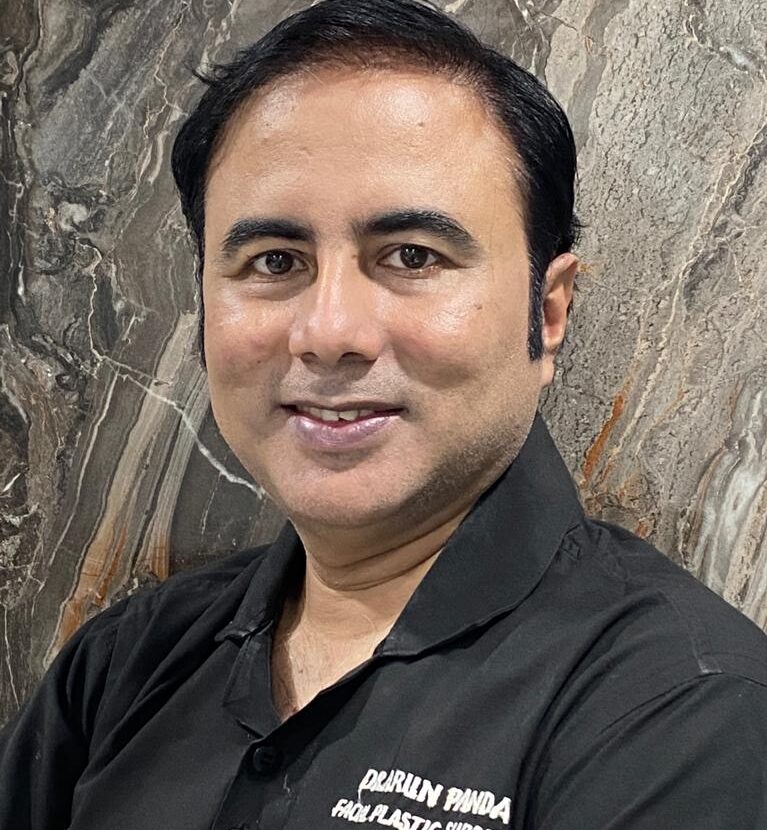
At Bodyskulpt Aesthetics in Vashi, Navi Mumbai, hair restoration is planned and led by Dr. Arun Panda, a Cranio-Maxillofacial and fellowship-trained Facial Plastic and Cosmetic Surgeon with 18+ years of experience. That matters for safety in three concrete ways:
- A surgeon designs your hairline. Natural, age-appropriate, and planned around your facial proportions — not stamped from a template.
- Donor management for life. Grafts are planned so your donor lasts, avoiding the over-harvesting that causes long-term problems.
- Honest, complete planning. You’ll hear what surgery can’t do, and how PRP and medical maintenance protect your result — plus options like beard hair transplant when relevant.
Frequently Asked Questions
Is a hair transplant safe?
Yes. A hair transplant is a minimally invasive, day-care procedure done under local anaesthesia using your own follicles, so there’s no rejection risk and serious complications are rare. Its safety depends almost entirely on choosing a qualified surgeon and a sterile, accredited clinic.
What are the side effects of a hair transplant?
The common side effects are mild and temporary: swelling, redness, small scabs around the grafts, and temporary “shock loss” of the transplanted hairs (which regrow from about month three). Numbness, minor bleeding and infection are uncommon to rare and largely avoidable with proper technique and aftercare.
Does a hair transplant leave scars?
FUE leaves tiny, dot-like scars that are barely visible; FUT leaves a fine linear scar hidden by surrounding hair. With an experienced surgeon and good aftercare, scarring is minimal and well concealed.
Is a hair transplant painful?
No — it’s done under local anaesthesia, so you’re comfortable and awake throughout, feeling mostly pressure. Mild soreness afterwards is easily managed with simple medication.
How long is recovery after a hair transplant?
Most people return to work within a few days to a week. The scalp largely heals in 10–14 days, with transplanted hairs shedding in the first few weeks before regrowing permanently.
Who performs the best hair transplant in Mumbai?
Look for a qualified surgeon — ideally a facial plastic surgeon who personally designs the hairline — operating in a sterile, accredited clinic, with honest donor assessment and genuine patient results. Surgeon-led care, not the lowest price, is the marker of the best and safest hair transplant.
Talk to a Surgeon — Honestly, With No Pressure
| Book a hair restoration consultation in Navi Mumbai. Get an honest assessment with Dr. Arun Panda at Bodyskulpt Aesthetics, Sector 9, Vashi, Navi Mumbai — your loss staged, your donor assessed, a hairline designed for your face, and a clear, honest plan. Read the full hair transplant in Navi Mumbai guide, or book a consultation. Call / WhatsApp: 9152020907 / 9152020908 • drarunpanda.com • EMI available |