Liposuction in Navi Mumbai
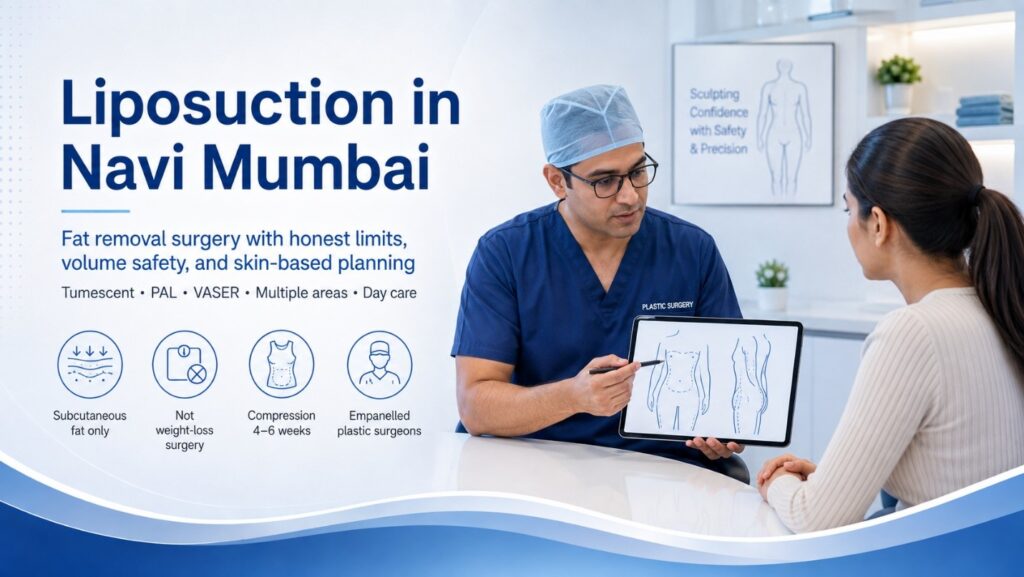
In short: what liposuction does, what it costs, and its real limits
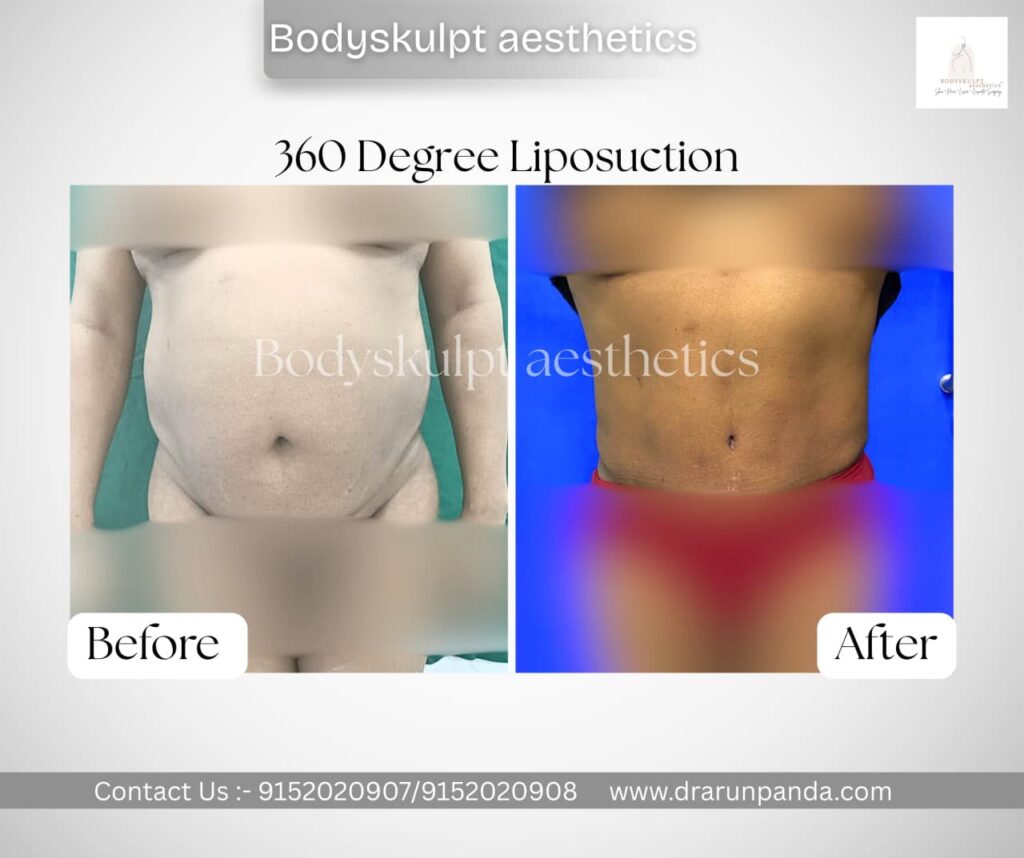
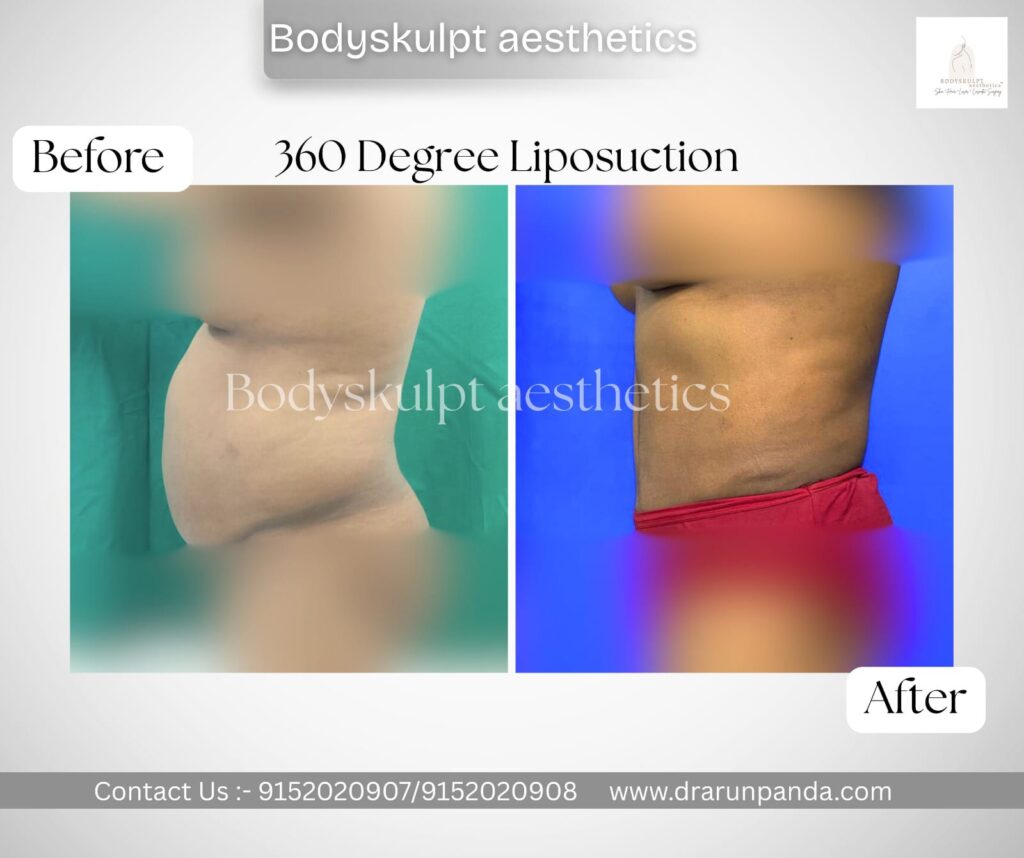
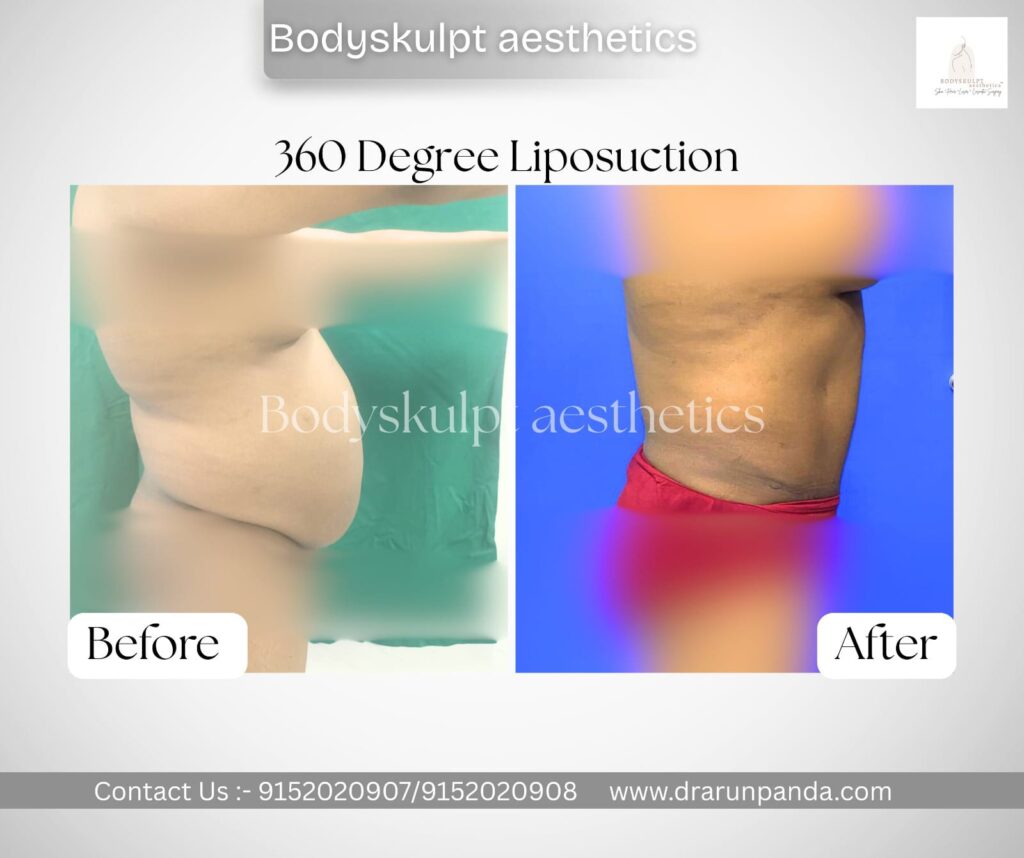
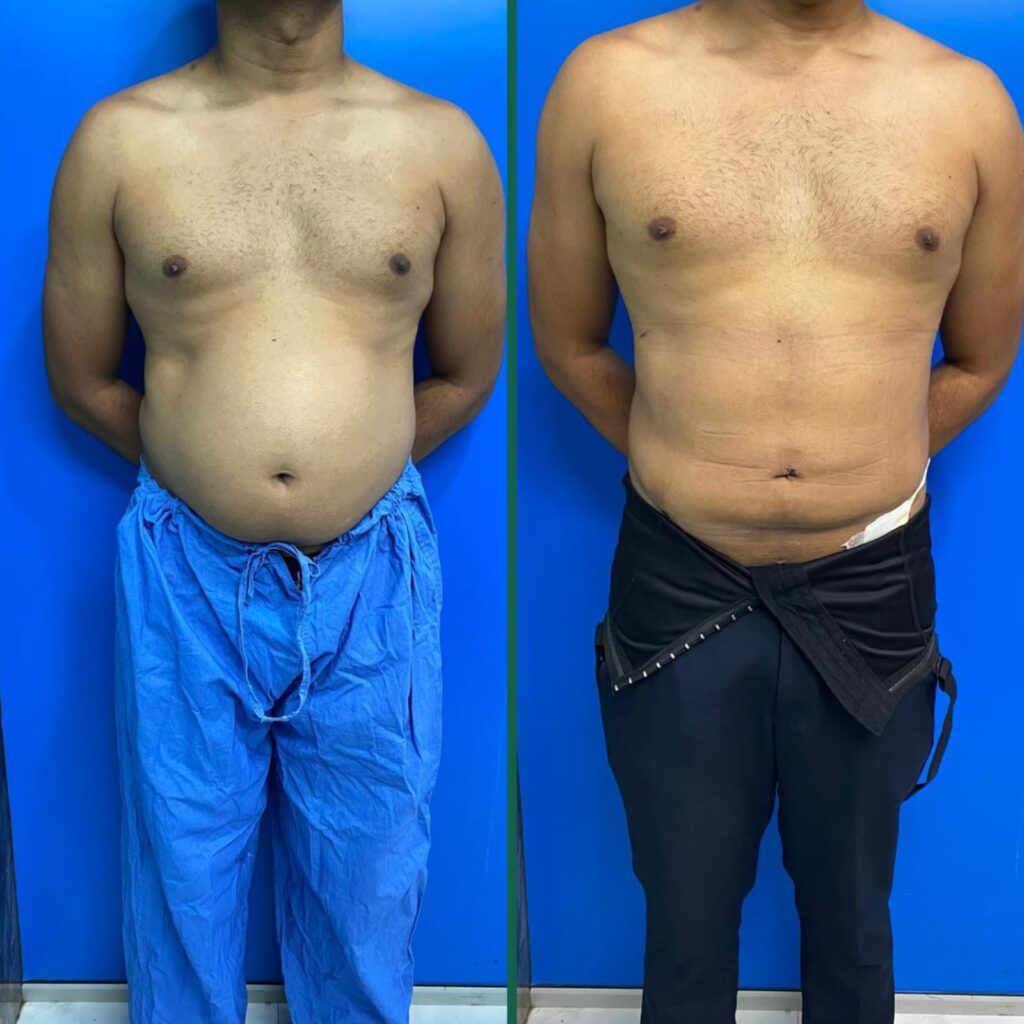
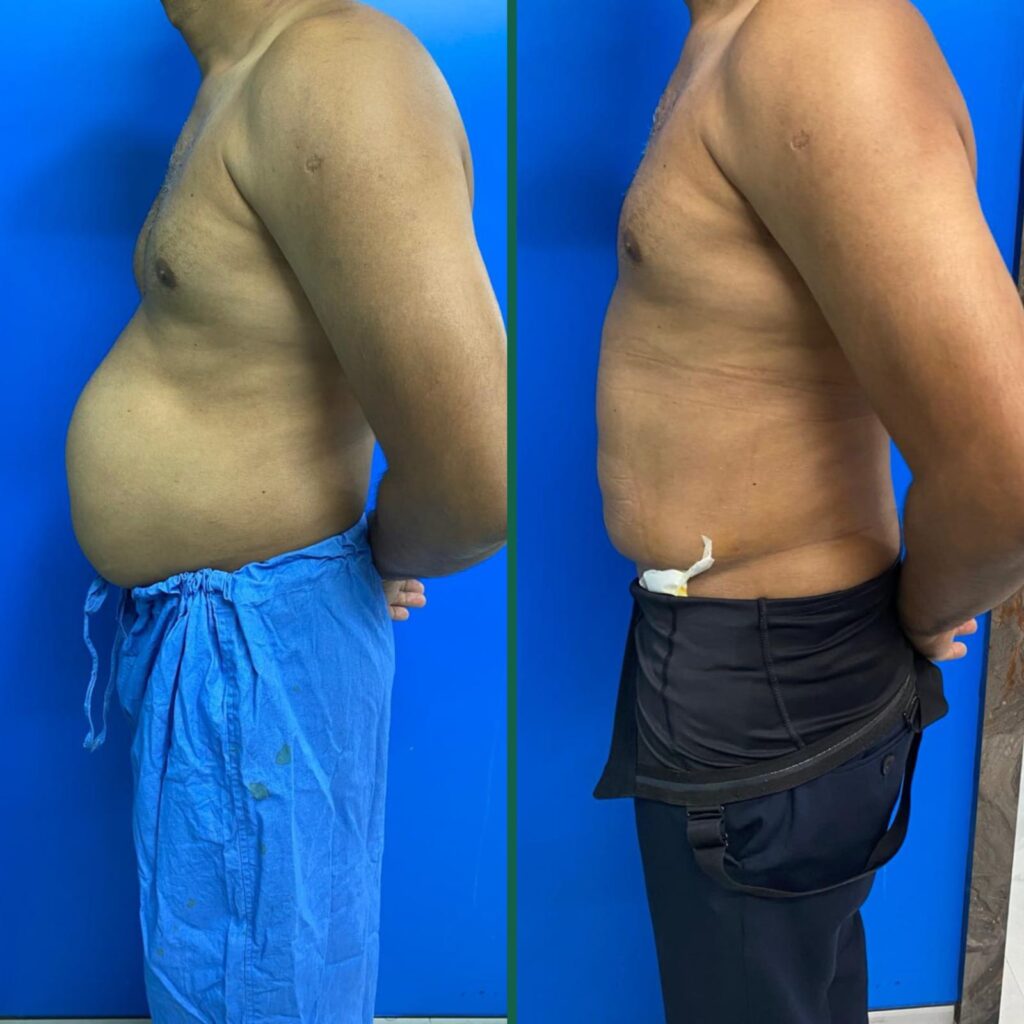
Liposuction removes subcutaneous fat directly through small incisions using a fine cannula. It is the most efficient fat-removal option available — imaging studies of abdominal liposuction report around 45% fat-layer reduction in a single procedure, against roughly 20–25% per session for non-invasive devices. Surgery runs 1–4 hours depending on areas, usually as day care. Cost in Navi Mumbai is roughly ₹60,000–₹1,50,000 for a single area and ₹1,50,000–₹3,00,000 for multiple areas, plus 18% GST. Most people return to desk work in 5–7 days and to full exercise at 4–6 weeks. Three limits worth knowing before you book. It is not a weight-loss operation and does not touch visceral fat — the deep fat around your organs that carries the metabolic risk. It does not remove loose skin, and on poor-quality skin it can leave the area looking worse. And there are genuine safety limits on how much fat can be removed in one sitting — a surgeon who agrees to no limit is a warning sign, not a bargain.
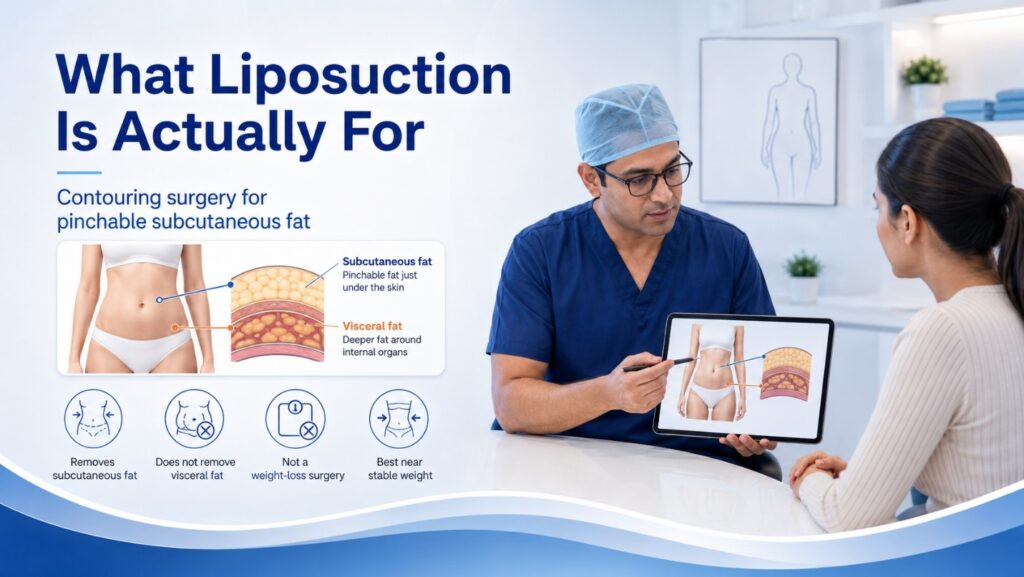
What Liposuction Is Actually For
Liposuction is a contouring operation, not a weight-loss one — a distinction that sounds pedantic until you understand what it means practically. It removes subcutaneous fat: the layer you can pinch between your fingers. It does not remove visceral fat, the deeper fat packed around the organs inside the abdominal wall, which is the fat that carries cardiovascular and metabolic risk. No cannula reaches it, and no device does either.
So the right patient is not someone who wants to lose weight. It is someone at or near a stable weight with disproportionate fat in particular areas — the flanks that persist however lean you get, the outer thighs that don’t respond to training, the lower abdomen that stays despite everything. Those are genetic distribution patterns, and they are exactly what liposuction corrects well.
It is also worth saying that this is real surgery. The marketing around body contouring has softened the language to the point where people arrive expecting something closer to a treatment than an operation. Under anaesthesia, with cannulas, drains sometimes, compression garments always, and a genuine recovery — it deserves the same deliberation as any other operation.
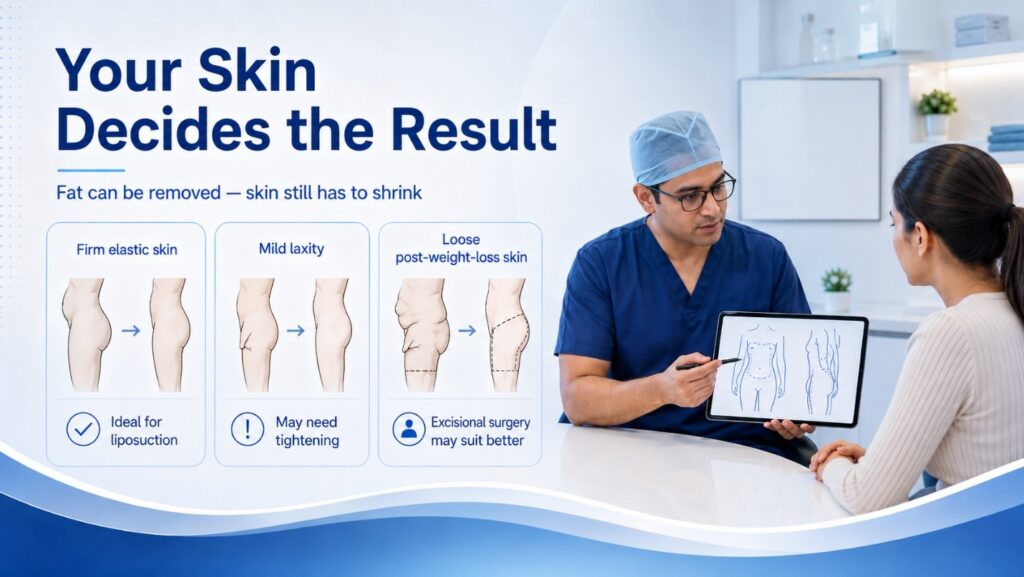
Your Skin Decides the Result More Than the Fat Does
This is the assessment that separates a good outcome from a disappointing one, and it gets skipped constantly. When fat is removed, the overlying skin has to shrink down onto the new contour. Skin with good elasticity does this well. Skin that has lost its recoil — through age, sun, pregnancy or significant weight loss — does not. Remove the fat that was filling it, and it hangs.
Your skin | How to judge it | What suits you |
| |
Firm, springs back when pinched | Releases immediately, no lasting crease | Liposuction — ideal candidate |
| |
Slightly reduced elasticity | Slow return, mild crease | Liposuction with tightening, or subdermal laser |
| |
Loose, stays creased | Doesn’t spring back; visible folds | Excisional surgery — see tummy tuck; liposuction alone can worsen it |
| |
Post-major-weight-loss skin | Hanging skin, stretch marks | Skin removal surgery, not liposuction |
| |
Firm skin, muscle separation underneath | Abdominal midline gap | Abdominoplasty — liposuction won’t help |
| |
| The honest version of a hard conversation If your skin won’t retract, the correct recommendation is excisional surgery — a bigger operation with a permanent scar and a longer recovery. It is a harder thing to be told and a harder thing to sell, and it is the reason some clinics simply don’t mention it and proceed with liposuction anyway. The result is a patient who looks smaller but not better, and who then pays a second time for the operation they needed first. We will tell you when liposuction is the wrong operation for you, including when that means recommending something more involved than you came in for. | |||
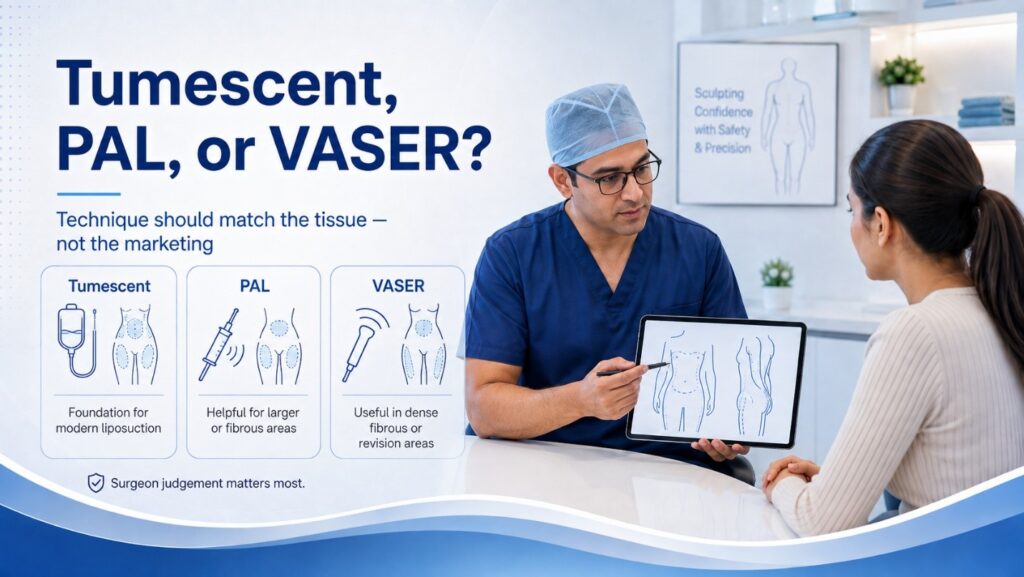
Tumescent, PAL, VASER — Does the Technique Actually Matter?
You’ll see techniques marketed as though the machine determines the outcome. Here is a fair account of what each actually does:
Technique | How it differs | Genuinely better for |
| |
Tumescent (the foundation) | Dilute local anaesthetic and adrenaline infiltrated first, reducing bleeding and easing fat removal. Underlies all modern techniques | Every case — this is the base, not an upgrade |
| |
Power-assisted (PAL) | Cannula vibrates rapidly, easing passage through tissue | Fibrous areas, larger volumes, more even passes |
| |
Ultrasound-assisted (VASER/UAL) | Ultrasound emulsifies fat before removal | Dense fibrous fat — male chest, back, revision cases |
| |
Laser-assisted (LAL) | Laser energy liquefies fat, with some thermal skin effect | Small areas; skin-tightening claims are modest |
| |
Radiofrequency-assisted (RFAL) | RF energy applied during removal | Mild laxity alongside fat |
| |
| The uncomfortable truth about technique marketing The evidence that any one technology produces meaningfully better contour than another in skilled hands is weaker than the marketing suggests. VASER and laser platforms are genuinely useful — particularly in fibrous tissue and revision work — but they are tools, not results. Even, symmetrical passes at the right depth, appropriate volume judgement, and knowing when to stop matter far more than which console is in the room. Choose the surgeon and let them choose the technique for your tissue; be sceptical of any clinic whose entire proposition is a brand name. | |||
How Much Can Safely Be Removed in One Sitting
This is the safety conversation that separates responsible practice from the clinics that make headlines. Removing large volumes of fat causes significant fluid shifts, blood loss, heat loss and inflammatory stress. The risks rise sharply with volume and with the number of areas treated in one session — including venous thromboembolism, fluid overload and, in tumescent work, local anaesthetic toxicity.
- Responsible practice caps the volume removed in a single session and stages larger cases across separate operations. Large-volume liposuction warrants an overnight stay and closer monitoring.
- Combining liposuction with other operations increases risk, not just theatre time — relevant if you’re considering a tummy tuck or breast surgery at the same sitting.
- Your weight and health determine the safe limit, not your wish list. This is why a proper pre-operative assessment exists.
A surgeon willing to remove whatever you ask for is not being accommodating. Staging a case across two operations costs more and is inconvenient — which is exactly why a surgeon who recommends it is worth trusting.
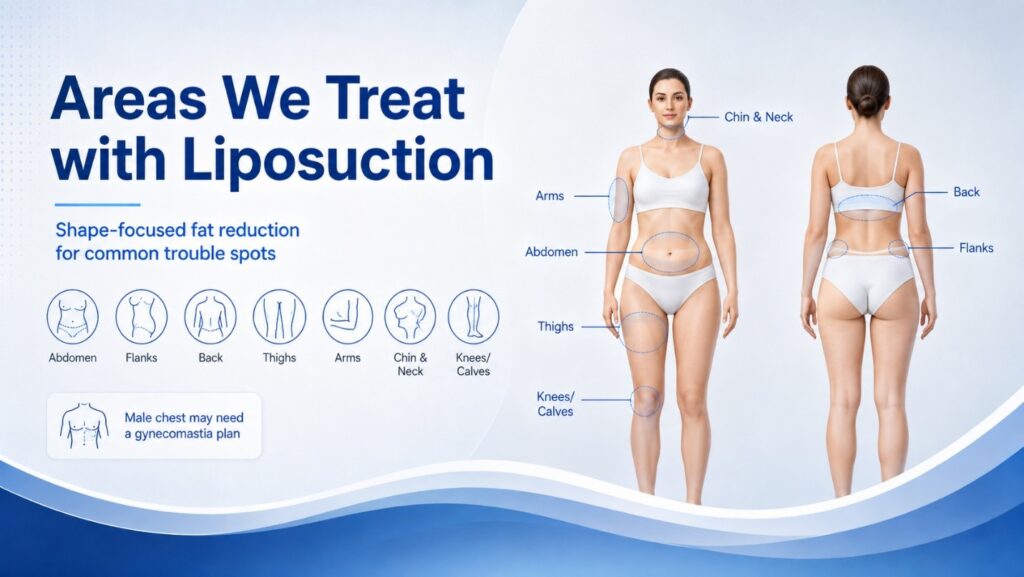
Areas We Treat
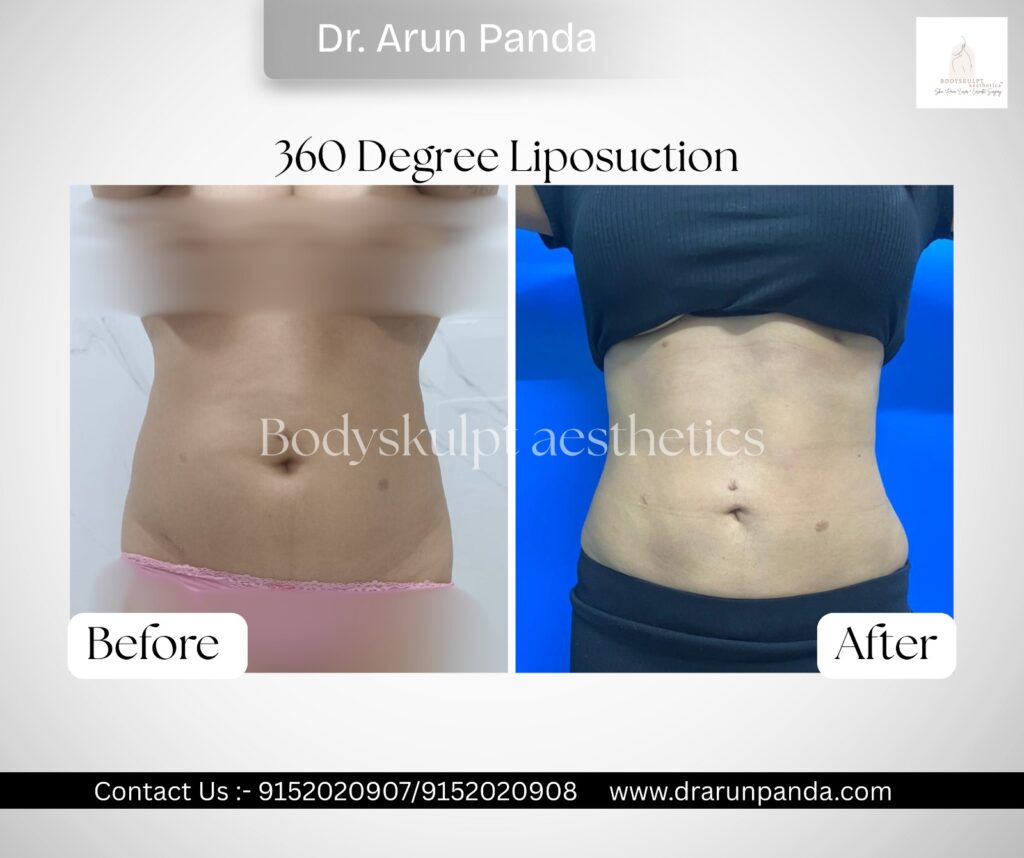
- Abdomen — upper, lower or both; the most-requested area.
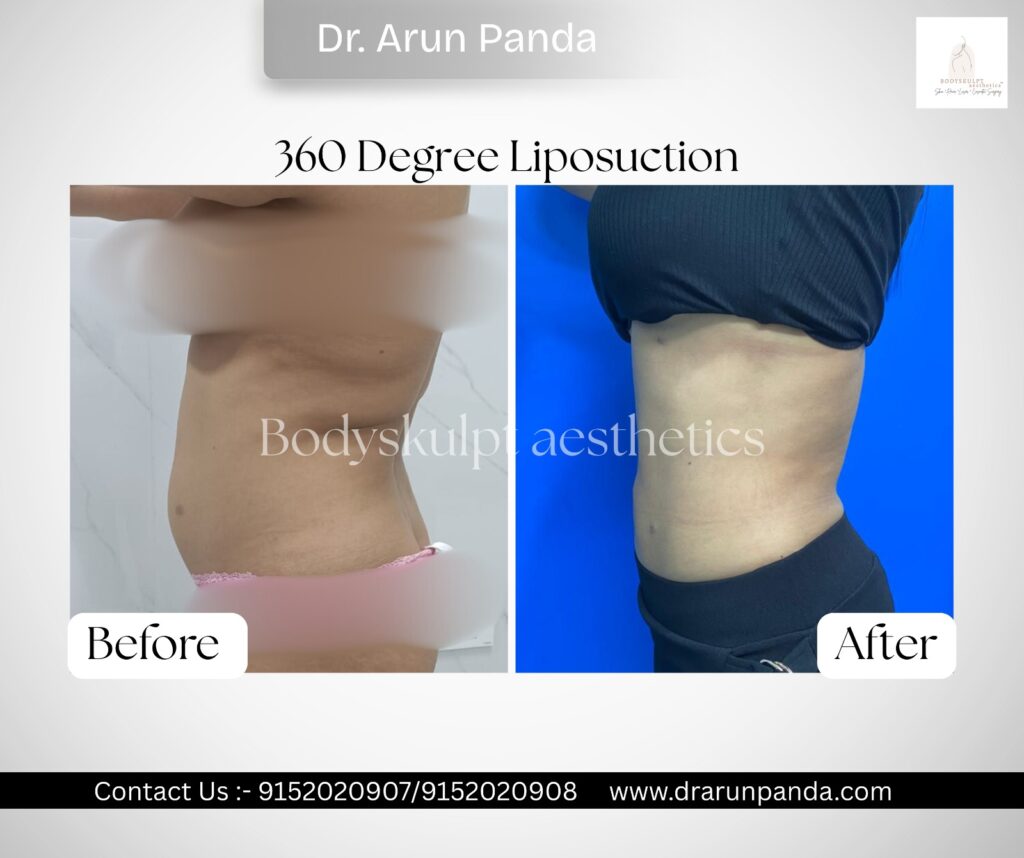
- Flanks and waist — usually treated with the abdomen, since treating one without the other looks unbalanced.
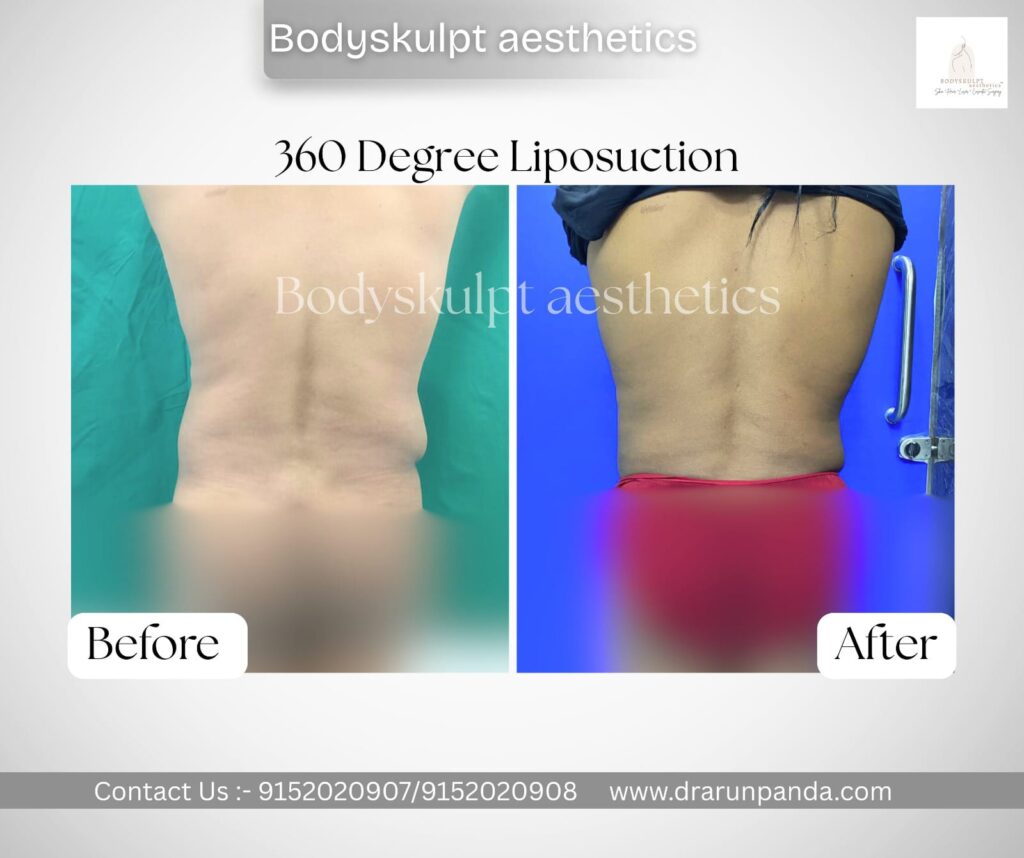
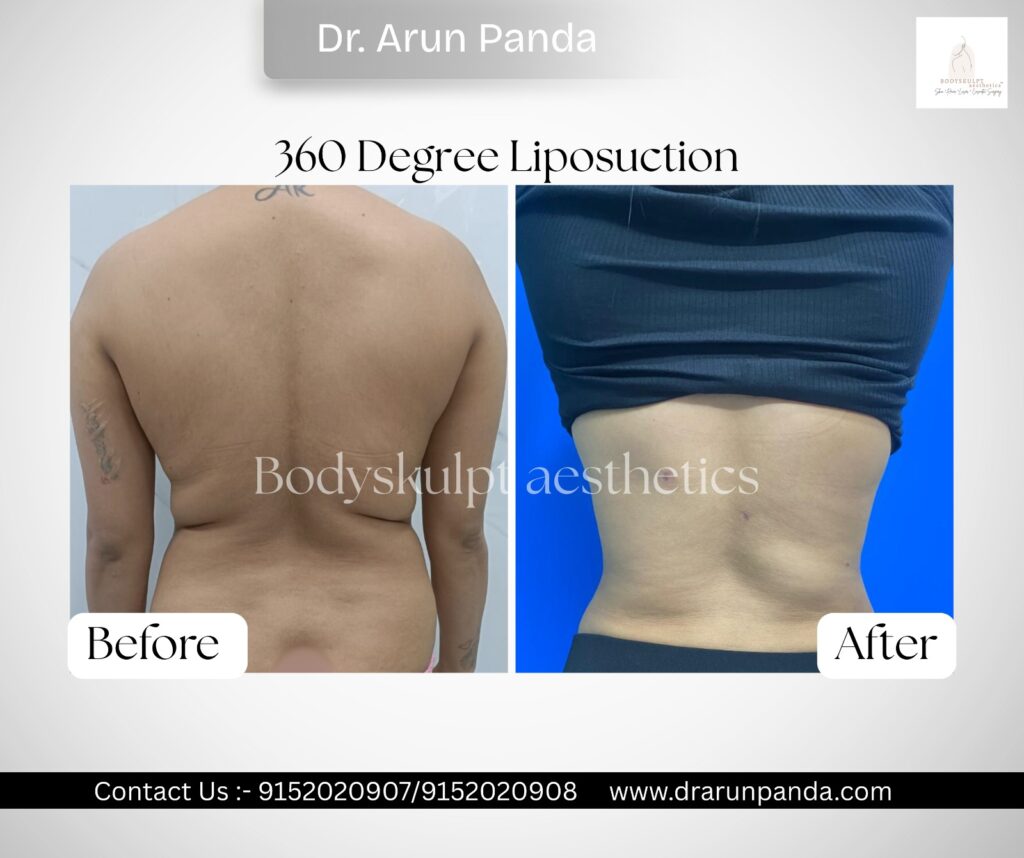
- Back — bra-line and upper back rolls; fibrous tissue that benefits from ultrasound assistance.
- Outer thighs (saddlebags) and inner thighs.
- Buttocks and banana roll — the crease beneath the buttock.
- Upper arms — with careful skin assessment, since arm skin retracts poorly after 40.
- Male chest — as part of gynecomastia surgery; liposuction alone will not remove glandular tissue.
- Chin and neck — submental liposuction; see double chin reduction.
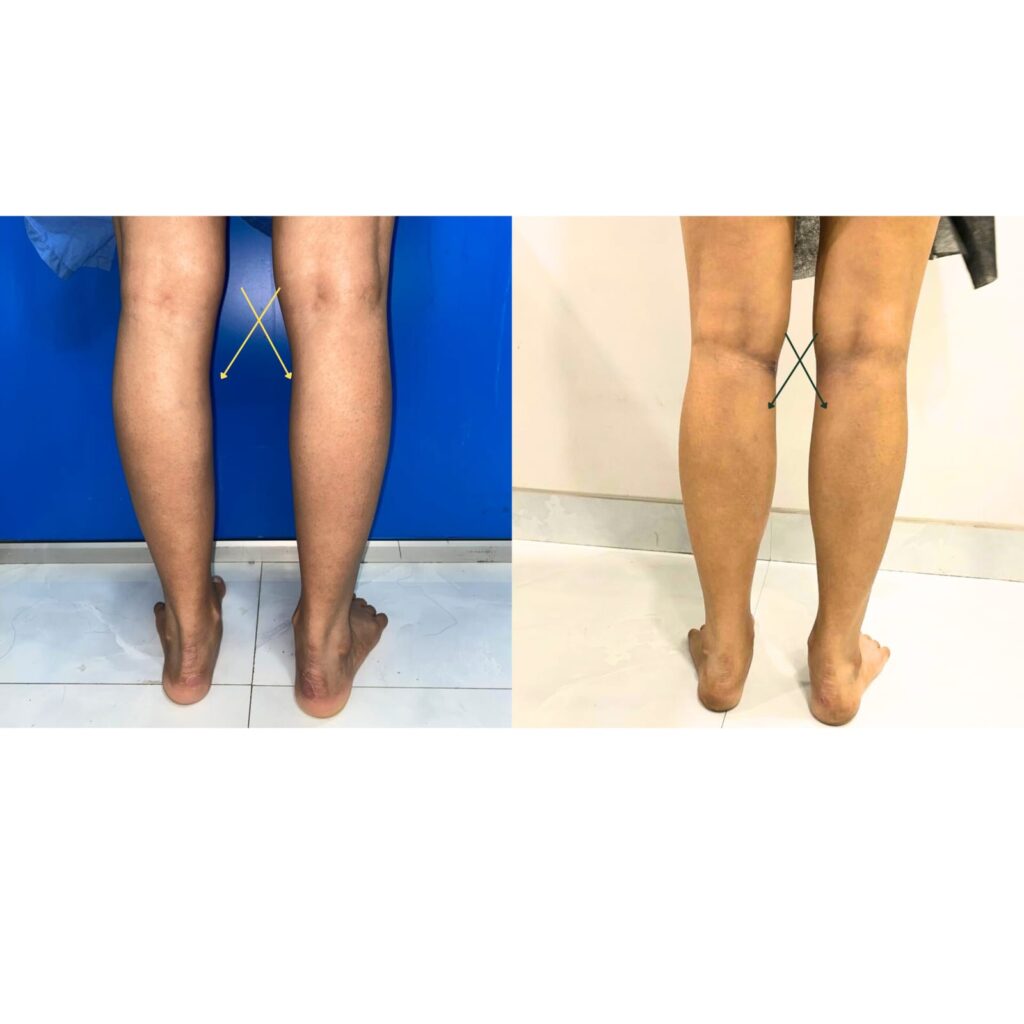
- Knees, calves and ankles — small stubborn pockets.
Concerns It Addresses
- Localised fat deposits that persist despite diet and exercise — the core indication.
- Disproportionate body shape — genetic distribution patterns that weight loss doesn’t change.
- Post-pregnancy fat distribution where skin and muscle are intact.
- Male chest fat as part of chest contouring.
- Lipomas — benign fatty lumps, in selected cases.
- Contour irregularity after previous liposuction — revision work, which is technically harder than a primary case.
- Fat harvesting for grafting elsewhere.
What liposuction cannot do — stated plainly It will not make you lose weight, and the number on the scale may barely move. It does not remove visceral fat or reduce metabolic risk. It does not tighten loose skin — and on poor skin it makes laxity more obvious. It does not treat cellulite, which is caused by fibrous tethers rather than fat volume, and aggressive superficial liposuction can make dimpling worse. It does not remove stretch marks. And it does not repair separated abdominal muscles — that is abdominoplasty. If any of those is your actual concern, liposuction is the wrong operation, however well performed. |
The Procedure, Step by Step
- Consultation with the plastic surgeon. Assessment of fat distribution by pinch test, skin elasticity, muscle integrity, weight stability and overall health; areas prioritised and a realistic volume discussed.
- Pre-operative work-up. Blood tests, anaesthetic assessment, blood-clot risk scoring and smoking cessation where relevant. Compression garments sized in advance.
- Done with you standing, since fat distribution changes with position — zones to treat and zones to feather deliberately mapped.
- Tumescent infiltration. Dilute local anaesthetic with adrenaline is infiltrated to reduce bleeding, numb the area and make fat easier to remove.
- Fat removal. Fine cannulas passed through incisions of a few millimetres, usually hidden in creases, working in even criss-cross passes at controlled depth — deliberately leaving a smooth transition layer rather than stripping the area bare.
- Closure, garment and home. Incisions closed or left to drain briefly, compression garment fitted before you wake. Surgery runs 1–4 hours; day care for most cases, overnight for larger volumes.
Recovery Timeline
Timeframe | What to expect |
Days 1–3 | Soreness like a hard workout; fluid leakage from incisions in the first 24–48 hours is normal. Compression worn continuously. Walk from day one. |
Days 5–7 | Most people return to desk work. Bruising visible but covered; swelling substantial. |
Weeks 2–4 | Bruising resolving; areas feel firm and lumpy — normal remodelling, not a bad result. |
Weeks 4–6 | Compression usually discontinued; exercise resumed with clearance. Contour clearly emerging. |
Months 2–3 | Most swelling gone; firmness softening. |
Months 3–6 | Final contour as skin fully retracts and tissues settle. |
Aftercare that genuinely affects your result
- Wear the compression garment exactly as instructed — it controls swelling and materially influences how the skin redrapes. This is not optional.
- Walk from day one, little and often — the most effective thing you can do to reduce blood-clot risk.
- Lymphatic massage from around week 2 if advised — it helps swelling and firmness settle more evenly.
- Expect firmness and lumpiness for weeks. Almost everyone worries about this at week three; almost everyone is fine by month three.
- Report calf pain, breathlessness or chest pain immediately — the warning signs of a clot.
- Keep your weight stable. Removed fat cells don’t return, but the remaining ones enlarge if you gain.
Cost of Liposuction in Navi Mumbai
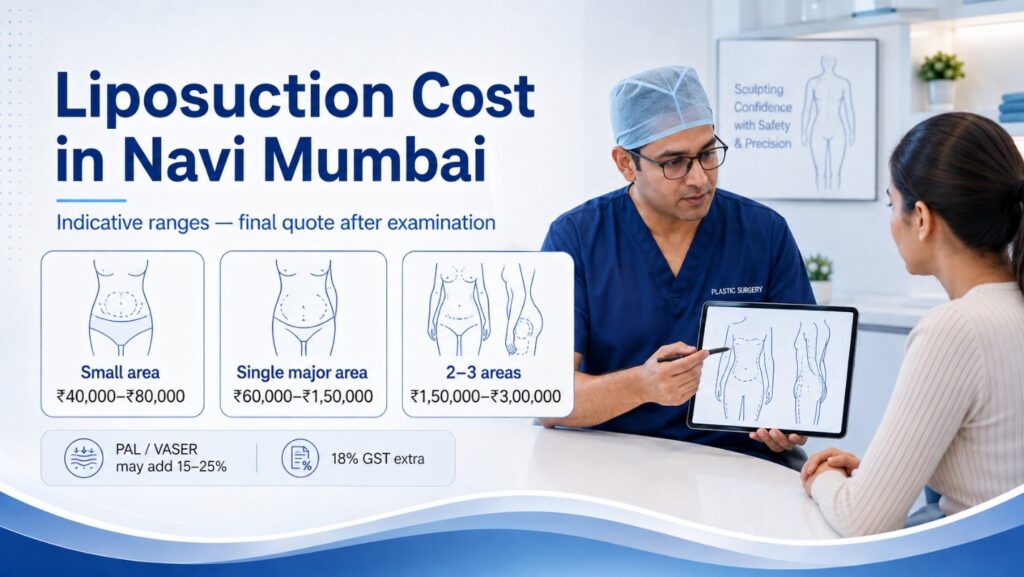
Liposuction is priced by area and by the extent of work, with technique and theatre time also contributing. These indicative ranges cover surgeon and anaesthetist fees, accredited theatre, garments and routine follow-up. 18% GST applies and is often excluded from advertised prices. EMI options are available.
Scope | Indicative cost (INR) |
| |
Small single area (chin, knees, arms) | ₹40,000 – ₹80,000 |
| |
Single major area (abdomen, thighs, back) | ₹60,000 – ₹1,50,000 |
| |
Two to three areas combined | ₹1,50,000 – ₹3,00,000 |
| |
VASER / power-assisted premium | Typically 15–25% above standard |
| |
Large-volume or staged multi-area case | Quoted per stage after assessment |
| |
Revision after previous liposuction | Assessed case by case — usually higher |
| |
Combined with abdominoplasty (lipoabdominoplasty) | ₹2,00,000 – ₹3,50,000 |
| |
| Comparing quotes without being misled Ask what counts as an ‘area’ — definitions vary widely and a quote for ‘abdomen’ that excludes the flanks will not give you the result you’re picturing, because treating one without the other looks unbalanced. Then confirm whether the quote includes the anaesthetist, accredited theatre charges, compression garments, all follow-up visits, lymphatic massage sessions if recommended, and GST. Finally, ask what happens if a touch-up is needed: minor revision is not rare after liposuction, and a clinic’s revision policy tells you a great deal about how they price. A quote 40% below the others usually differs on those terms rather than on skill. | ||
Results Timeline
When | What you’ll see |
Weeks 1–2 | Swollen — possibly larger than before surgery. Nothing to judge. |
Weeks 4–6 | Swelling substantially down; the new shape becomes visible. |
Months 2–3 | Clear improvement; firmness resolving. |
Months 3–6 | Final contour as skin retracts fully. |
Long term | Permanent, provided weight stays stable — remaining fat cells still enlarge with weight gain. |
Liposuction vs the Alternatives
Option | Fat reduction | Skin | Sessions |
Liposuction | About 45% of the fat layer | No skin removal; relies on retraction | One |
Cryolipolysis / non-invasive | About 20–25% per area | Minimal effect | 2–4 per area |
Small pockets | Mild tightening | Usually one | |
Modest fat, plus skin excision | Removes excess skin; repairs muscle | One | |
Diet and exercise | Reduces fat overall, including visceral | Depends on elasticity | Ongoing |
The honest positioning: liposuction is the most efficient way to remove a defined fat deposit, and nothing non-invasive comes close on magnitude. But it is a shaping tool within a healthy body composition — not a substitute for the metabolic benefits of losing weight properly. Explore the full range on our body contouring overview.
Risks & Safety
- Contour irregularity, rippling or asymmetry — the commonest aesthetic complication, usually from uneven or overly superficial passes. Minor cases settle; some need revision.
- Seroma — fluid collection, managed with compression and occasional aspiration.
- Venous thromboembolism — the most serious risk, rising with volume, multiple areas and combined procedures. Managed with risk scoring, compression, early walking and prophylaxis where indicated.
- Fluid shifts and local anaesthetic toxicity in large-volume tumescent work — the reason volume limits and monitored settings exist.
- Infection, bleeding or haematoma — uncommon with proper technique and accredited facilities.
- Prolonged swelling and firmness — expected rather than a complication, but frequently distressing when nobody warned you.
- Patchy numbness over treated areas, usually resolving over weeks to months.
- Worsened skin laxity where skin quality was poor — which is why the skin assessment above comes first.
- Fat embolism — rare but serious; risk is minimised by technique and by respecting volume limits.
A Note on High-Definition Liposuction
High-definition or ‘etching’ liposuction sculpts superficially to reveal underlying muscle definition — abdominal lines, chest borders. It can look striking in the right patient, and it is heavily marketed on social media. The honest caveats: it requires an already-lean patient with excellent skin, it works in the superficial fat layer where the margin for error is smallest, and irregularities are both more likely and more visible than with conventional liposuction. Results can also look artificial as you age or if your weight changes. It is a legitimate technique in experienced hands for carefully selected patients — and a poor choice for someone hoping it will substitute for the training that produced the muscle in the first place.
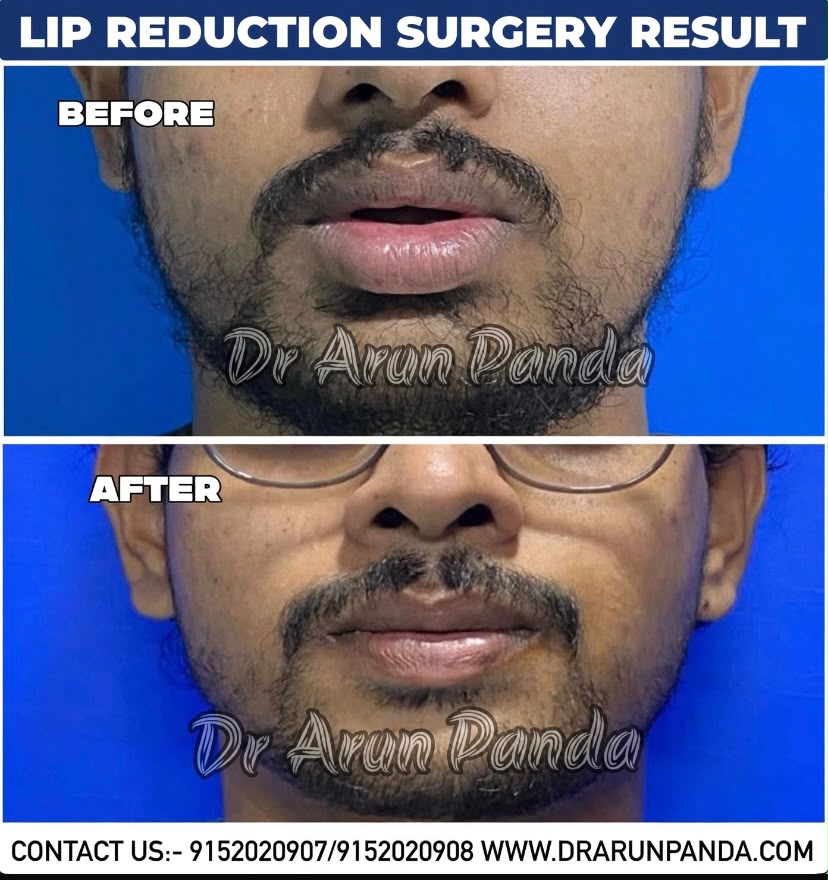
Who Performs Your Surgery at Bodyskulpt Aesthetics
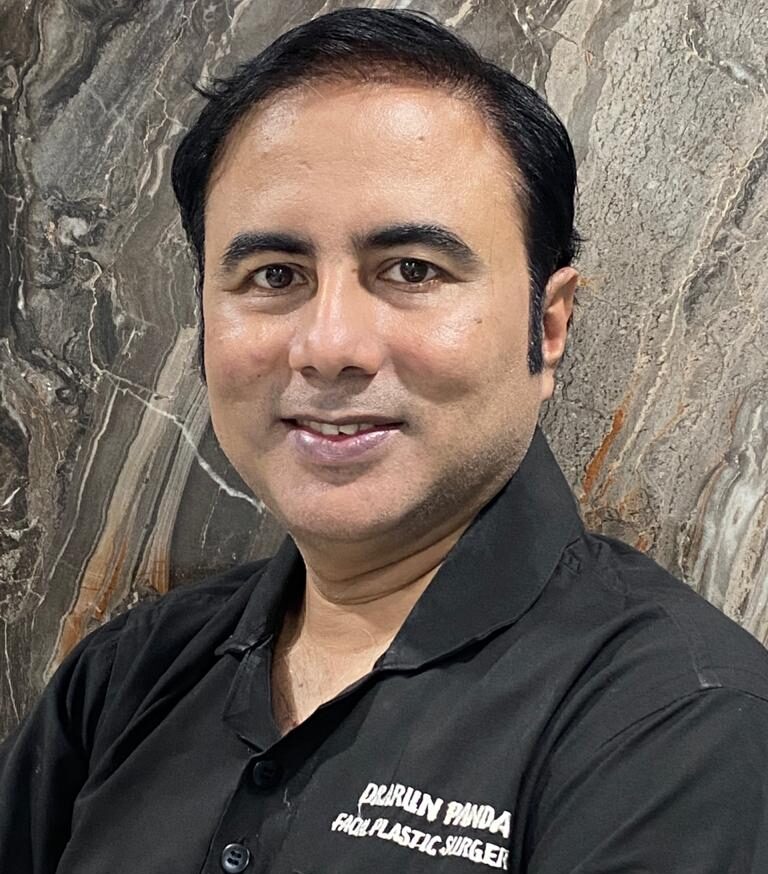
Bodyskulpt Aesthetics is a doctor-led clinic in Vashi founded by Dr. Arun Panda, a Cranio-Maxillofacial and fellowship-trained Facial Plastic and Cosmetic Surgeon whose own practice is facial. Liposuction is performed by qualified plastic surgeons empanelled with the clinic, in accredited operating facilities and in compliance with Indian medical regulations.
- Skin assessed before fat volume. The single most predictive factor in your result, and the first thing examined.
- Volume limits respected and cases staged where appropriate — even though staging costs more and is less convenient.
- Accredited theatre with senior anaesthesia support and formal blood-clot risk assessment for every case.
- Technique chosen for your tissue, not sold as a brand — ultrasound assistance where fat is fibrous, standard tumescent where it isn’t.
- Honest redirection. If you need abdominoplasty, gland excision or simply a stable weight first, that’s what you’ll be told.
- Full body-contouring context — see our body contouring overview for how liposuction sits alongside surgical and non-invasive options.
Centrally located in Vashi — serving Navi Mumbai and Mumbai Bodyskulpt Aesthetics is in the heart of Vashi, easily reached from Kharghar, Panvel, Belapur, Nerul, Airoli, Thane and across Mumbai. Consultations are private and carry no obligation, with an itemised quote covering theatre, anaesthesia, garments, follow-up and GST. EMI options available. |
Frequently Asked Questions
How much does liposuction cost in Navi Mumbai?
Approximately ₹40,000–₹80,000 for a small area such as the chin or knees, ₹60,000–₹1,50,000 for a single major area like the abdomen or thighs, and ₹1,50,000–₹3,00,000 for two to three areas combined. VASER or power-assisted techniques typically add 15–25%. Lipoabdominoplasty runs ₹2,00,000–₹3,50,000. GST at 18% applies and is often excluded from advertised prices. EMI options are available.
Is liposuction a weight-loss procedure?
No. It removes subcutaneous fat — the layer you can pinch — and does not touch visceral fat, the deeper fat around the organs that carries metabolic risk. The number on the scale may barely change. It is a contouring operation for people at or near a stable weight with disproportionate fat in specific areas, not a treatment for excess weight.
Will liposuction tighten loose skin?
No. It relies on your skin retracting onto the new contour. Firm, elastic skin does this well. Skin that has lost recoil through age, sun damage, pregnancy or major weight loss does not — and removing the fat filling it can leave it hanging, making laxity more obvious. Where skin quality is poor, excisional surgery such as a tummy tuck is the correct recommendation even though it is a bigger operation.
Does the fat come back after liposuction?
The fat cells removed do not return. However the fat cells remaining in that area, and elsewhere in the body, can still enlarge if you gain weight — so results hold best at a stable weight. The commonly repeated claim that fat simply relocates to other areas is not well supported; what people usually observe is generalised weight gain distributed across untreated regions.
Is VASER liposuction better than standard liposuction?
Not universally. VASER uses ultrasound to emulsify fat before removal and is genuinely useful in dense fibrous tissue such as the male chest, the back and revision cases. But evidence that any single technology produces meaningfully better contour in skilled hands is weaker than the marketing implies. Even passes at the right depth and sound volume judgement matter far more than the console. Choose the surgeon, and let them choose the technique for your tissue.
How much fat can be removed in one operation?
There are genuine safety limits. Large-volume removal causes significant fluid shifts, blood loss and heat loss, and risks including blood clots, fluid overload and local anaesthetic toxicity rise sharply with volume and with the number of areas treated at once. Responsible practice caps the volume per session and stages larger cases across separate operations. A surgeon willing to remove whatever you ask for is a warning sign rather than a bargain.
What is the recovery time after liposuction?
Most people return to desk work in 5–7 days. A compression garment is worn for 4–6 weeks, exercise resumes at 4–6 weeks with clearance, and swelling settles substantially by weeks 4–6. Areas feel firm and lumpy for several weeks — normal remodelling rather than a poor result — with the final contour at 3–6 months.
Does liposuction treat cellulite?
No, and it can make it worse. Cellulite is caused by fibrous tethers pulling the skin down rather than by fat volume, so removing fat beneath dimpled skin does not release those tethers — and aggressive superficial liposuction can accentuate the dimpling. Cellulite needs treatments directed at the tethers themselves, which is a different conversation.
Book a Body Assessment
An honest assessment of your fat, your skin, and whether this is the right operation. Book at Bodyskulpt Aesthetics, Sector 9, Vashi, Navi Mumbai. You’ll be assessed by a plastic surgeon for fat distribution, skin elasticity, muscle integrity and weight stability; told plainly whether liposuction, excisional surgery or waiting will serve you best; and given an itemised quote including theatre, anaesthesia, garments, follow-up and GST. Explore body contouring, tummy tuck, gynecomastia surgery, or book a consultation. Call / WhatsApp: 9152020907 / 9152020908 • drarunpanda.com • EMI available |
Authoritative references
For independent information, see the American Society of Plastic Surgeons on liposuction, Mayo Clinic and peer-reviewed literature on large-volume liposuction safety.
Educational information only and not a substitute for an in-person surgical consultation. Liposuction is performed by qualified empanelled plastic surgeons at Bodyskulpt Aesthetics in accordance with Indian medical regulations. Liposuction is a contouring procedure, not a treatment for obesity or metabolic disease. Results, suitability and recovery vary between individuals.
Please reach out to us through the contact details below.
- Website: https://drarunpanda.com/
- Phone: +919152020907, +919152020908
- Address: Dr. Arun Panda, BodySkulpt Aesthetics, F1/A-4, Aditi Apartments, Sector 9, Vashi, Navi Mumbai – 400703
- Facebook: https://www.facebook.com/DrArunPanda
- Instagram: https://www.instagram.com/drarunpanda/
- Youtube: https://www.youtube.com/DrArunPanda
- LinkedIn: https://www.linkedin.com/in/drarunpanda
- Twitter: https://twitter.com/DrArunPanda1
- Email: facialaestheticsindia@gmail.com
- Google Directions: https://g.page/DrArunPanda?gm