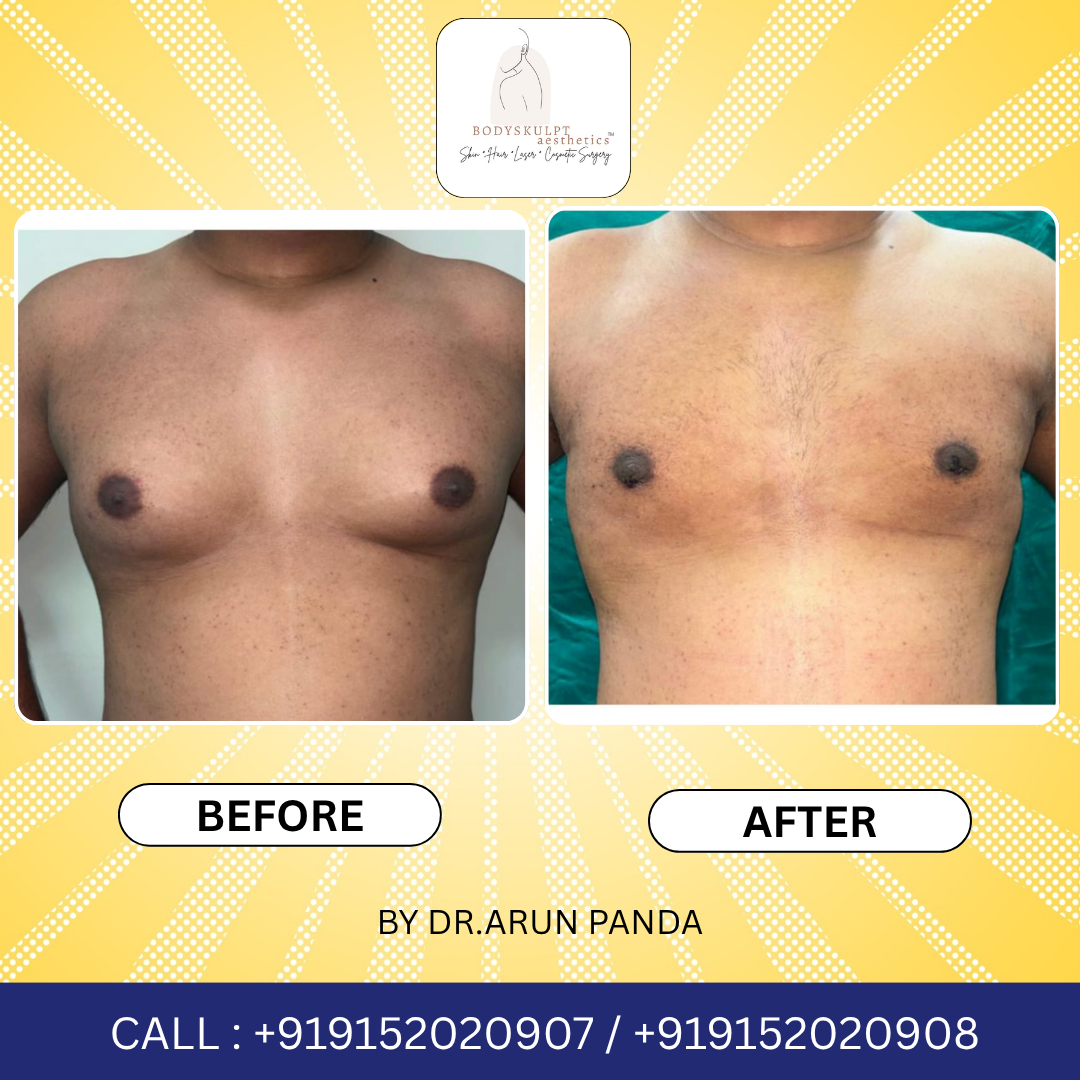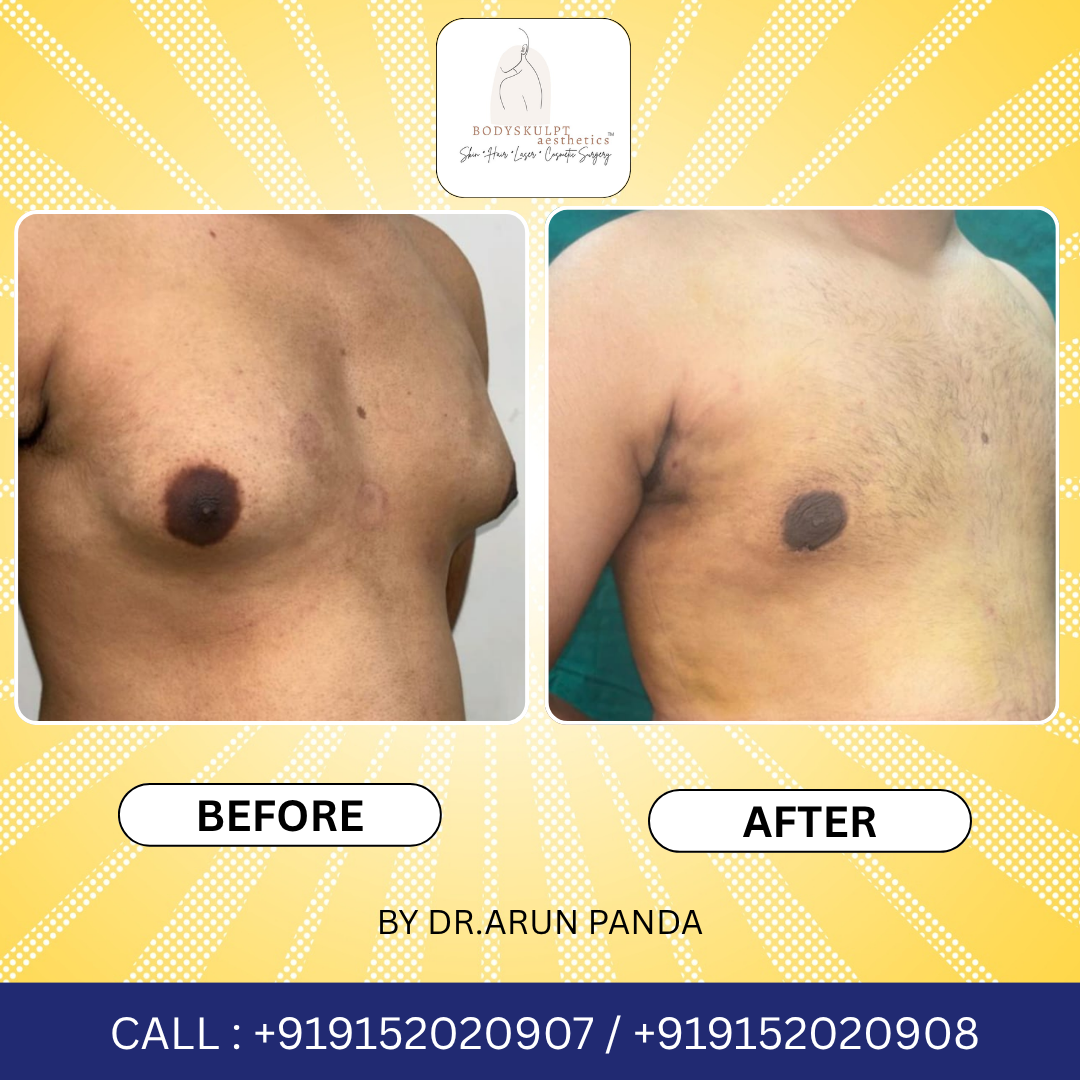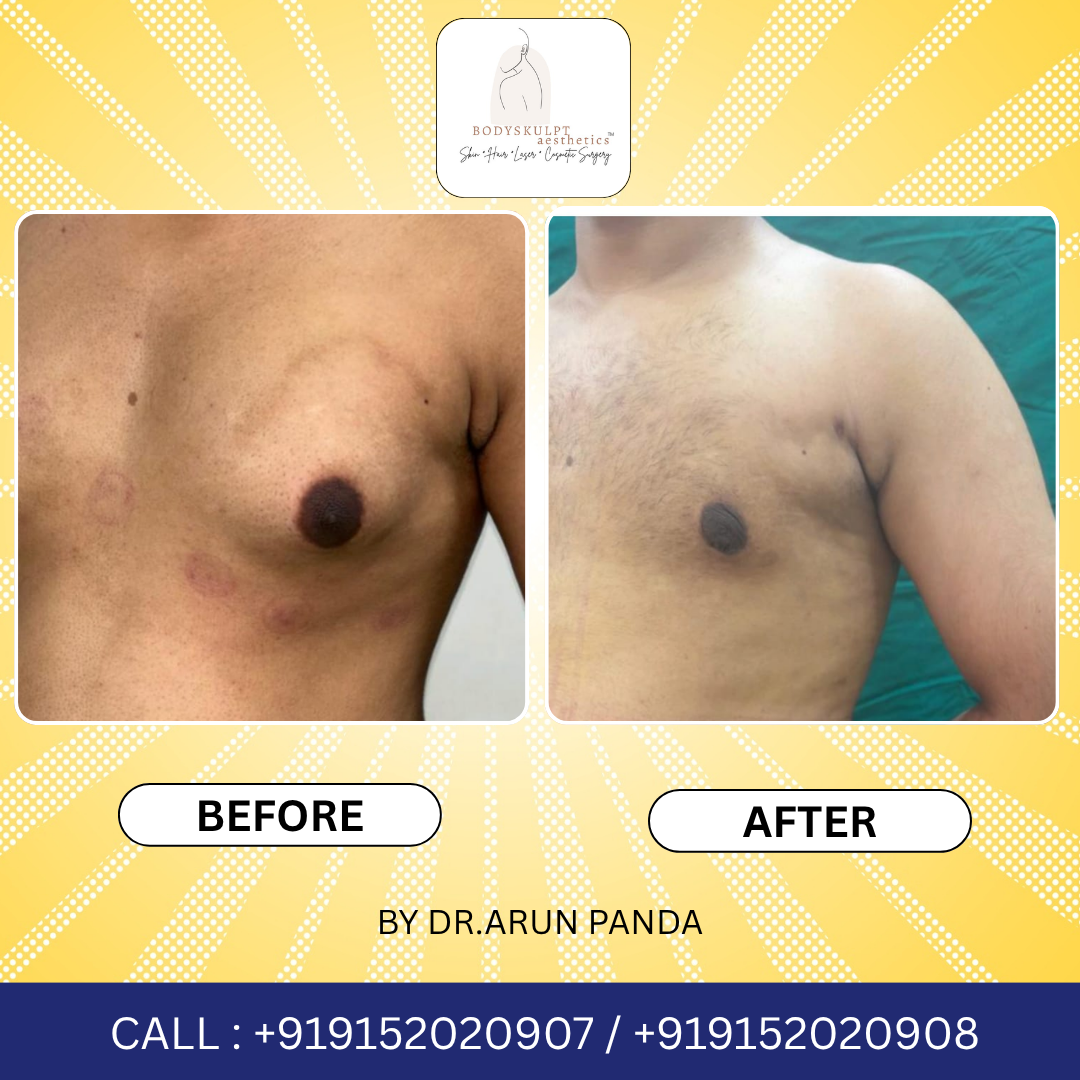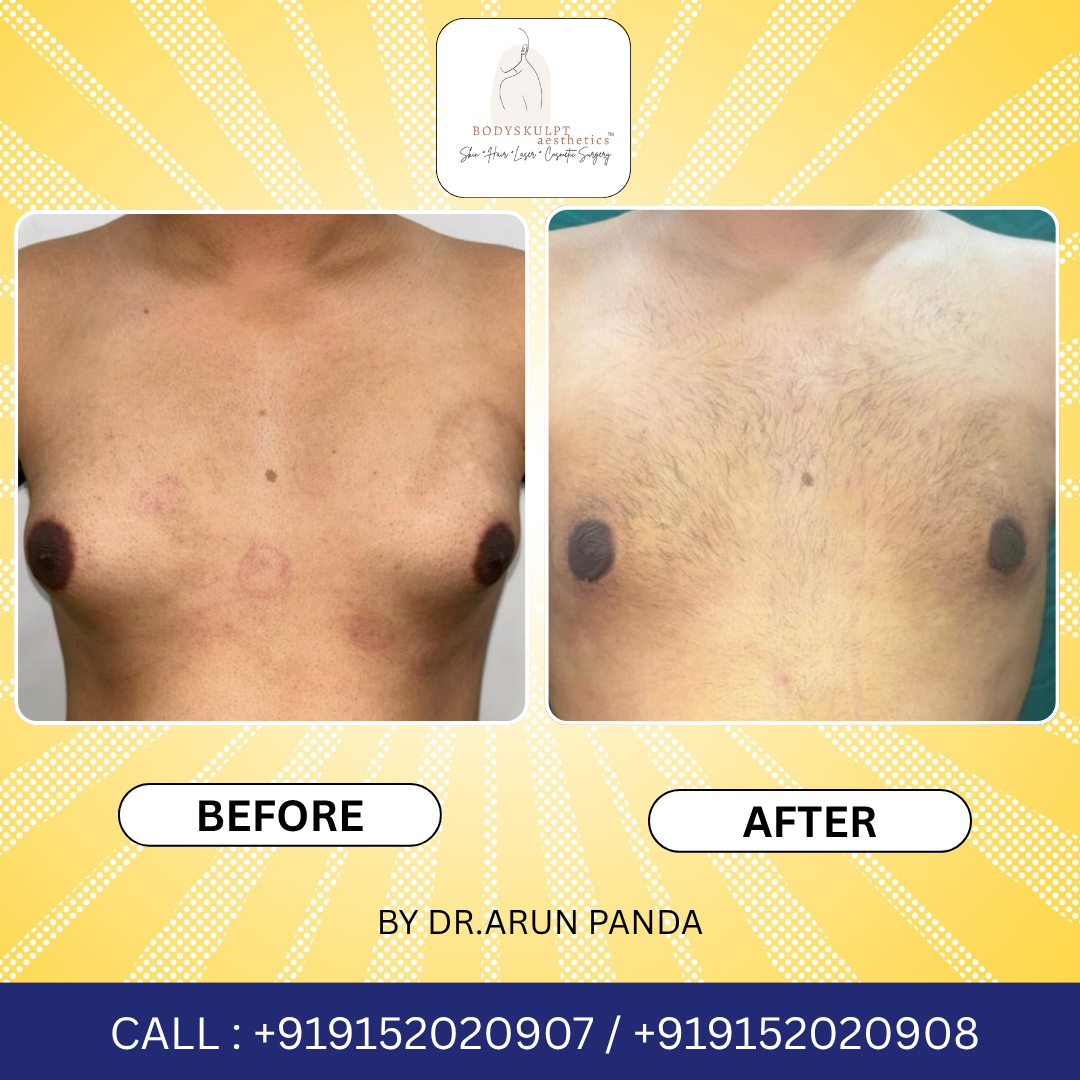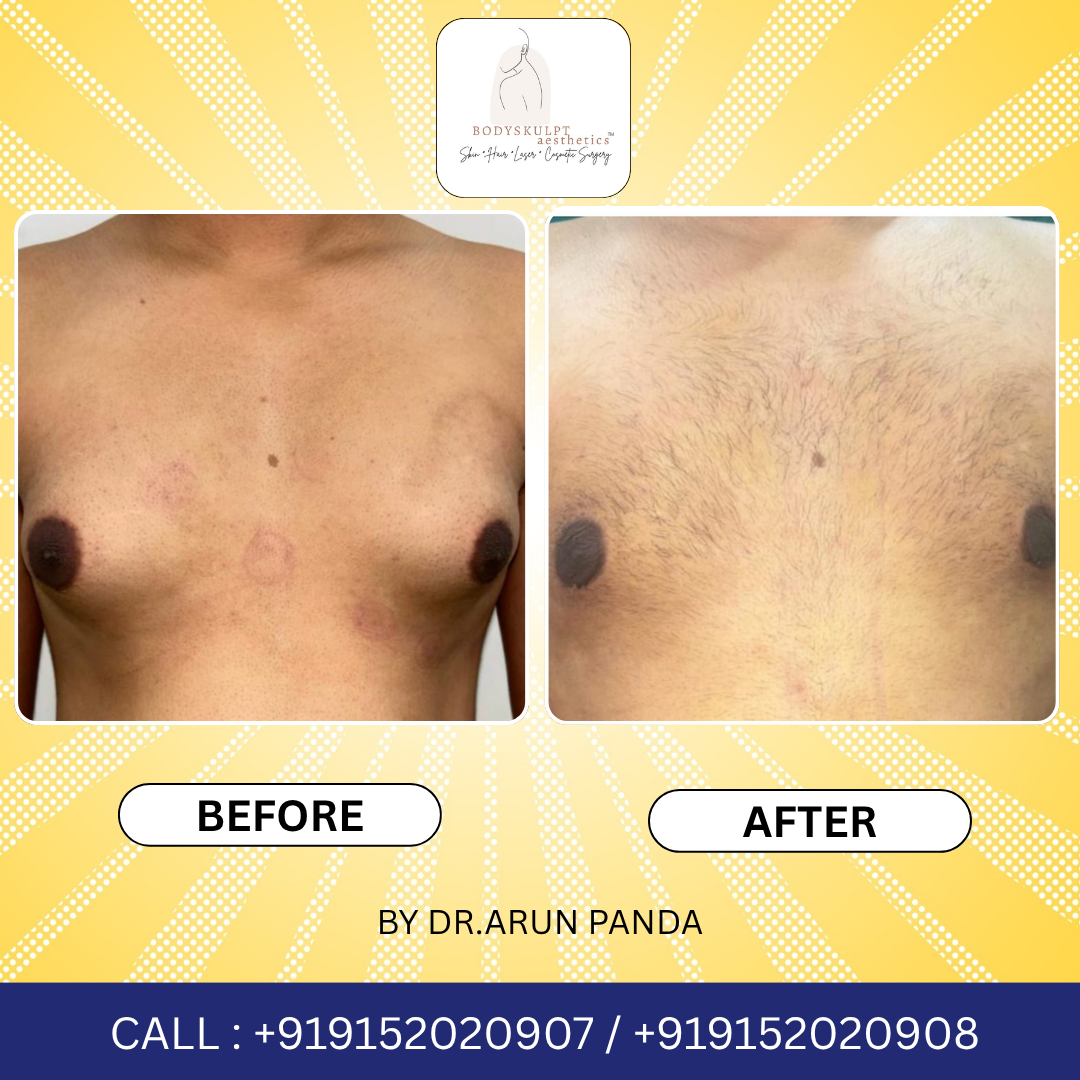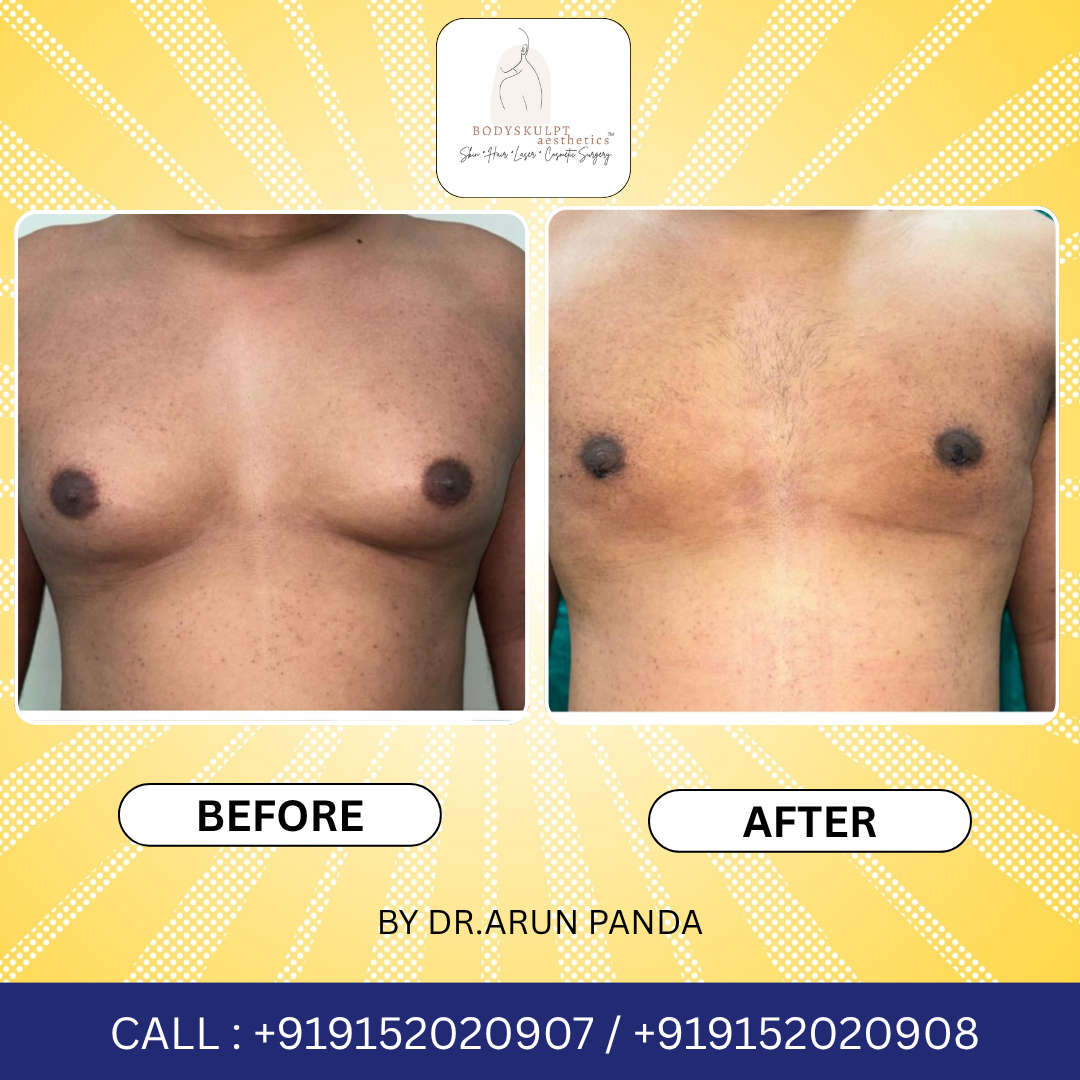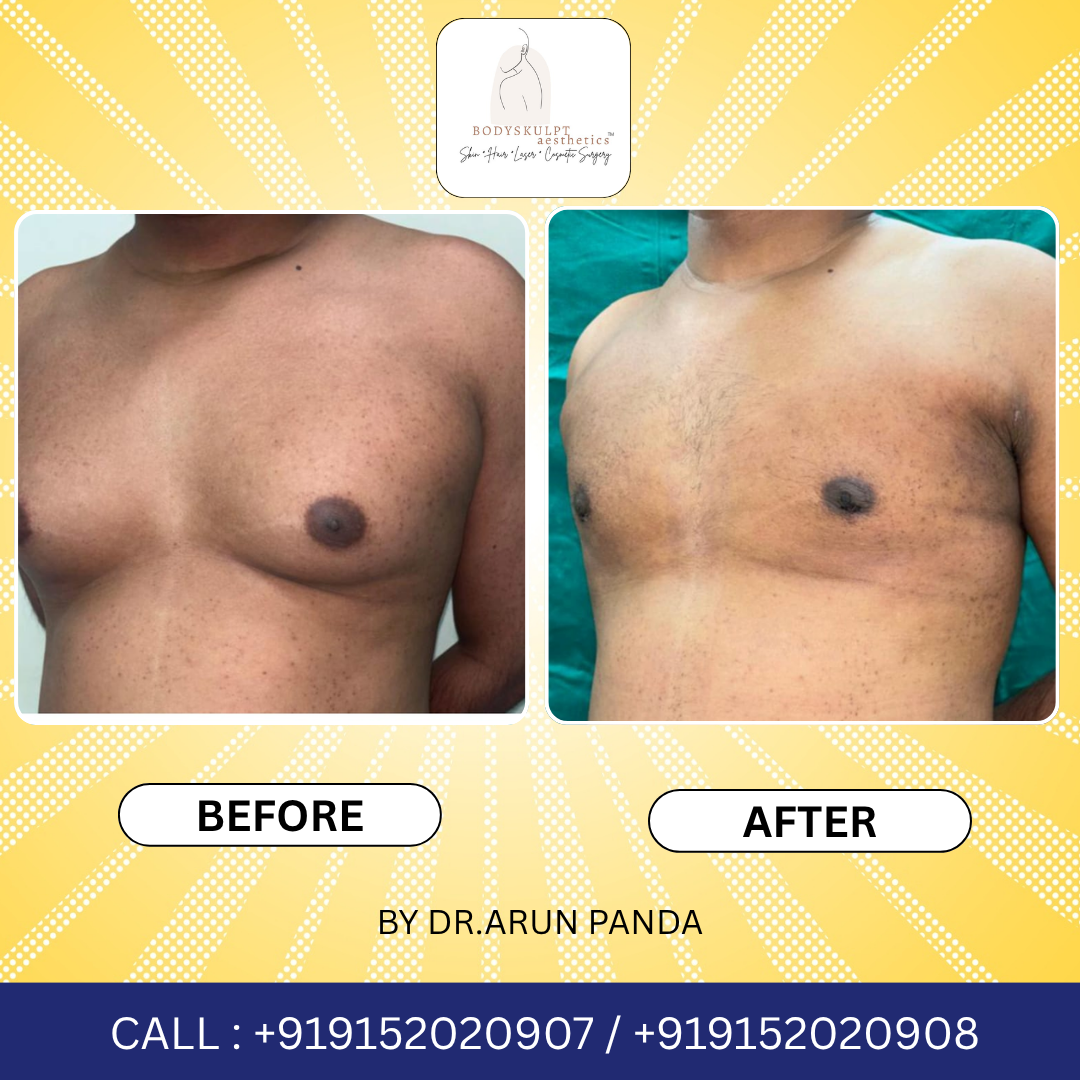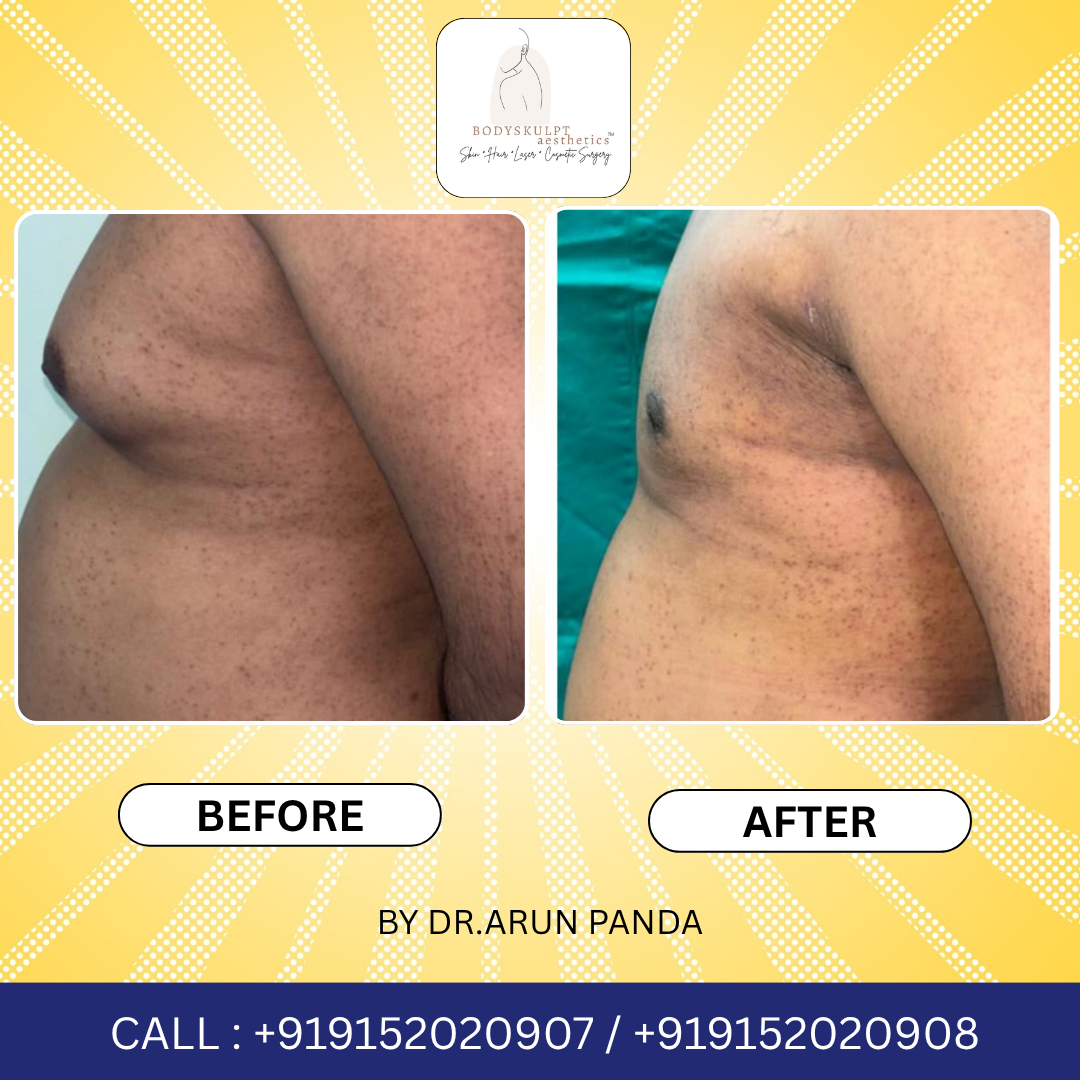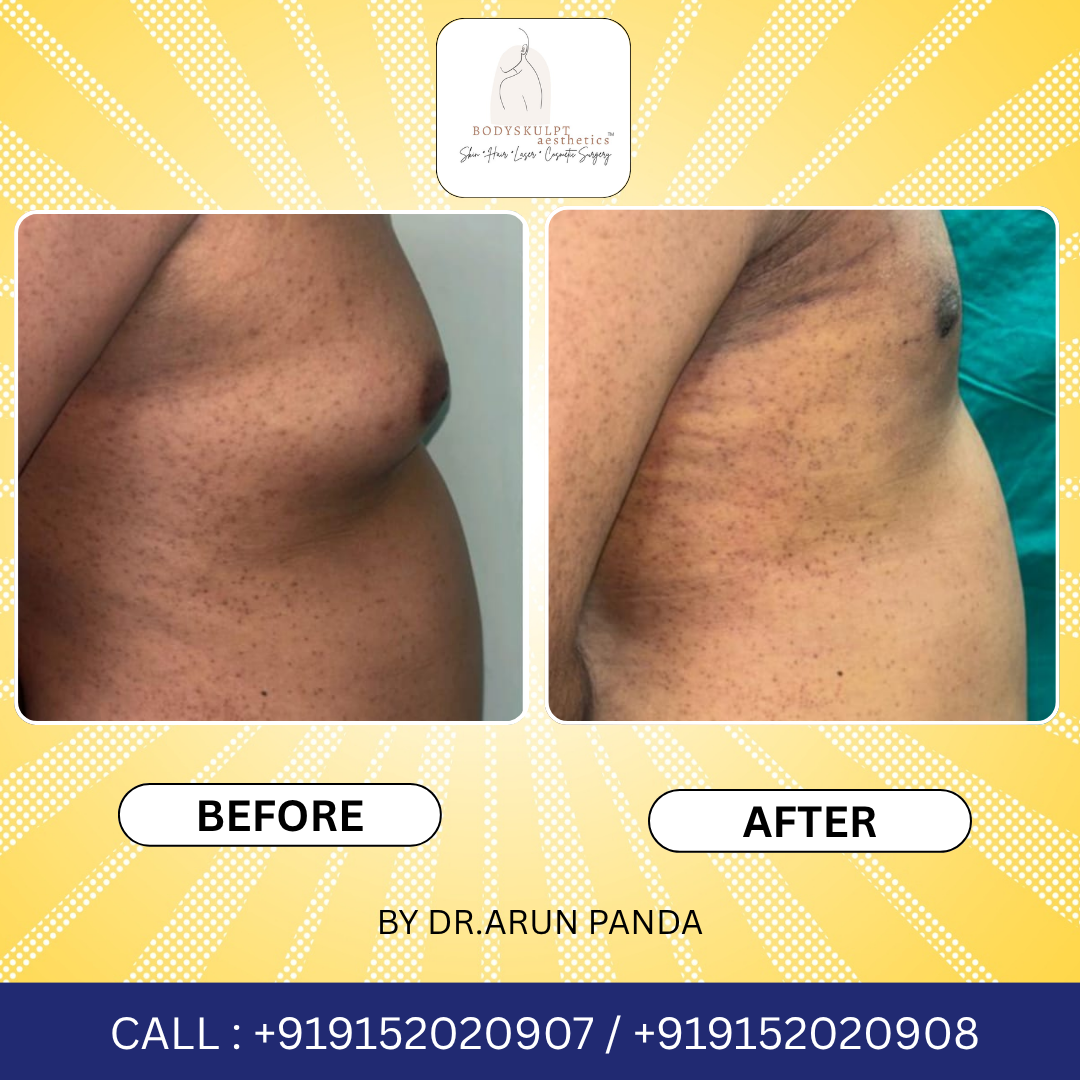
Gynecomastia Surgery in Navi Mumbai
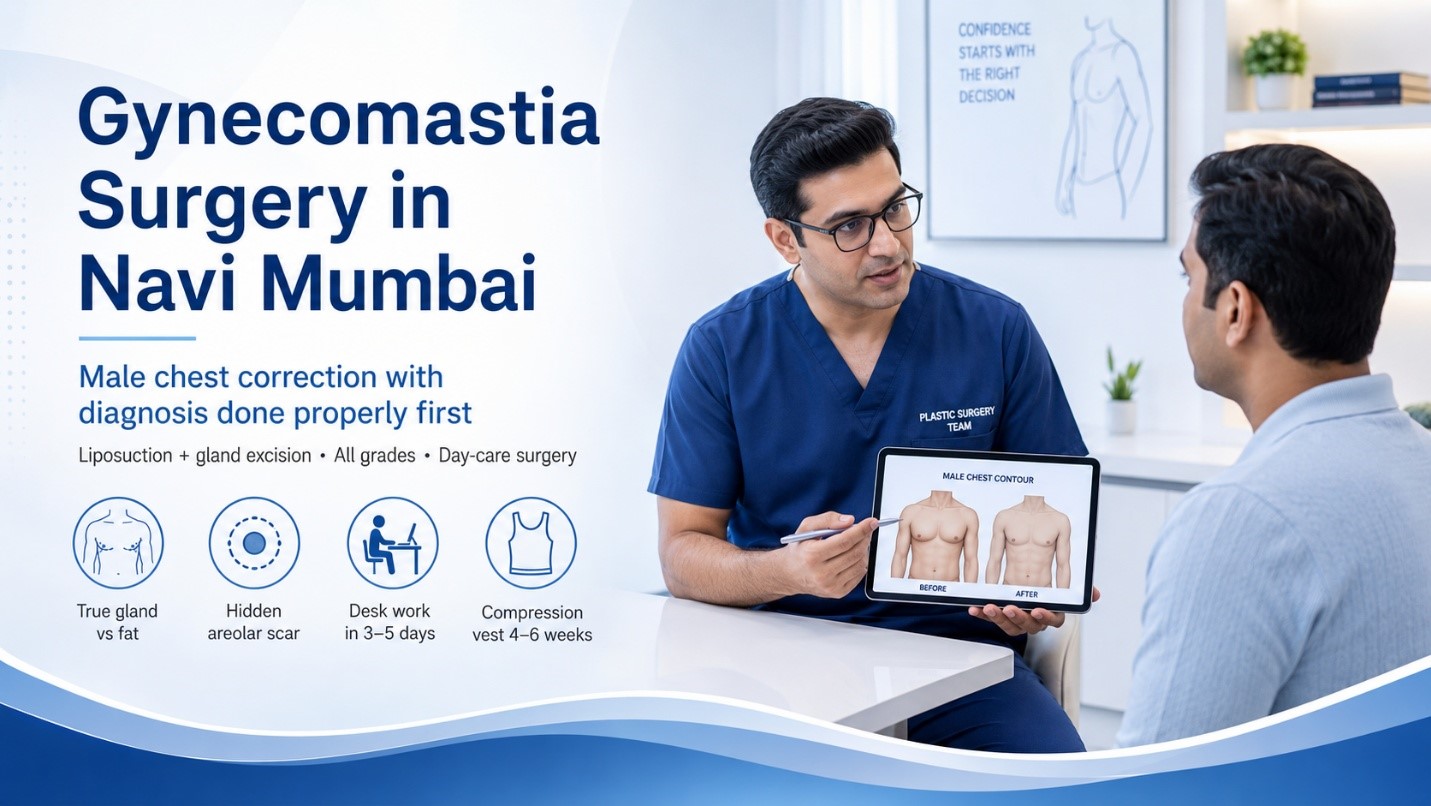
Why the Chest Doesn’t Flatten With Training
Most men who come to us have already tried. Years of chest work, cutting body fat, sometimes getting genuinely lean — and the chest still doesn’t flatten, or worse, becomes more obvious as everything around it shrinks. That’s the clue: glandular tissue does not respond to training or weight loss. It isn’t fat, and no amount of dieting removes it.
Gynecomastia is the growth of actual breast glandular tissue in men, driven by a shift in the balance between oestrogen and testosterone activity. It affects a large proportion of men at some stage — in adolescence, in mid-life, or as a side effect of medication or substances. It is benign, and it is common. It is also, for many men, quietly limiting in a way that’s rarely discussed: shirts chosen carefully, swimming avoided, gym changing rooms managed.
Surgery is the only reliable treatment for established glandular gynecomastia. But before that conversation, there’s a more important one: what is your chest actually made of, and why did it happen?
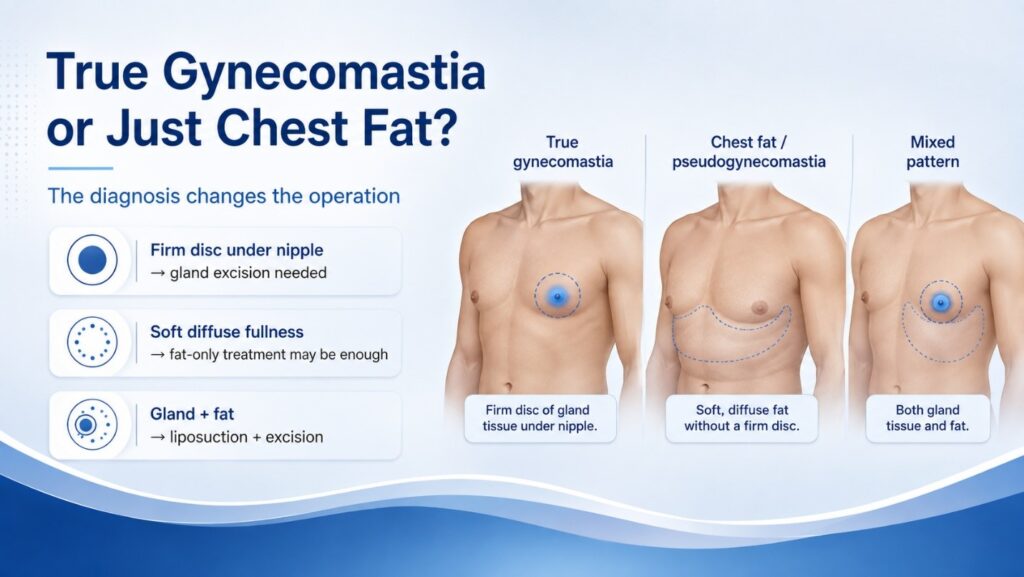
True Gynecomastia or Just Chest Fat?
These look similar in a mirror and need different operations. The distinction is straightforward to feel:
What you feel | What it is | What it needs |
| |
A firm, rubbery disc under the nipple, distinct from surrounding tissue | True gynecomastia — glandular | Gland excision (liposuction alone won’t work) |
| |
Soft, even fullness with no distinct lump | Pseudogynecomastia — fat only | Liposuction alone, or weight loss first |
| |
A firm disc PLUS soft surrounding fullness | Mixed — the commonest pattern | Liposuction + gland excision together |
| |
Fullness with loose, hanging skin | Higher-grade with skin excess | Excision with skin reduction |
| |
Tender, recently enlarged, one side only | Needs investigation before surgery | Medical assessment first — see below |
| |
| The pinch test, and why it decides your quote Sitting upright, pinch the tissue directly beneath and around the nipple between thumb and finger. Glandular tissue feels like a firm, mobile disc with a definable edge — noticeably denser than the softer fat further out on the chest. Fat feels uniform and has no edge. This matters commercially as well as clinically: liposuction alone is cheaper and quicker, and it is genuinely the right operation for pure pseudogynecomastia. But performed on a glandular chest it removes the surrounding fat and leaves the firm disc sitting there — sometimes looking more prominent than before. If a clinic quotes you for liposuction without examining you, that quote is guesswork. | |||
Grading: What Determines Your Operation and Your Cost
Surgeons grade gynecomastia by how much tissue is present and whether the skin has stretched. It’s the single biggest driver of technique, scarring and price:
Grade | What it looks like | Usual operation | Indicative cost |
Grade I | Small enlargement around the nipple, no skin excess | Liposuction + gland excision | ₹55,000 – ₹90,000 |
Grade IIa | Moderate enlargement, no skin excess | Liposuction + gland excision | ₹70,000 – ₹1,10,000 |
Grade IIb | Moderate enlargement with minor skin excess | As above, with limited skin tightening | ₹90,000 – ₹1,50,000 |
Grade III | Marked enlargement with clear skin excess and ptosis | Excision with skin reduction; scar longer | ₹1,20,000 – ₹2,00,000 |
GST at 18% applies on top. Bilateral (both sides) is standard; unilateral is slightly less. Grade III cases involve visible scarring beyond the areolar border — a trade-off that must be discussed honestly, because for a heavier chest there is no way to remove skin without leaving a scar somewhere.
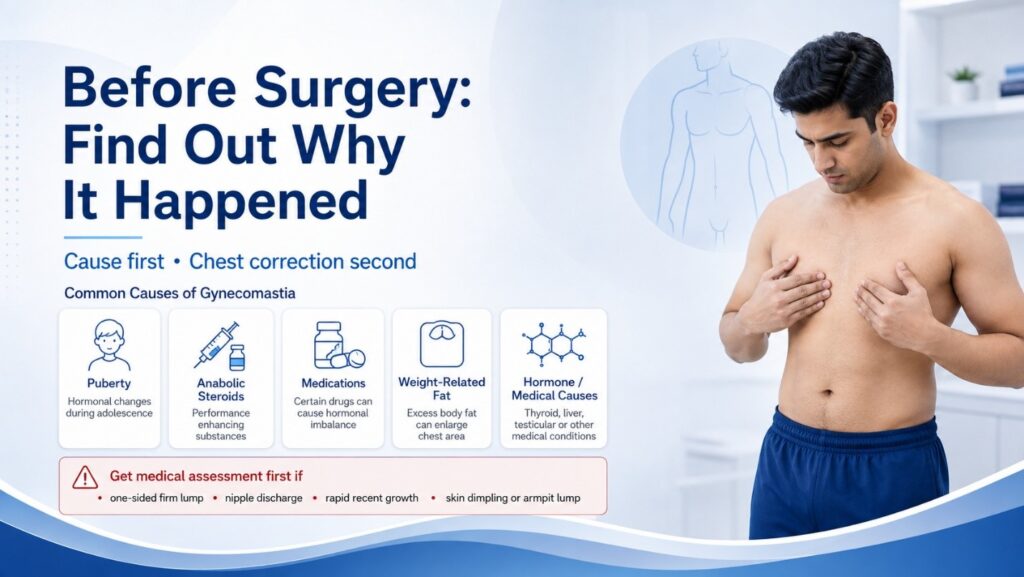
Before Surgery: Find Out Why It Happened
Gynecomastia is a sign, not just a shape. Operating without asking why risks two things: missing a treatable cause, and — rarely — missing something serious. A proper assessment covers:
Common causes worth identifying
- Physiological pubertal gynecomastia is very common and frequently resolves on its own within 6–24 months. Operating too early in an adolescent is a genuine mistake — watchful waiting is usually right unless it has persisted well beyond that window or is causing significant distress.
- Anabolic steroids and performance drugs. A major cause in gym-going men. Excess testosterone is converted to oestrogen, which stimulates breast tissue. Worth stating plainly — see the note below.
- Finasteride, spironolactone, some antipsychotics and antidepressants, certain heart medications, cimetidine and antiretrovirals are all recognised causes. Sometimes a medication review with your physician resolves early cases without surgery.
- Alcohol and cannabis — both associated with gynecomastia with sustained use.
- Medical conditions. Low testosterone, thyroid disorders, liver or kidney disease, and rarely hormone-producing tumours. Basic blood work is worth doing rather than assuming.
- In many adult men no specific cause is found — which is a legitimate conclusion once the others are excluded, not a shortcut to reach first.
When it needs medical assessment before any cosmetic conversation See a doctor promptly rather than a cosmetic clinic if you have: enlargement on ONE side only that is firm or hard rather than rubbery; a lump that feels fixed to the skin or chest wall; skin dimpling, retraction or ulceration; discharge from the nipple, particularly if blood-stained; or a lump in the armpit. Male breast cancer is uncommon but it exists, and these are the features that distinguish it from benign gynecomastia. Any responsible surgeon examines for them and arranges imaging where there is doubt — the cosmetic plan can wait a fortnight. |
If anabolic steroids caused it — the honest conversation
Surgery removes the gland that has already formed, and that removal is permanent. What it does not do is change the hormonal environment that produced it. If you continue using anabolic steroids after surgery, tissue can regrow — and revision surgery on an operated chest is harder, more expensive and less predictable than the first operation. We’re not here to lecture anyone about their choices, but you deserve to know that before you spend the money, not after. If you’re planning to stop, having surgery afterwards gives a more durable result.
Benefits of Gynecomastia Surgery
- A flat, masculine chest contour — the definitive correction where training and diet cannot work.
- Permanent removal of glandular tissue. Excised gland does not regrow, provided the underlying cause is addressed.
- Immediate, visible change. Unlike gradual treatments, the difference is apparent as soon as swelling settles.
- Relief of tenderness where the tissue was painful or sensitive.
- A small, well-hidden scar at the lower areolar border in most grades.
- Clothes fit differently — consistently the change men mention first at follow-up.
- Day-care surgery — in and home the same day, back at a desk within a week.
- Meaningful psychological benefit, well documented in men who have avoided swimming, changing rooms or fitted shirts for years.
Areas Treated & Concerns Addressed
- Glandular tissue beneath the nipple and areola — the primary target.
- Surrounding chest fat — treated with liposuction for a smooth transition.
- Lateral chest and axillary fullness — the roll toward the armpit, which must be blended or the result looks incomplete.
- Puffy or protruding nipple — often the sole complaint in Grade I.
- Enlarged areola — reduced where needed.
- Skin excess and chest ptosis in higher grades.
- Asymmetry between sides — common and correctable.
- Post-weight-loss chest laxity — assessed alongside wider body contouring
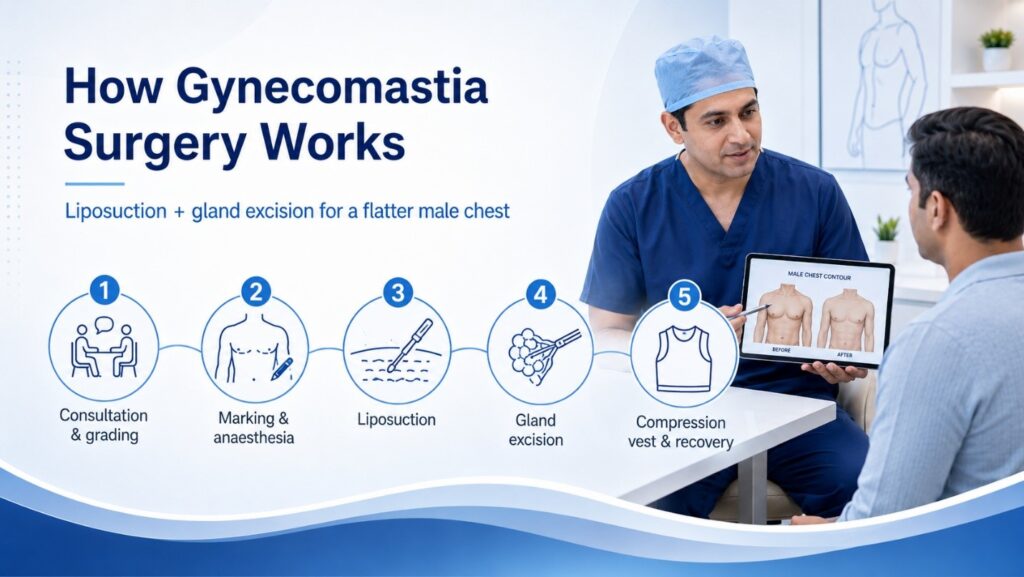
The Procedure, Step by Step
- Consultation and examination. Palpation to establish glandular versus fatty composition, grading, symmetry and skin quality; history covering medications, substances and duration; blood tests or imaging where indicated.
- Planning and marking. Marked with you standing, since chest contour changes with position. Incision placement and expected scar shown to you beforehand.
- General anaesthesia for most cases; local with sedation is sometimes appropriate in small Grade I cases.
- Fat removed through small access points, contouring the chest and blending the lateral roll toward the armpit.
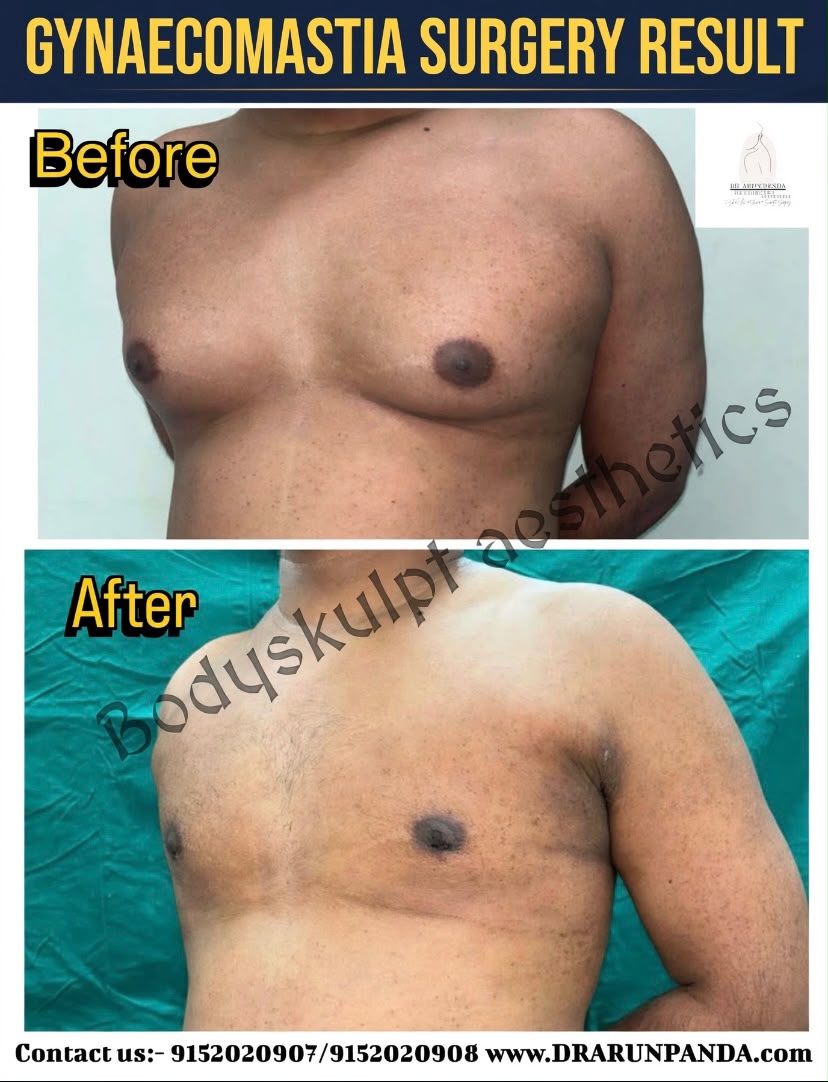
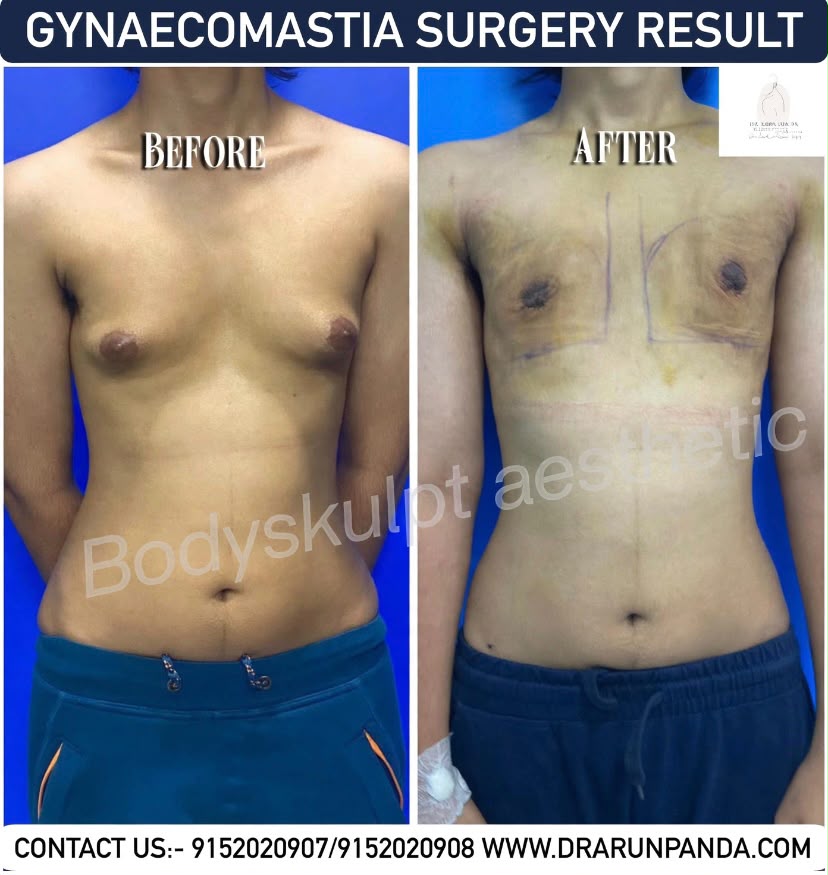
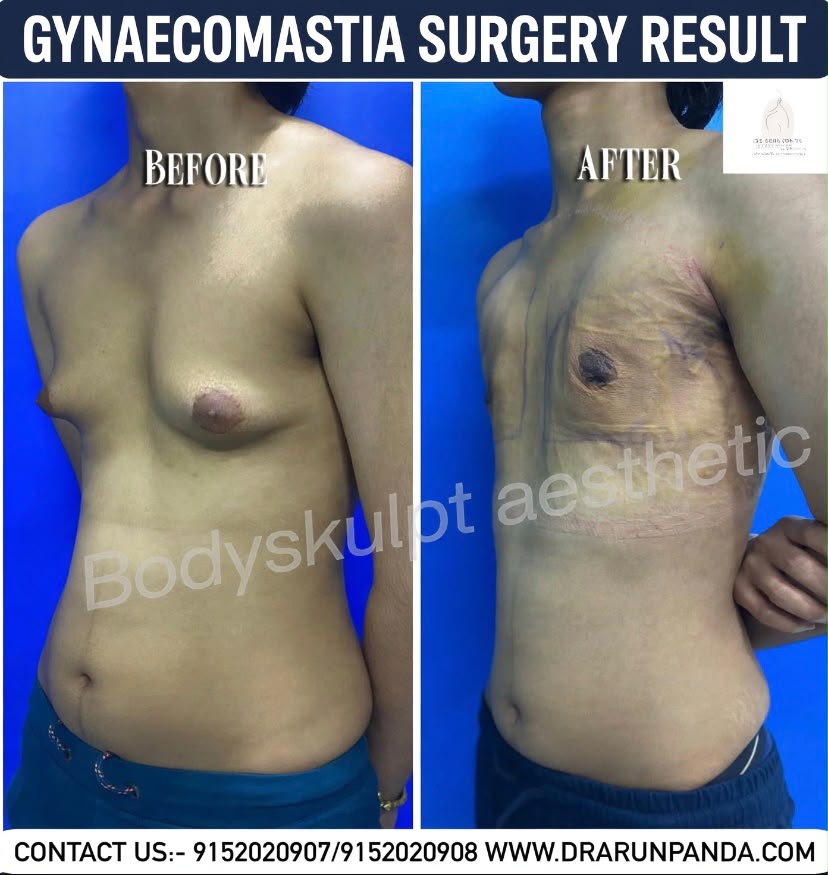
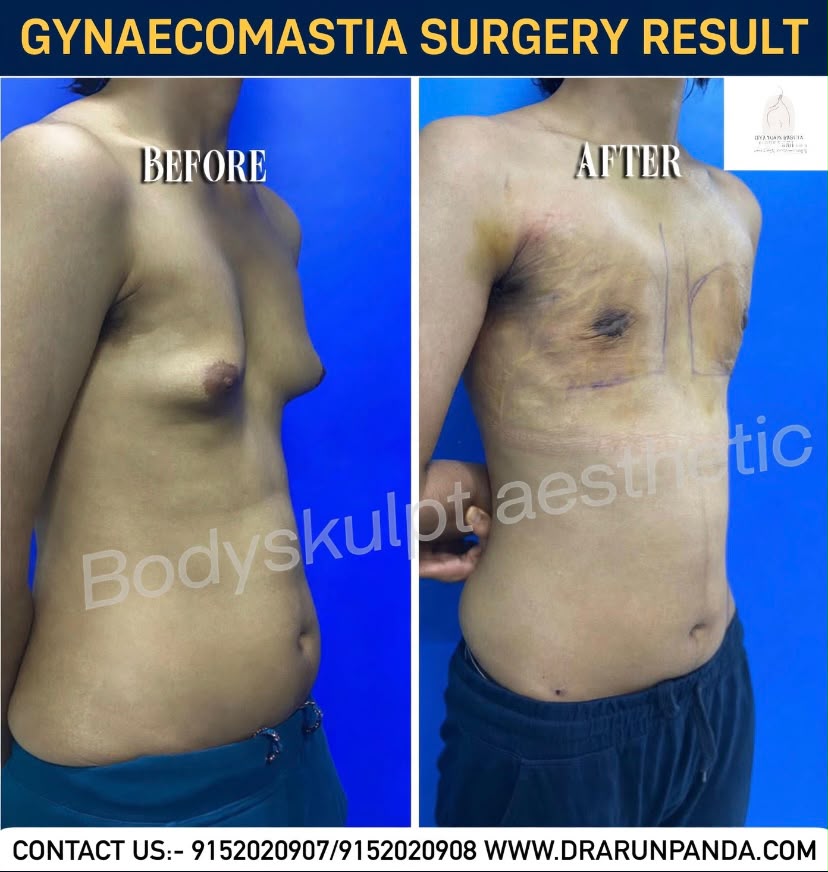
- Gland excision. The firm glandular disc is removed through a small incision at the lower border of the areola — deliberately leaving a thin layer of tissue beneath the nipple to avoid a depression.
- Closure and compression. Layered closure, drains only where needed, and a compression vest fitted before you wake. Surgery takes 60–90 minutes; you go home the same day.
The complication competitors don’t name: crater deformity The most common aesthetic problem after gynecomastia surgery is not a visible scar — it is over-resection directly beneath the nipple, leaving a saucer-shaped depression that becomes obvious in side lighting and is difficult to correct. It happens when a surgeon removes every last trace of gland to guarantee no residual lump. Good technique deliberately leaves a thin, even layer of tissue under the areola and feathers the edges into the surrounding chest. Ask your surgeon directly how they avoid crater deformity; a specific answer tells you a great deal about how many of these they have done. |
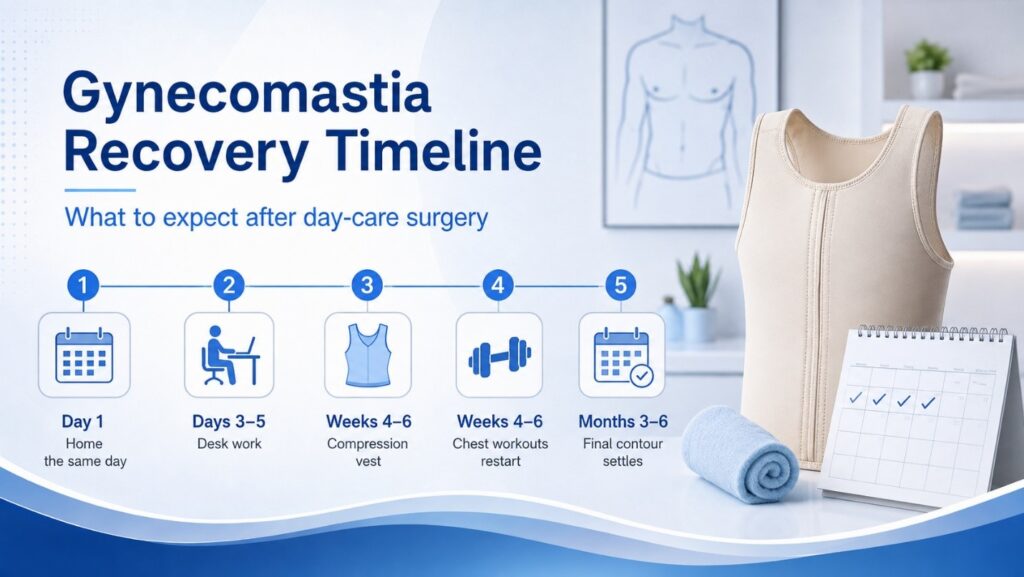
Recovery Timeline
Timeframe | What to expect |
Days 1–3 | Compression vest worn continuously. Soreness and tightness, controlled with simple medication. Arms kept low. |
Days 3–5 | Most men return to desk work. Swelling and bruising visible but manageable under clothing. |
Weeks 1–2 | Sutures reviewed; bruising fading. Light walking encouraged; no chest work. |
Weeks 3–4 | Swelling settling; contour becoming apparent. Light cardio resumed. |
Weeks 4–6 | Compression usually discontinued; gym resumed gradually with clearance. No heavy chest pressing until cleared. |
Months 3–6 | Final contour; scar fading. Residual firmness resolves. |
Aftercare
- Wear the compression vest exactly as instructed — it controls swelling and materially affects how the skin redrapes.
- No heavy lifting or chest exercise for 4–6 weeks; no sauna, steam or hot showers over the chest for 6–8 weeks.
- Expect firmness and lumpiness for weeks — normal scar tissue remodelling, not residual gland.
- Sleep slightly elevated for the first week.
- Scar care from week 3 — silicone gel and sun protection; areolar scars pigment readily on Indian skin.
- Report sudden one-sided swelling — haematoma is the commonest early complication and is easily managed if reported promptly.
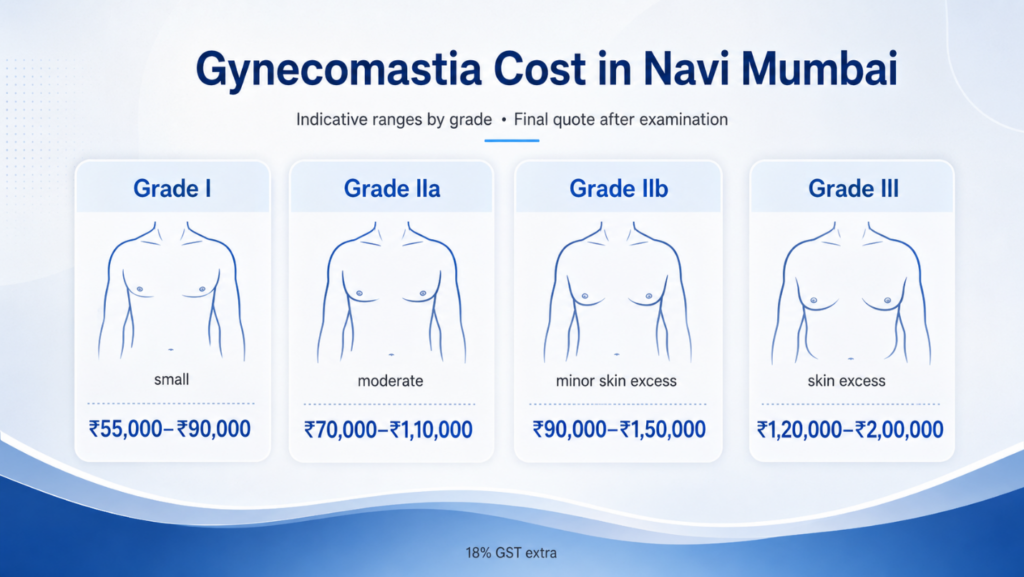
Cost of Gynecomastia Surgery in Navi Mumbai
Cost is driven by grade, technique and whether skin reduction is needed. These indicative ranges cover surgeon and anaesthetist fees, accredited theatre, compression vest, medication and routine follow-up. 18% GST applies and is frequently excluded from advertised prices. EMI options are available.
Procedure | Indicative cost (INR) |
| |
Grade I — liposuction + gland excision | ₹55,000 – ₹90,000 |
| |
Grade IIa — moderate, no skin excess | ₹70,000 – ₹1,10,000 |
| |
Grade IIb — with minor skin excess | ₹90,000 – ₹1,50,000 |
| |
Grade III — with skin reduction | ₹1,20,000 – ₹2,00,000 |
| |
Unilateral (one side only) | Approximately 25–35% less |
| |
Revision after previous surgery | Assessed case by case |
| |
Combined with liposuction of other areas | Quoted together — shares theatre cost |
| |
| On insurance, honestly Gynecomastia surgery is usually treated as cosmetic by Indian insurers and excluded accordingly. Some policies will consider it where the condition is genuinely symptomatic — documented pain or tenderness, an established pathological cause, or significant functional impact — but approval depends entirely on your specific policy wording and the quality of clinical documentation, and many claims are declined. You will find clinics that imply coverage is routine; it isn’t. We’ll document your case accurately and tell you honestly how strong it is, and we won’t manufacture a medical indication that doesn’t exist. Budget on the assumption you’re paying, and treat any approval as a bonus. | ||
Results Timeline
When | What you’ll see |
Week 1 | Swollen and bruised under the vest — nothing to judge. |
Weeks 3–4 | Flatter contour clearly emerging as swelling drops. |
Weeks 6–8 | Chest looks close to its final shape; firmness settling. |
Months 3–6 | Final result; scars fading toward pale. |
Long term | Permanent — excised gland does not return, provided the underlying cause is addressed. |
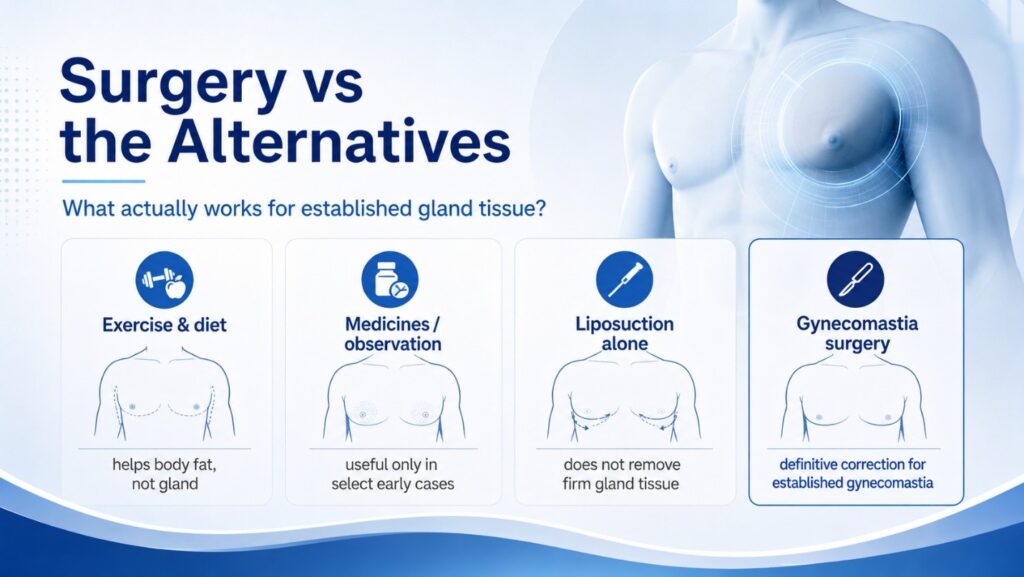
Surgery vs the Alternatives
Option | Works on | Doesn’t work on | Outcome |
Liposuction + gland excision | Glandular and mixed gynecomastia | — | Definitive and permanent |
Pure pseudogynecomastia (fat only) | Glandular tissue — leaves the disc behind | Good only with correct diagnosis | |
Weight loss & training | Chest fat | Glandular tissue | Can make a gland MORE obvious |
Medication (early cases) | Recent, tender, painful gynecomastia | Established fibrous gland | Occasionally useful within the first months |
Small fat pockets, mild laxity | Glandular tissue | No role in true gynecomastia |
The honest summary: there is no non-surgical cure for established glandular gynecomastia. Medication can help in the early, tender phase before the tissue becomes fibrous, and weight loss genuinely helps pseudogynecomastia. Once a firm disc has formed, excision is the only thing that removes it — and any clinic selling a device package for a glandular chest is selling you something that cannot work.
Risks & Safety
- Haematoma — the commonest early complication; presents as sudden one-sided swelling and needs prompt drainage. Reported promptly, it’s straightforward to manage.
- Crater or saucer deformity from over-resection beneath the nipple — the leading aesthetic complaint and largely technique-dependent.
- Residual gland or asymmetry — sometimes needing minor revision.
- Seroma — fluid collection, managed with compression and occasional aspiration.
- Altered nipple sensation — usually temporary; permanent numbness is uncommon.
- Nipple contour irregularity or, rarely, compromise of nipple blood supply in extensive Grade III resections.
- Scarring — usually well hidden at the areolar border, but longer and visible where skin reduction is required.
- Recurrence — uncommon after adequate excision, but a real risk if anabolic steroid use continues.

Who Performs Your Surgery at Bodyskulpt Aesthetics
Bodyskulpt Aesthetics is a doctor-led clinic in Vashi founded by Dr. Arun Panda, a Cranio-Maxillofacial and fellowship-trained Facial Plastic and Cosmetic Surgeon whose own practice is facial. Gynecomastia surgery is performed by qualified plastic surgeons empanelled with the clinic, in accredited operating facilities and in compliance with Indian medical regulations. We say so plainly, because scope of practice is a safety matter.
- Diagnosis before quotation. Glandular versus fatty composition established by examination, and grade assigned, before any price is discussed.
- Cause investigated, not assumed. Medication review, relevant blood work, and examination for the features that warrant imaging.
- Technique that avoids crater deformity — a thin, even layer preserved beneath the areola and edges feathered into the chest.
- Discretion as standard. Private consultation, confidential records, and no assumptions — many men have carried this for years before walking in.
- Honest advice on adolescents — including recommending watchful waiting where pubertal gynecomastia may still resolve.
- Full body-contouring context — chest correction planned alongside liposuction or abdominoplasty where relevant; see our body contouring
Centrally located in Vashi — serving Navi Mumbai and Mumbai Bodyskulpt Aesthetics is in the heart of Vashi, easily reached from Kharghar, Panvel, Belapur, Nerul, Airoli, Thane and across Mumbai. Consultations are private, unhurried and carry no obligation. EMI options available. |
Frequently Asked Questions
How much does gynecomastia surgery cost in Navi Mumbai?
Approximately ₹55,000–₹90,000 for Grade I, ₹70,000–₹1,10,000 for Grade IIa, ₹90,000–₹1,50,000 for Grade IIb with minor skin excess, and ₹1,20,000–₹2,00,000 for Grade III requiring skin reduction. Unilateral surgery is roughly 25–35% less. GST at 18% applies and is often excluded from advertised prices — always confirm. EMI options are available.
Can gynecomastia go away without surgery?
Sometimes. Pubertal gynecomastia frequently resolves on its own within 6–24 months, which is why watchful waiting is usually right in adolescents. Drug-induced cases may improve if the responsible medication is changed, in discussion with your physician. But once glandular tissue has been present for a year or more it becomes fibrous, and at that stage no medication, exercise or device removes it — excision is the only reliable treatment.
How do I know if it’s gynecomastia or just chest fat?
Pinch the tissue directly under the nipple. True gynecomastia feels like a firm, rubbery disc with a definable edge, distinctly denser than the softer fat further out. Pseudogynecomastia feels uniformly soft with no lump. Most men have a mix. This distinction determines the operation — liposuction alone cannot remove glandular tissue and will leave the firm disc behind.
Will liposuction alone fix gynecomastia?
Only if your condition is purely fatty. Glandular tissue is firm and fibrous and cannot be aspirated through a liposuction cannula. Performing liposuction alone on a glandular chest removes the surrounding fat and can leave the disc looking more prominent than before. Where a gland is present, excision through a small areolar incision is required alongside liposuction.
Does gynecomastia come back after surgery?
Excised glandular tissue does not regrow, so recurrence is uncommon after adequate surgery. The important exception is continued anabolic steroid use, which can stimulate new tissue formation — surgery corrects the chest but not the hormonal cause. Significant weight gain can also increase chest fat, though that is a different problem from glandular regrowth.
What is the recovery time after gynecomastia surgery?
Most men return to desk work in 3–5 days. A compression vest is worn for 4–6 weeks, light cardio resumes at 3–4 weeks, and chest training at 4–6 weeks with surgical clearance. Swelling and firmness settle over 6–8 weeks and the final contour appears at 3–6 months.
Where will the scar be?
In most cases a small incision at the lower border of the areola, where the colour change hides it well once healed. Higher grades requiring skin reduction need longer incisions with visible scarring beyond the areola — an unavoidable trade-off when significant skin has to be removed, and one that should be shown and discussed before surgery rather than after.
Is gynecomastia surgery covered by insurance in India?
Usually not — most insurers treat it as cosmetic and exclude it. Some policies will consider it where the condition is genuinely symptomatic with documented pain, an established pathological cause or functional impact, but approval depends on your policy wording and documentation, and many claims are declined. Budget on the assumption you are paying; treat approval as a bonus, and be wary of clinics implying coverage is routine.
Should a teenager have gynecomastia surgery?
Usually not immediately. Pubertal gynecomastia is very common and often resolves within 6–24 months, so watchful waiting with review is generally the right approach. Surgery is considered when it has persisted well beyond that window, is causing significant distress, or where assessment identifies a cause that won’t resolve. Any surgeon recommending immediate surgery for a 15-year-old without that discussion is moving too fast.
Book a Private Consultation
A proper diagnosis, a clear grade, and an honest quote. Book at Bodyskulpt Aesthetics, Sector 9, Vashi, Navi Mumbai. You’ll be examined to establish whether your chest is glandular, fatty or mixed, given your grade and the operation it actually requires, asked the questions that identify a treatable cause, and given an itemised quote including GST. Consultations are private, confidential and carry no obligation. Explore body contouring, liposuction, or book a consultation. Call / WhatsApp: 9152020907 / 9152020908 • drarunpanda.com • EMI available |
Authoritative references
For independent information, see the American Society of Plastic Surgeons on gynecomastia surgery, Mayo Clinic on gynecomastia and peer-reviewed literature on gynecomastia classification and management.
Educational information only and not a substitute for an in-person surgical consultation. Gynecomastia surgery is performed by qualified empanelled plastic surgeons at Bodyskulpt Aesthetics in accordance with Indian medical regulations. Persistent, one-sided or rapidly enlarging male breast tissue should be medically assessed. Results, costs and recovery vary between individuals.
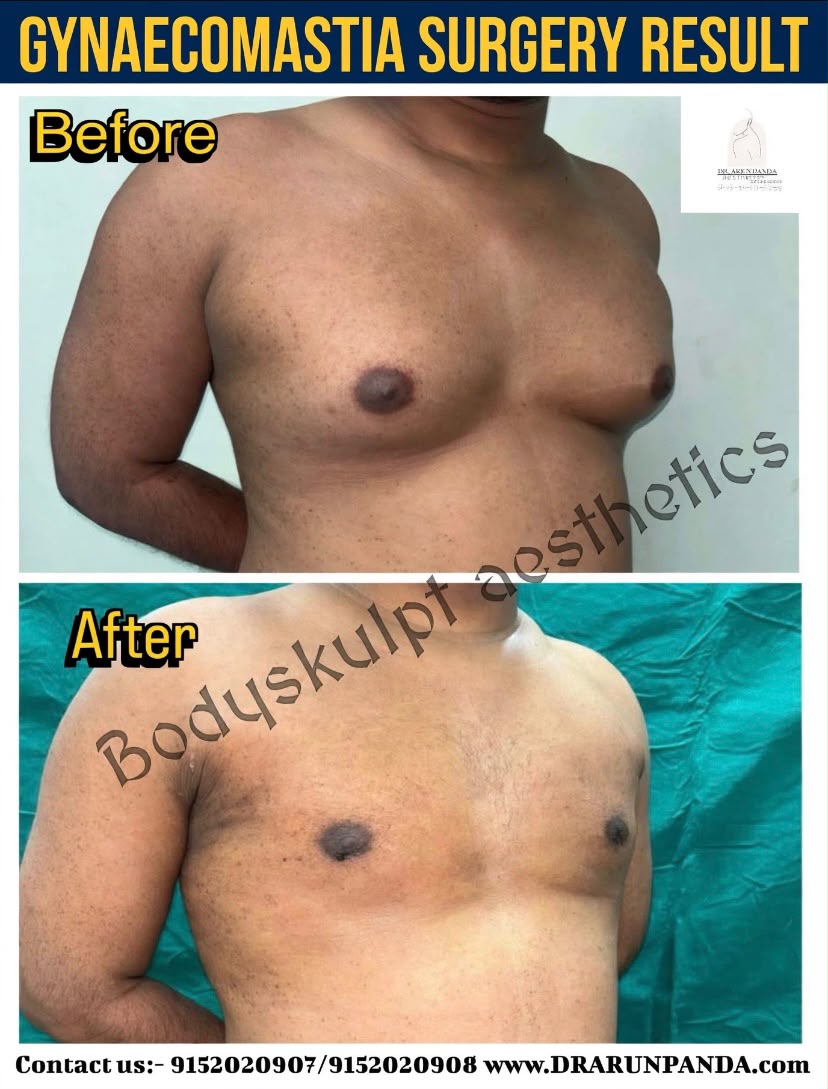
Please reach out to us through the contact details below.
- Website: https://drarunpanda.com/
- Phone: +919152020907, +919152020908
- Address: Dr. Arun Panda, BodySkulpt Aesthetics, F1/A-4, Aditi Apartments, Sector 9, Vashi, Navi Mumbai – 400703
- Facebook: https://www.facebook.com/DrArunPanda
- Instagram: https://www.instagram.com/drarunpanda/
- Youtube: https://www.youtube.com/DrArunPanda
- LinkedIn: https://www.linkedin.com/in/drarunpanda
- Twitter: https://twitter.com/DrArunPanda1
- Email: facialaestheticsindia@gmail.com
- Google Directions: https://g.page/DrArunPanda?gm