
Introduction
Hair restoration technology has advanced dramatically in the last decade. As of 2025, hair transplants deliver extremely natural results with very high graft survival rates. But with so many options—FUT, FUE, and DHI—patients often feel confused about which method is best for their baldness pattern, donor area strength, budget, and long-term expectations.
If you are planning a procedure or comparing hair transplant cost in Navi Mumbai, this in-depth guide explains the differences between these three techniques, their success rates, benefits, drawbacks, and ideal candidates.
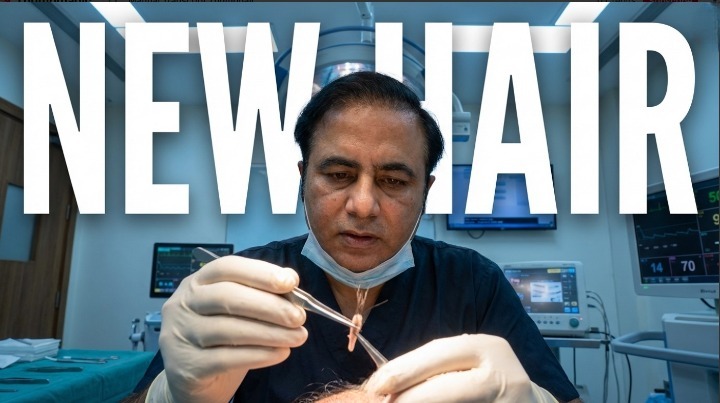
By the end, you’ll know exactly which method gives the highest hair transplant surgery success rate in 2025.
- Understanding All Three Techniques: FUT, FUE, DHI
- A) FUT (Follicular Unit Transplantation)
Also known as the Strip Method, FUT involves removing a thin strip of skin from the back of the head, dissecting it under microscopes, and implanting the grafts in the bald area.
How FUT Works
- A strip of donor skin is removed
- Grafts are separated manually
- Incisions are made in the recipient area
- Grafts are implanted into slits
Pros of FUT
- Higher number of grafts in one session
- Good for advanced baldness
- Excellent root survival
- Less expensive
Cons of FUT
- Leaves a linear scar
- Longer recovery time
- Stitches required
- Unable to shave head fully after surgery
- B) FUE (Follicular Unit Extraction)
FUE involves removing individual follicular units using a micro punch tool, without cutting a strip.
How FUE Works
- Individual grafts are extracted
- Tiny holes are created for implantation
- Grafts are inserted into the recipient area
Pros of FUE
- No visible scar
- Faster healing
- Can shave head afterward
- Ideal for people wanting short hairstyles
Cons of FUE
- Requires high surgeon skill
- Graft overharvesting risk
- Fewer grafts extracted per day
- C) DHI (Direct Hair Implantation)
DHI is a premium version of FUE using a Choi Implanter Pen, allowing graft extraction and implantation in a continuous cycle.
How DHI Works
- Grafts are extracted individually
- No pre-made incisions required
- Grafts implanted using Choi pen directly
- Shorter exposure time outside the scalp
Pros of DHI
- Highest graft survival
- Fastest healing
- No incisions
- Perfect for hairline precision
- Densest coverage in fewer sessions
Cons of DHI
- More expensive
- Requires expert surgeon
- Slower procedure per graft
- Hair Transplant Surgery Success Rate: FUT vs FUE vs DHI (2025 Data)
FUT Success Rate (2025): 90–95%
FUE Success Rate (2025): 92–97%
DHI Success Rate (2025): 95–98%
DHI has the highest success rate, thanks to:
- Minimal graft trauma
- Zero delay between extraction & implantation
- Perfect angle control
- Lower risk of dehydration
- Micro-precise depth control
This is why modern surgeons—and most premium hair transplant clinics in Navi Mumbai—recommend DHI for maximum density and natural results.
- Graft Survival Comparison
Survival depends on how carefully grafts are handled.
FUT Graft Survival: 85–92%
FUE Graft Survival: 90–95%
DHI Graft Survival: 95–98%
Winner: DHI
- Recovery Time Comparison
FUT Recovery: 10–14 days
FUE Recovery: 5–7 days
DHI Recovery: 3–5 days
DHI offers the fastest healing, with minimal swelling or scabbing.
- Pain Level Comparison
FUT: Moderate (due to stitches)
FUE: Mild
DHI: Very mild, least discomfort
Modern anaesthesia makes all methods nearly painless.
- Scarring Comparison
FUT:
Visible linear scar
FUE:
Tiny dot scars, barely visible
DHI:
Similar to FUE but even smaller extraction marks
- Natural Hairline Comparison
FUT: Good
FUE: Very good
DHI: Excellent — most natural hairline
DHI is best for:
- Hairline design
- Temple points
- Beard shaping
- Eyebrows
- Density Comparison (2025 Standards)
Density means how full your hair looks.
FUT Density: Medium
FUE Density: Good
DHI Density: Highest
DHI allows up to 50–60 grafts per sq cm, creating a fuller and denser appearance.
- Which Method Looks Most Natural?
DHI > FUE > FUT
Reason:
- Precise angle control
- Less graft trauma
- Controlled depth
- No root damage
- Minimal scar visibility
- Cost Comparison in Navi Mumbai (2025)
Approximate ranges:
FUT Cost in Navi Mumbai:
₹35,000 – ₹65,000
FUE Cost in Navi Mumbai:
₹45,000 – ₹95,000
DHI Cost in Navi Mumbai:
₹70,000 – ₹1,80,000
DHI is the costliest because it requires:
- Premium tools
- Longer surgeon involvement
- High-end technology
- Better graft survival
But it also offers the highest hair transplant surgery success rate.
- Which Method Is Best for Which Person?
Choose FUT if:
- You need 3000–5000+ grafts
- You have advanced baldness
- You don’t mind a linear scar
- You want a more affordable option
Choose FUE if:
- You want a shave-friendly procedure
- You prefer minimal scarring
- You want moderate to high density
- You have a healthy donor area
Choose DHI if:
- You want the most natural hairline
- You want the highest success rate
- You want maximum density
- You want fastest recovery
- You want premium results
- You prefer almost painless, scarless treatment
- Which Technique Is Best for Long-Term Results?
✔ DHI has the longest-lasting results
Thanks to minimal follicle trauma and accurate implantation.
✔ FUE ranks second
✔ FUT ranks third
- What to Choose If You Have Weak Donor Area?
DHI works best for weak donor areas because:
- Fewer grafts are wasted
- Each graft is placed carefully
- Advanced mapping avoids overharvesting
- Hair Transplant Surgery Success Rate According to Baldness Grade
Grade 2–3:
DHI is ideal
(Superior natural hairline)
Grade 4–5:
FUE or DHI
(Moderate to high density needed)
Grade 6–7:
Combination of FUT + FUE
(For large graft numbers)
- Does Hair Transplant Work for Everyone?
Mostly yes, but exceptions include:
- Very weak donor supply
- Active scalp infection
- Severe uncontrolled medical condition
- Unrealistic expectations
A proper consultation is necessary.
- Who Should Avoid FUT?
Avoid FUT if:
- You prefer to shave your head
- You want no visible scars
- You have tight scalp skin
- You want faster healing
- FUT vs FUE vs DHI: Which Has the Least Complications?
✔ DHI has the least
✔ FUE is second
✔ FUT has slightly higher due to stitches
Modern clinics ensure safety for all three.
- Why DHI Is the Preferred Technique in 2025
Because DHI offers:
- Maximum graft survival
- Zero incisions
- Fastest heali
- Highest density
- Most natural hairline
- Minimal pain
- Lowest downtime
It is the most advanced technique currently available.
- What Doctors in Navi Mumbai Recommend (2025 Trend)
Most surgeons prefer:
- DHI for hairline and frontal area
- FUE for mid-scalp and crown
- FUT only for large graft requirements
This combination ensures the ideal balance between cost and success rate.
- Final Comparison Table
| Feature | FUT | FUE | DHI |
| Success Rate | 90–95% | 92–97% | 95–98% |
| Scarring | Linear | Minimal Dots | Minimal |
| Pain Level | Moderate | Mild | Very Mild |
| Density | Medium | High | Highest |
| Healing | Slow | Fast | Fastest |
| Cost | Low | Medium | High |
| Best For | High graft count | Most patients | Premium natural results |
If your goal is to find the highest hair transplant surgery success rate, the winner in 2025 is clearly:
DHI (Direct Hair Implantation)
However, the right technique depends on:
- Baldness level
- Donor density
- Budget
- Desired density
- Surgeon’s recommendation
When planning your treatment or comparing hair transplant cost in Navi Mumbai, always choose an experienced clinic with modern tools, trained surgeons, and proper aftercare.
No matter which method you choose, when done correctly, a hair transplant can restore your confidence, improve your appearance, and give you natural, lifelong results.
FAQs
- Which technique is best for the highest density?
DHI offers the densest packing.
- Which is more painful—FUT or FUE?
FUT is slightly more painful due to stitches.
- Does DHI cost more?
Yes, but it offers better success rates and natural results.
- Which method is best for hairline design?
DHI provides the best hairline precision.